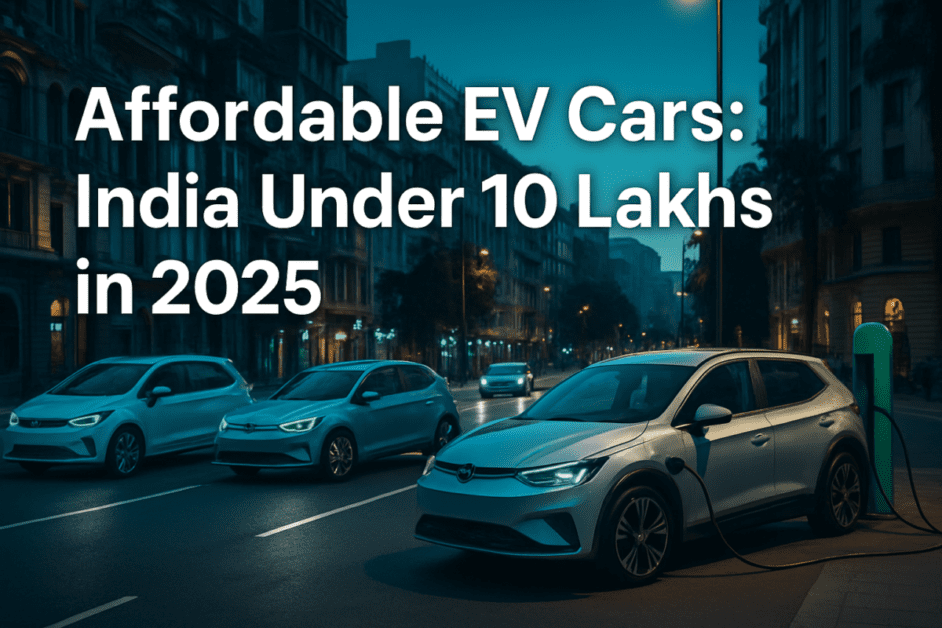
Are you dreaming of owning an electric vehicle (EV) but worried about the price tag? Good news! The Indian automotive market is rapidly evolving, and in 2025, it’s more feasible than ever to find compelling EV cars in India under 10 lakhs. Once considered a luxury, electric mobility is becoming increasingly accessible, with manufacturers focusing on budget-friendly models that don’t compromise on features or performance for the average Indian consumer. This comprehensive guide will explore the best options, key considerations, and the exciting future of affordable EVs in India.
The shift towards electric vehicles is driven by several factors: rising fuel prices, growing environmental consciousness, and proactive government initiatives encouraging EV adoption. For many, the perception that EVs are prohibitively expensive has been a barrier. However, as technology advances and economies of scale kick in, we are witnessing a surge in affordable EV options. This article will delve deep into the models that fit the “under 10 lakhs” budget, helping you navigate your path to sustainable driving.
Key Takeaways
- Affordability is Here: Several reputable manufacturers now offer legitimate EV cars in India under 10 lakhs (ex-showroom) in 2025, making electric mobility accessible to a wider audience.
- Government Support: Subsidies like FAME-II and state-specific incentives significantly reduce the upfront cost of EVs, enhancing their value proposition.
- Reduced Running Costs: EVs offer substantial savings on fuel and maintenance compared to traditional petrol/diesel cars, leading to lower total cost of ownership over time.
- Growing Infrastructure: India’s charging infrastructure is rapidly expanding, making range anxiety less of a concern for daily commutes and inter-city travel.
- Diverse Options: From compact hatchbacks to feature-rich models, there’s a growing variety of choices to suit different needs and preferences within the budget.
Top EV Cars in India Under 10 Lakhs (Ex-Showroom) in 2025
The Indian market for electric vehicles is buzzing with new entrants and updated models, especially in the budget segment. As we move through 2025, several manufacturers are vying for a slice of this growing pie, offering competitive EV cars in India under 10 lakhs. Let’s explore some of the most promising options that make electric ownership a reality for budget-conscious buyers.
Tata Tiago EV
Tata Motors has been a pioneer in India’s EV revolution, and the Tiago EV is a testament to their commitment to accessible electric mobility. Building on the success of its petrol counterpart, the Tiago EV has quickly become a strong contender in the budget EV segment. It combines practicality, a familiar design, and impressive features for its price point.
Key Features and Specifications:
- Price Range: Starts well within the 10 lakh bracket, making it one of the most affordable fully electric cars.
- Battery Options: Available with two battery pack options – a 19.2 kWh and a 24 kWh.
- Range: The larger 24 kWh battery offers an MIDC-certified range of up to 315 km, while the 19.2 kWh variant provides a range of 250 km. These figures are quite respectable for city driving and occasional highway use.
- Performance: Offers decent power, with the larger battery variant producing 74 bhp and 114 Nm of torque, allowing for brisk acceleration.
- Charging: Supports various charging options, including 3.3 kW AC, 7.2 kW AC, and DC fast charging, which can charge the battery from 10% to 80% in about 57 minutes.
- Interiors & Features: Comes equipped with a touchscreen infotainment system (some variants), ZConnect connected car technology, cruise control, multi-mode regen braking, and automatic climate control. The cabin feels modern and well-appointed for its segment.
- Safety: Boasts a strong build, though specific crash test ratings for the EV variant might differ from the ICE model.
The Tiago EV is ideal for urban commuters looking for a compact, feature-rich, and affordable electric hatchback. Its multiple battery options allow buyers to choose based on their specific range requirements and budget. You can learn more about Tata’s offerings by checking out our guide on best Tata cars under 10 lakhs.
MG Comet EV
The MG Comet EV stands out with its incredibly compact size and unique, quirky design. It’s purpose-built for urban environments, offering exceptional maneuverability and ease of parking in congested Indian cities. While its range might be lower than some competitors, its ultra-compact dimensions and feature set make it a compelling choice for specific buyers looking for EV cars in India under 10 lakhs.
Key Features and Specifications:
- Price Range: Positioned as one of the most affordable EV cars, falling comfortably under the 10 lakh mark.
- Battery: Equipped with a 17.3 kWh battery pack.
- Range: Offers an ARAI-certified range of 230 km on a single charge, which is perfectly adequate for daily city commutes.
- Performance: Powered by a single electric motor producing 41.4 bhp and 110 Nm of torque. While not a powerhouse, it’s zippy enough for city traffic.
- Charging: Primarily uses a 3.3 kW AC charger, taking around 7 hours to fully charge. DC fast charging is not available.
- Interiors & Features: Despite its small footprint, the Comet EV features a surprisingly modern interior with dual 10.25-inch screens (one for infotainment, one for the digital instrument cluster), connected car tech, and steering-mounted controls. Its unique two-door setup makes it a head-turner.
- Safety: Comes with dual airbags, ABS with EBD, and rear parking sensors.
The MG Comet EV is a great option for individuals or small families living in crowded city centers, looking for a second car for errands, or those who prioritize ease of parking and a distinctive design. It truly embodies the spirit of compact urban mobility.

Citroën eC3
The Citroën eC3 brings a touch of European flair and robustness to the budget EV segment. Based on the C3 hatchback, the eC3 offers a spacious cabin and a comfortable ride, making it a practical choice for those who need a bit more space than the Tiago EV or Comet EV. Its unique suspension tuning aims to handle Indian road conditions with ease.
Key Features and Specifications:
- Price Range: Variants start just under or around the 10 lakh mark, making it a strong contender among EV cars in India under 10 lakhs.
- Battery: Features a 29.2 kWh battery pack.
- Range: Boasts an ARAI-certified range of 320 km, which is highly competitive and suitable for varied usage patterns.
- Performance: Generates 57 bhp and 143 Nm of torque, offering a smooth and adequate performance for daily driving.
- Charging: Supports 3.3 kW AC charging (10.5 hours for 10-100%) and DC fast charging (10-80% in 57 minutes).
- Interiors & Features: The eC3 inherits the C3’s comfortable and spacious interior, including a 10.2-inch touchscreen infotainment system with wireless Apple CarPlay and Android Auto. It emphasizes comfort and practicality.
- Safety: Equipped with dual airbags, ABS with EBD, and reverse parking sensors.
The Citroën eC3 is a compelling choice for families or individuals who need a practical, spacious, and comfortable electric car for city commutes and occasional longer trips, all while staying within a tight budget. For more details on this model, you can check out the Citroen C3 2025 information.
Upcoming Contenders and Expected Models
The Indian EV market is dynamic, with new models and updates frequently appearing. While the above are established players, several new EV cars in India under 10 lakhs are rumored or expected to launch, or existing models might see price adjustments bringing them into this segment. Keep an eye on announcements from brands like Mahindra (perhaps a more affordable eKUV100 variant), and even potential collaborations or new entrants aiming for this high-volume segment. Maruti Suzuki is also heavily investing in EVs, and a budget-friendly electric hatchback could be on the horizon. For a broader look at electric cars in India, explore our guide on electric cars India.
Here’s a quick comparison table of the current prominent models in the “under 10 lakhs” category for 2025:
| Feature | Tata Tiago EV (Medium Range) | MG Comet EV | Citroën eC3 |
|---|---|---|---|
| Ex-showroom Price | ₹8.29 – ₹12.04 Lakhs | ₹6.99 – ₹9.53 Lakhs | ₹7.60 – ₹10.68 Lakhs |
| Battery Size | 19.2 kWh / 24 kWh | 17.3 kWh | 29.2 kWh |
| ARAI/MIDC Range | 250 km / 315 km | 230 km | 320 km |
| Power Output | 61 bhp / 74 bhp | 41.4 bhp | 57 bhp |
| Torque | 110 Nm / 114 Nm | 110 Nm | 143 Nm |
| 0-60 km/h | 6.2s / 5.7s | N/A | 6.8s |
| Fast Charging | Yes (DC, 57 min 10-80%) | No | Yes (DC, 57 min 10-80%) |
| Key Highlight | Practical, multiple ranges | Ultra-compact, urban-centric | Spacious, comfortable ride |
Note: Prices are ex-showroom and subject to change. Government subsidies can further reduce the effective cost.
Why Choose an EV in 2025? Beyond the Price Tag
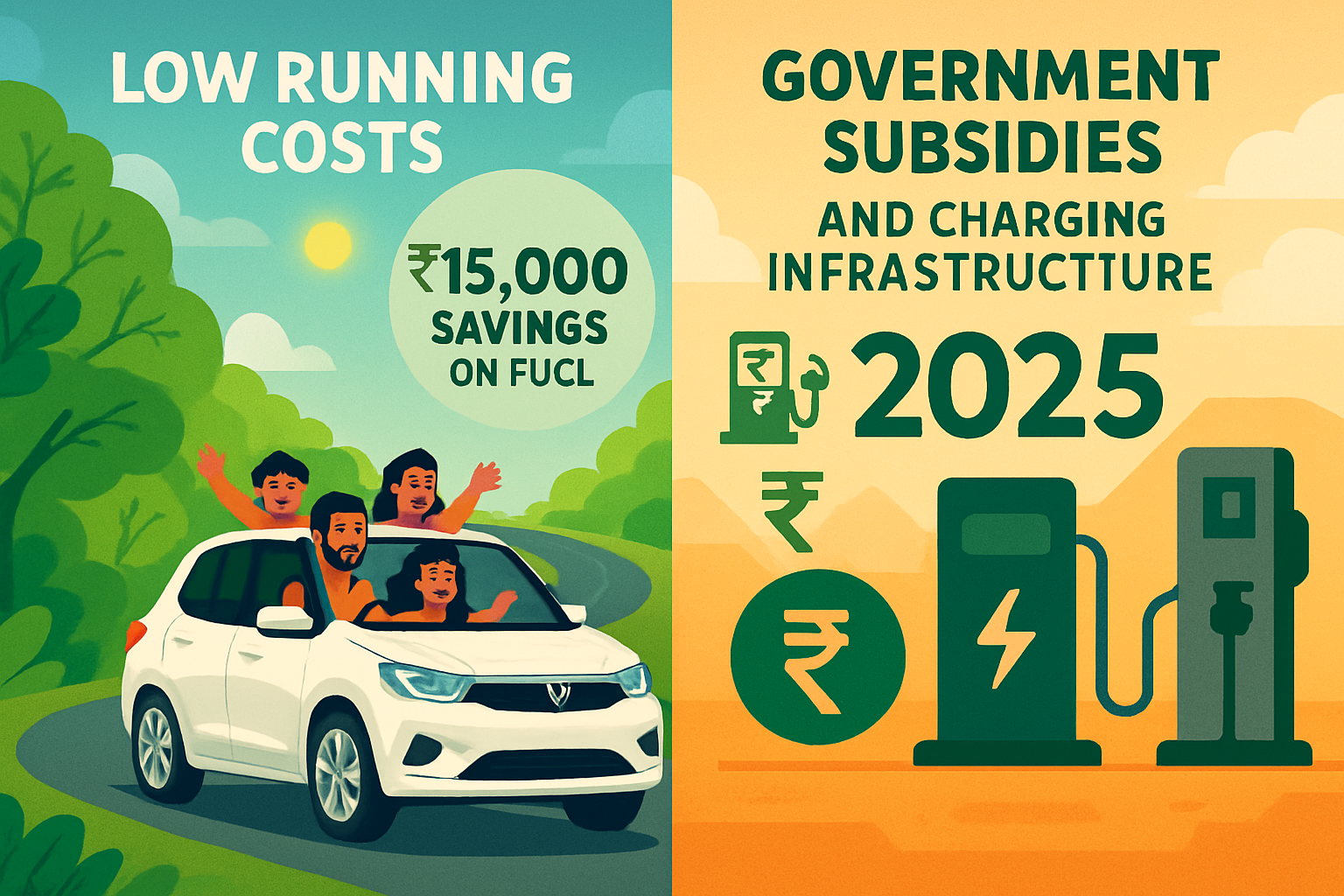
While finding EV cars in India under 10 lakhs is a fantastic achievement for budget-conscious buyers, the decision to go electric extends far beyond the initial purchase price. In 2025, the ecosystem supporting electric vehicles in India is more robust than ever, offering a multitude of benefits that make them an increasingly smart choice for a wide range of consumers. Let’s delve into why an EV might be your best automotive investment this year.

Significant Savings on Running Costs
One of the most compelling reasons to switch to an EV is the drastic reduction in running costs.
- Fuel Savings: Electricity is significantly cheaper per kilometer than petrol or diesel. Even with fluctuating electricity rates, charging an EV at home or public charging stations will almost always cost less than filling up a tank of fossil fuel. Imagine your daily commute costing a fraction of what it used to!
- Lower Maintenance: EVs have fewer moving parts than internal combustion engine (ICE) cars. There’s no engine oil to change, no spark plugs to replace, no clutch, and brake wear is often reduced due due to regenerative braking. This translates to fewer trips to the service center and lower maintenance bills over the vehicle’s lifespan.
“The long-term savings on fuel and maintenance make budget EVs an incredibly wise investment for Indian families.”
Environmental Benefits
Choosing an EV is a conscious step towards a greener future.
- Zero Tailpipe Emissions: EVs produce zero tailpipe emissions, meaning they don’t contribute to air pollution in urban areas. This directly benefits public health and improves air quality.
- Reduced Carbon Footprint: While electricity generation might still involve fossil fuels, the overall carbon footprint of an EV, especially when charged with renewable energy, is significantly lower than an ICE vehicle. As India moves towards more renewable energy sources, this benefit will only grow.
Government Incentives and Subsidies
The Indian government and various state governments are actively promoting EV adoption through a range of incentives. In 2025, these continue to make EV cars in India under 10 lakhs even more attractive.
- FAME-II Scheme: The Faster Adoption and Manufacturing of Electric Vehicles (FAME-II) scheme offers significant subsidies on the purchase of eligible EVs, directly reducing their ex-showroom price.
- State Subsidies: Many states offer additional incentives, including further purchase subsidies, road tax exemptions, and registration fee waivers. These can amount to substantial savings, making the effective cost of an EV much lower. Always check the specific incentives available in your state before making a purchase.
- Tax Benefits: Potential income tax benefits on EV loans (like Section 80EEB) further sweeten the deal.
These incentives are crucial in bringing down the upfront cost and bridging the gap between EVs and their ICE counterparts.
Enhanced Driving Experience
EVs offer a remarkably different and often superior driving experience.
- Instant Torque: Electric motors deliver instant torque, meaning immediate acceleration from a standstill. This makes EVs feel zippier and more responsive, especially in city traffic.
- Smooth and Silent Operation: The absence of an engine means EVs are incredibly quiet and smooth to drive. This reduces driver fatigue and makes for a more relaxing commute.
- No Gear Shifts: Most EVs are automatic, offering a seamless, clutch-free driving experience, which is particularly beneficial in stop-and-go traffic.
Growing Charging Infrastructure
One of the biggest concerns for potential EV buyers – range anxiety – is steadily diminishing thanks to India’s expanding charging infrastructure.
- Public Charging Stations: The number of public charging stations, including fast chargers, is growing rapidly across cities and along major highways. Companies like Tata Power, Magenta EV, and others are aggressively setting up networks.
- Home Charging: For most EV owners, home charging is the primary mode. Installing a dedicated charger at home (either a 3.3 kW or 7.2 kW AC charger) makes overnight charging convenient and hassle-free.
- Workplace Charging: Many progressive companies are installing charging points for their employees, further boosting convenience.
The development of the charging ecosystem is crucial for widespread EV adoption and makes driving EV cars in India under 10 lakhs a practical reality for everyday life. For those interested in upcoming automotive advancements, you might also be interested in articles like 11 upcoming SUVs India 2025-2028.

Advanced Technology and Connected Features
Even budget EVs come packed with modern technology. Many offer:
- Connected Car Tech: Features like remote vehicle monitoring, geofencing, charging status updates, and vehicle diagnostics accessible via a smartphone app.
- Digital Infotainment Systems: Touchscreen displays with smartphone integration (Apple CarPlay, Android Auto) are becoming standard.
- Safety Features: Modern safety features like ABS with EBD, multiple airbags, and rear parking sensors are common, ensuring a secure ride.
Choosing an EV in 2025 means embracing innovation, saving money in the long run, contributing to a cleaner environment, and enjoying a superior driving experience. The options for EV cars in India under 10 lakhs are not just affordable, but they are also smart, future-proof choices. If you’re comparing your options, remember to check out other guides on best cars in India to get a holistic view of the market.
Conclusion
The landscape of personal mobility in India is undergoing a profound transformation, with electric vehicles leading the charge. As we navigate through 2025, the idea of owning an EV is no longer a distant dream but an accessible reality, especially for those looking for EV cars in India under 10 lakhs. We’ve seen how models like the Tata Tiago EV, MG Comet EV, and Citroën eC3 are not just budget-friendly but also capable, feature-rich, and practical choices for the modern Indian consumer.
The journey to electric mobility is supported by a growing charging infrastructure, significant government incentives, and the undeniable benefits of reduced running costs and a cleaner environment. The initial higher purchase price, once a major deterrent, is now being effectively mitigated by subsidies and the long-term savings on fuel and maintenance. This makes the total cost of ownership for EVs increasingly attractive compared to their petrol or diesel counterparts.
As an expert SEO content strategist and senior editor, I firmly believe that this segment of affordable EVs is poised for explosive growth. Manufacturers are actively innovating, and new models or refreshed versions are continually entering the market, offering more choices, better range, and enhanced features. This dynamic environment ensures that competition will continue to drive prices down and innovation up, benefiting the consumer.
Actionable Next Steps:
- Research State Subsidies: Before making any purchase, thoroughly research the specific EV subsidies and incentives offered by your state government, as these can significantly impact the final on-road price of EV cars in India under 10 lakhs.
- Test Drive Multiple Models: Don’t rely solely on specifications. Test drive the Tata Tiago EV, MG Comet EV, and Citroën eC3 to experience their driving dynamics, comfort, and features firsthand. See which one best fits your personal driving style and needs.
- Assess Your Charging Needs: Consider your daily commute and access to charging facilities. While public infrastructure is growing, home charging will be your primary method. Ensure you have a feasible plan for installing a home charger.
- Calculate Total Cost of Ownership: Look beyond the ex-showroom price. Factor in fuel savings, lower maintenance costs, and potential tax benefits to get a realistic picture of the long-term financial advantages of owning an EV.
- Stay Updated: The EV market is evolving rapidly. Keep an eye on automotive news portals like CarFatafat.com for announcements on new launches, price revisions, and technological advancements that might affect your decision. For example, staying informed about 3 upcoming Tata subcompact SUVs could include future EV variants.
Embracing an electric vehicle in 2025 is not just a trend; it’s a smart, sustainable, and economically sound decision. The options for EV cars in India under 10 lakhs are compelling, offering a gateway to a greener, more efficient, and enjoyable driving experience.