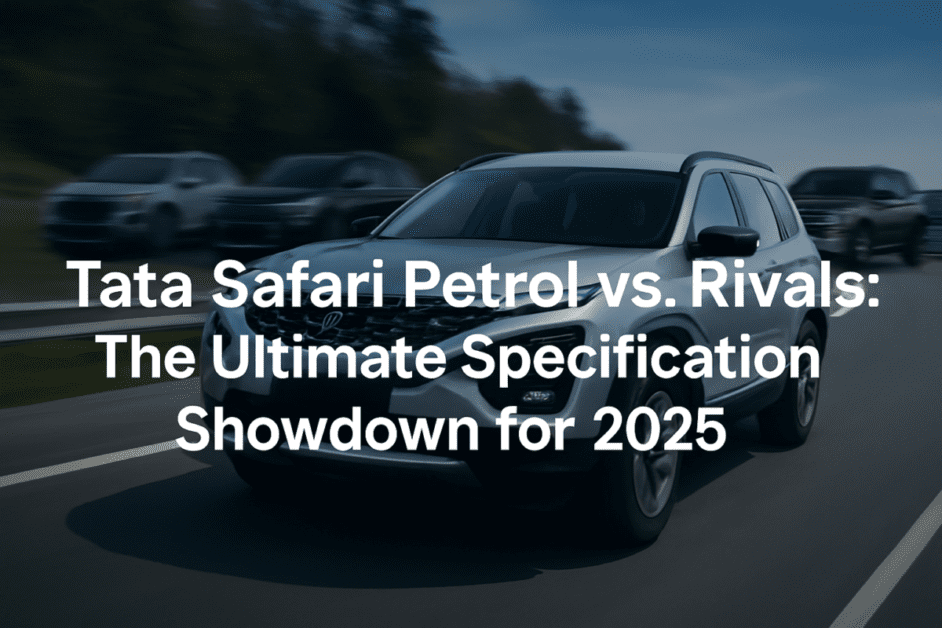
The automotive landscape in India is perpetually evolving, with manufacturers pushing boundaries to offer more compelling packages. In the fiercely competitive 7-seater SUV segment, the Tata Safari has long been a formidable player, known for its robust build, comfortable ride, and commanding road presence. However, with the much-anticipated introduction of its petrol variant in 2025, the game is set to change. Are you pondering whether the new petrol-powered Safari can hold its own against established rivals? This comprehensive article will delve deep into the “Tata Safari petrol vs rivals: Specifications compared,” offering a detailed analysis to help you make an informed decision.
Key Takeaways
- The 2025 Tata Safari petrol is expected to feature a powerful 1.5L or 2.0L turbocharged engine, aiming to match or surpass competitors in performance.
- Rivals like the Mahindra XUV700, Hyundai Alcazar, and MG Hector Plus already offer strong petrol powertrains, setting a high benchmark for the Safari.
- The comparison will focus on critical aspects such as engine performance, dimensions, safety, and key features to provide a holistic view.
- Tata’s reputation for build quality and safety, likely bolstered by advanced features, will be a significant differentiator in the “Tata Safari petrol vs rivals: Specifications compared.”
- Pricing strategy will be crucial for the Safari petrol to carve out its niche in this competitive segment.
Engine and Performance: Tata Safari Petrol vs Rivals: Specifications Compared
When we talk about SUVs, especially those designed for family adventures and highway cruising, the engine is often the heart of the debate. The arrival of the Tata Safari petrol in 2025 is highly anticipated, as it will open up a new demographic for this iconic SUV. Let’s pit its expected specifications against the petrol powertrains of its main adversaries.
The current Tata Safari is renowned for its 2.0-liter Kryotec diesel engine, a proven performer. For the petrol variant, Tata Motors is likely to introduce a new-generation turbocharged petrol engine. Industry speculation suggests a 1.5-liter direct-injection turbocharged petrol engine, or possibly a more powerful 2.0-liter turbo petrol unit, similar to the one seen in some international models. For the sake of this comparison, we will consider a strong, competitive petrol engine from Tata that aims to match its rivals.
Let’s look at the key petrol competitors in the 7-seater (or 6-seater equivalent) SUV space:
- Mahindra XUV700 (Petrol): A segment leader, the XUV700 offers a potent 2.0-liter mStallion TGDi turbo petrol engine.
- Hyundai Alcazar (Petrol): Based on the Creta, the Alcazar offers a refined 1.5-liter turbo GDi petrol engine.
- MG Hector Plus (Petrol): The Hector Plus comes with a 1.5-liter turbocharged petrol engine, often paired with mild-hybrid technology.
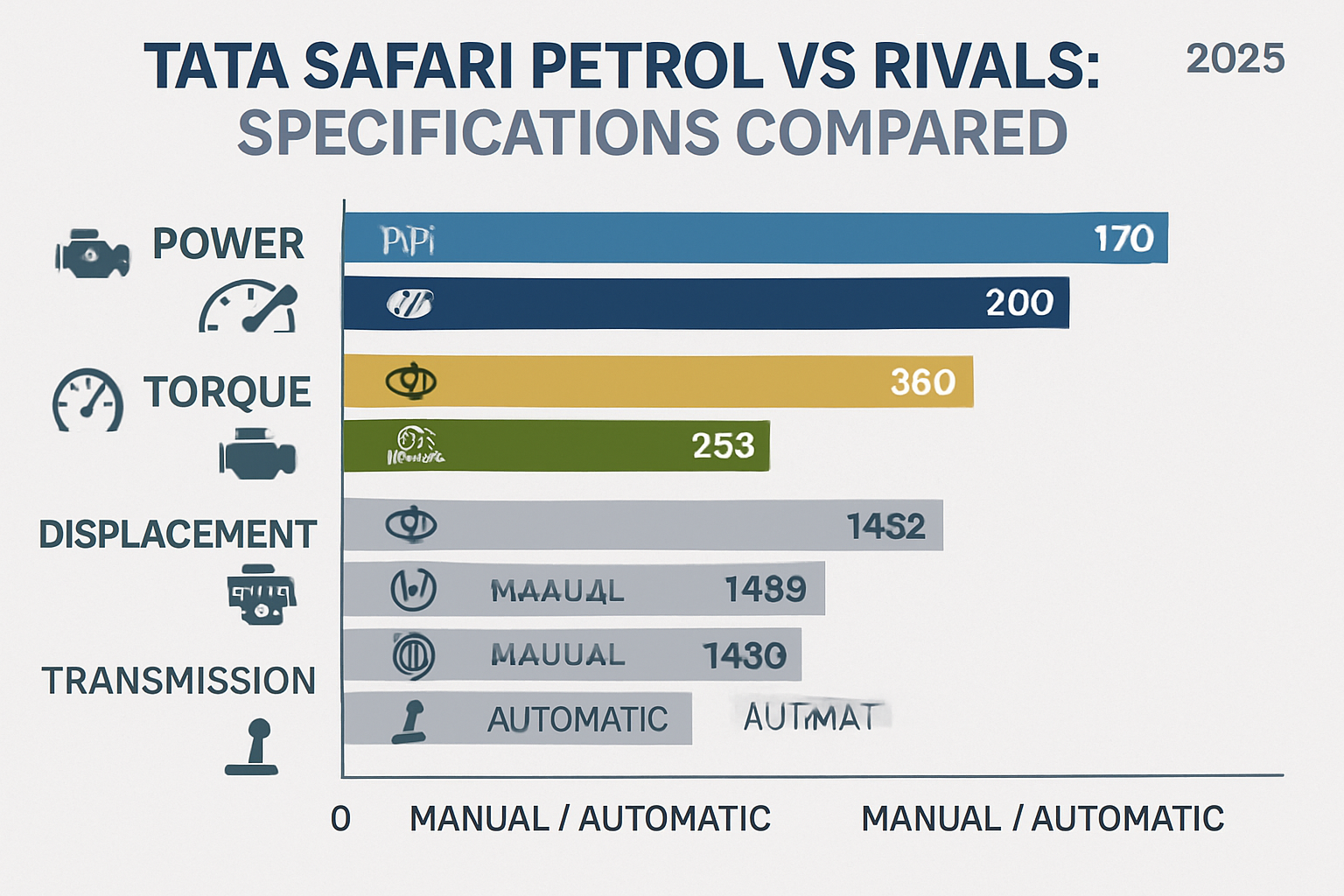
Here’s a detailed look at how their petrol engines stack up against the anticipated Tata Safari petrol specifications:
| Feature | Expected Tata Safari Petrol (2025) | Mahindra XUV700 (Petrol) | Hyundai Alcazar (Petrol) | MG Hector Plus (Petrol) |
|---|---|---|---|---|
| Engine Type | 1.5L/2.0L Turbo Petrol DI | 2.0L mStallion TGDi Turbo Petrol | 1.5L Turbo GDi Petrol | 1.5L Turbo Petrol (w/ optional Hybrid) |
| Displacement | 1500cc – 2000cc (est.) | 1999cc | 1482cc | 1451cc |
| Max Power | 160-190 PS (est.) | 200 PS @ 5000 rpm | 160 PS @ 5500 rpm | 143 PS @ 5000 rpm |
| Max Torque | 250-320 Nm (est.) | 380 Nm @ 1750-3000 rpm | 253 Nm @ 1500-3500 rpm | 250 Nm @ 1600-3600 rpm |
| Transmission | 6-speed MT / 6-speed AT (est.) | 6-speed MT / 6-speed AT | 6-speed MT / 7-speed DCT | 6-speed MT / CVT |
| Fuel Economy | TBD (expected competitive) | 13-15 kmpl (approx.) | 16-18 kmpl (approx.) | 12-14 kmpl (approx.) |
Note: The specifications for the Tata Safari petrol are estimates based on market trends and industry expert predictions for its 2025 launch.
The Mahindra XUV700 clearly holds the upper hand in raw power and torque, making it a performance leader in its petrol avatar. The Hyundai Alcazar, with its 1.5L Turbo GDi, strikes a great balance between performance and efficiency, a hallmark of Hyundai engines. The MG Hector Plus petrol offers decent power, with the optional mild-hybrid system providing a slight boost to fuel economy and low-end torque.

For the Tata Safari petrol, the challenge will be to not just match these figures but to offer a refined driving experience that complements its already established ride and handling characteristics. If Tata opts for a 2.0-liter turbo petrol, it could directly compete with the XUV700’s power figures, potentially making it a very strong contender in the “Tata Safari petrol vs rivals: Specifications compared” debate. A 1.5-liter unit would likely be tuned for a balance of power and efficiency, aiming to rival the Alcazar.
When considering a vehicle for long drives, engine performance and refinement are key. For those who frequently embark on journeys, understanding how these engines perform under different conditions is vital. You can explore more about SUVs ideal for long drives here.
“The introduction of a petrol engine is a strategic move for the Tata Safari, broadening its appeal and allowing it to compete directly in a segment increasingly favouring petrol powertrains due to fuel price volatility and emission norms.” — Carfatafat Analyst
Dimensions, Features, and Safety: Tata Safari Petrol vs Rivals: Specifications Compared
Beyond the engine, an SUV’s appeal lies significantly in its spaciousness, comfort features, and, crucially, its safety credentials. The Tata Safari has always been known for its imposing presence and comfortable cabin. Let’s see how the Tata Safari petrol, with its anticipated features, stands up in comparison to its rivals in these critical areas for 2025.
Dimensions
Dimensions play a vital role in determining road presence, interior space, and maneuverability. The Safari is already a large SUV, and its petrol variant will naturally retain these dimensions.
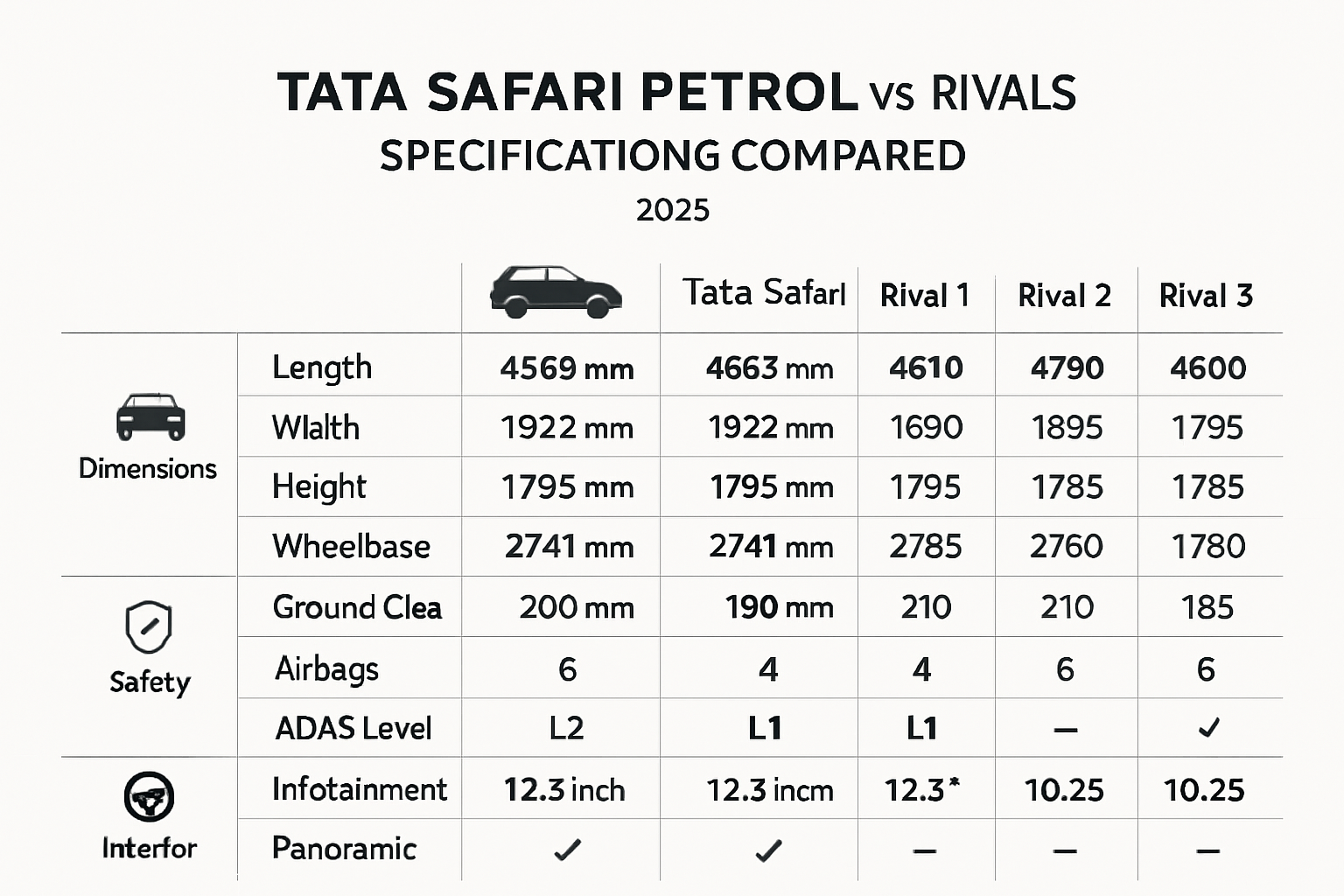
| Feature | Tata Safari (Petrol/Diesel) | Mahindra XUV700 | Hyundai Alcazar | MG Hector Plus |
|---|---|---|---|---|
| Length | 4668 mm | 4695 mm | 4500 mm | 4722 mm |
| Width | 1915 mm | 1890 mm | 1790 mm | 1835 mm |
| Height | 1786 mm | 1755 mm | 1675 mm | 1760 mm |
| Wheelbase | 2741 mm | 2750 mm | 2760 mm | 2750 mm |
| Ground Clearance | 205 mm | 200 mm | 200 mm | 192 mm |
| Seating Capacity | 6/7 Seater | 5/7 Seater | 6/7 Seater | 6/7 Seater |
The Tata Safari holds its own in terms of size, offering comparable length and a greater width than the XUV700, contributing to its strong road presence and potentially better shoulder room. The Alcazar is notably smaller, positioned more as a compact 7-seater. The MG Hector Plus is the longest, often equating to generous cabin space. These dimensions are key when considering the “Tata Safari petrol vs rivals: Specifications compared” for practical daily use and comfort.
Features & Comfort
Modern SUVs are loaded with technology and comfort features. Here’s a quick overview of what to expect and how the rivals compare:

- Infotainment: All contenders offer large touchscreen infotainment systems (10.25-inch to 12.3-inch) with Apple CarPlay and Android Auto. The Safari is expected to feature Tata’s latest iRA connected car tech, while XUV700 has AdrenoX, Alcazar has BlueLink, and Hector Plus has i-SMART.
- Sunroof: A panoramic sunroof is a popular feature. All four SUVs offer a panoramic sunroof in their higher variants, enhancing the cabin’s airy feel.
- Seating: All offer 6-seater (captain seats in the middle row) and 7-seater (bench seat) configurations. Ventilated seats for the front row are becoming common, with some offering it for the second row as well.
- Convenience: Expected features include automatic climate control, multi-zone AC, electric driver seat adjustment, wireless charging, and ambient lighting. The Safari’s petrol variant is sure to be competitive on this front.
For those looking for overall value, comparing features within a specific budget is essential. You might find our article on the best SUVs under 15 lakhs in India 2025 insightful, as it touches upon many feature-rich options.
Safety
Safety is paramount, and thankfully, Indian manufacturers are prioritizing it. The Tata Safari (diesel) already boasts a 5-star Global NCAP rating, and the petrol variant is expected to carry forward this strong safety ethos.
| Safety Feature | Tata Safari (Petrol/Diesel) | Mahindra XUV700 | Hyundai Alcazar | MG Hector Plus |
|---|---|---|---|---|
| Airbags | Up to 7 | Up to 7 | Up to 6 | Up to 6 |
| ABS with EBD | Standard | Standard | Standard | Standard |
| ESP | Standard | Standard | Standard | Standard |
| All-Wheel Disc Brakes | Yes | Yes | Yes | Yes |
| ADAS | Yes (Level 2 expected) | Yes (Level 2) | No (but strong passive safety) | Yes (Level 2) |
| NCAP Rating | 5-star (Global NCAP) [1] | 5-star (Global NCAP) [2] | 3-star (Global NCAP) [3] | Not Rated (but strong build) |
Both the Tata Safari and Mahindra XUV700 stand out with their 5-star Global NCAP safety ratings, offering tremendous peace of mind. They also lead the pack in offering Level 2 ADAS (Advanced Driver-Assistance Systems), which includes features like Adaptive Cruise Control, Lane Keep Assist, and Autonomous Emergency Braking. The MG Hector Plus also offers Level 2 ADAS, making it a strong contender. The Hyundai Alcazar offers a robust passive safety suite but currently lacks ADAS features.
The “Tata Safari petrol vs rivals: Specifications compared” truly highlights how competitive the Indian SUV market has become, with safety and advanced technology no longer luxuries but expected norms. For those considering other upcoming SUVs, it’s worth checking out 11 upcoming SUVs in India 2025-2028.
Price and Value Proposition
While exact pricing for the Tata Safari petrol in 2025 is not yet revealed, it’s expected to be competitively priced against its petrol rivals. Tata Motors usually positions its products aggressively to capture market share. The petrol variant will likely make the Safari more accessible to a wider audience, especially those deterred by diesel engine costs or preferences.
The value proposition will depend on a combination of factors:
- Performance: Will the petrol engine deliver the expected power and refinement?
- Features: Will it be loaded with the latest technology and comfort features to match or exceed rivals?
- Safety: Its proven 5-star safety rating will be a huge advantage.
- Brand Trust: Tata’s growing reputation for robust and safe vehicles is a significant draw.
For potential buyers, the comparison isn’t just about the initial purchase price but also about the total cost of ownership, including fuel efficiency, service costs, and resale value.

Conclusion
The forthcoming Tata Safari petrol variant in 2025 marks a significant chapter for Tata Motors. By expanding its powertrain options, Tata aims to solidify the Safari’s position as a dominant force in the fiercely competitive 7-seater SUV segment. Our deep dive into “Tata Safari petrol vs rivals: Specifications compared” reveals that the playing field is incredibly competitive, with each contender bringing unique strengths to the table.
The Mahindra XUV700 petrol sets a high bar with its powerful engine and advanced features. The Hyundai Alcazar petrol offers a refined, efficient, and well-equipped package, while the MG Hector Plus petrol combines space with a host of connected technologies and ADAS.
The Tata Safari petrol’s success will hinge on several key factors:
- Engine Performance and Refinement: It needs a petrol engine that is not only powerful enough to move its substantial frame but also refined and fuel-efficient to appeal to modern buyers.
- Feature Set: Matching or exceeding the extensive feature lists of its rivals, especially in terms of infotainment, connectivity, and creature comforts, will be crucial.
- Pricing Strategy: Aggressive pricing, particularly in the mid-to-high variants, will be essential to attract buyers who might otherwise gravitate towards established petrol models.
- Maintaining Safety Standards: Carrying forward its 5-star safety legacy and offering advanced ADAS features will remain a massive differentiator.
For prospective buyers in 2025, the decision will boil down to individual priorities. If sheer power and advanced driving dynamics are paramount, the XUV700 might still edge out. If refined efficiency and modern cabin tech are a priority, the Alcazar makes a strong case. For those valuing extensive features and space, the Hector Plus offers a compelling package. However, if Tata delivers a petrol Safari that combines its legendary build quality, commanding presence, 5-star safety, and a potent, refined petrol engine with competitive pricing, it could very well emerge as the segment’s new frontrunner.
Before making your final choice, always test drive your preferred vehicles and consider your specific needs and driving habits. Keep an eye on Carfatafat.com for the latest updates and detailed reviews on the Tata Safari petrol launch in 2025!
References
[1] Global NCAP. “Tata Safari/Harrier achieves five stars for adult and child occupant protection.” Global NCAP, 2023. Accessed at https://www.globalncap.org/news/tata-safari-harrier-achieves-five-stars-for-adult-and-child-occupant-protection
[2] Global NCAP. “Mahindra XUV700 is the first car to achieve five stars for adult protection and four stars for child protection in latest GNCAP tests.” Global NCAP, 2021. Accessed at https://www.globalncap.org/news/mahindra-xuv700-is-the-first-car-to-achieve-five-stars-for-adult-protection-and-four-stars-for-child-protection-in-latest-gncap-tests
[3] Global NCAP. “Hyundai Alcazar records three stars for adult and child occupant protection.” Global NCAP, 2023. Accessed at https://www.globalncap.org/news/hyundai-alcazar-records-three-stars-for-adult-and-child-occupant-protection