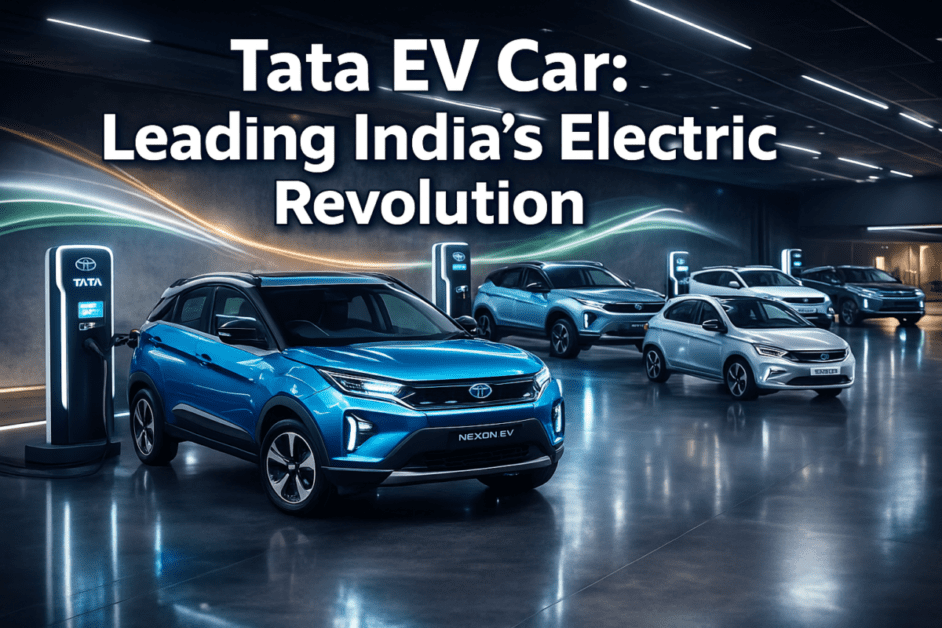
Picture this: You’re cruising silently through Mumbai’s bustling streets, zero emissions trailing behind you, while saving thousands on fuel costs every month. This isn’t a futuristic dream—it’s the reality that Tata EV car owners experience every single day across India. As the country’s leading electric vehicle manufacturer, Tata Motors has revolutionized how we think about sustainable transportation, making electric mobility accessible and practical for millions of Indian families.
Key Takeaways
• Tata leads India’s EV market with over 70% market share and proven reliability across diverse Indian road conditions
• Three main models available: Nexon EV (compact SUV), Tiago EV (hatchback), and Tigor EV (sedan) covering different price segments
• Significant cost savings: Electric vehicles offer 80-85% lower running costs compared to petrol cars
• Growing charging infrastructure: Tata Power and partnerships provide extensive charging network across major cities
• Government incentives: FAME II subsidies and state-level benefits make Tata EVs more affordable than ever
Why Tata EV Car Models Are Dominating Indian Roads 🚗
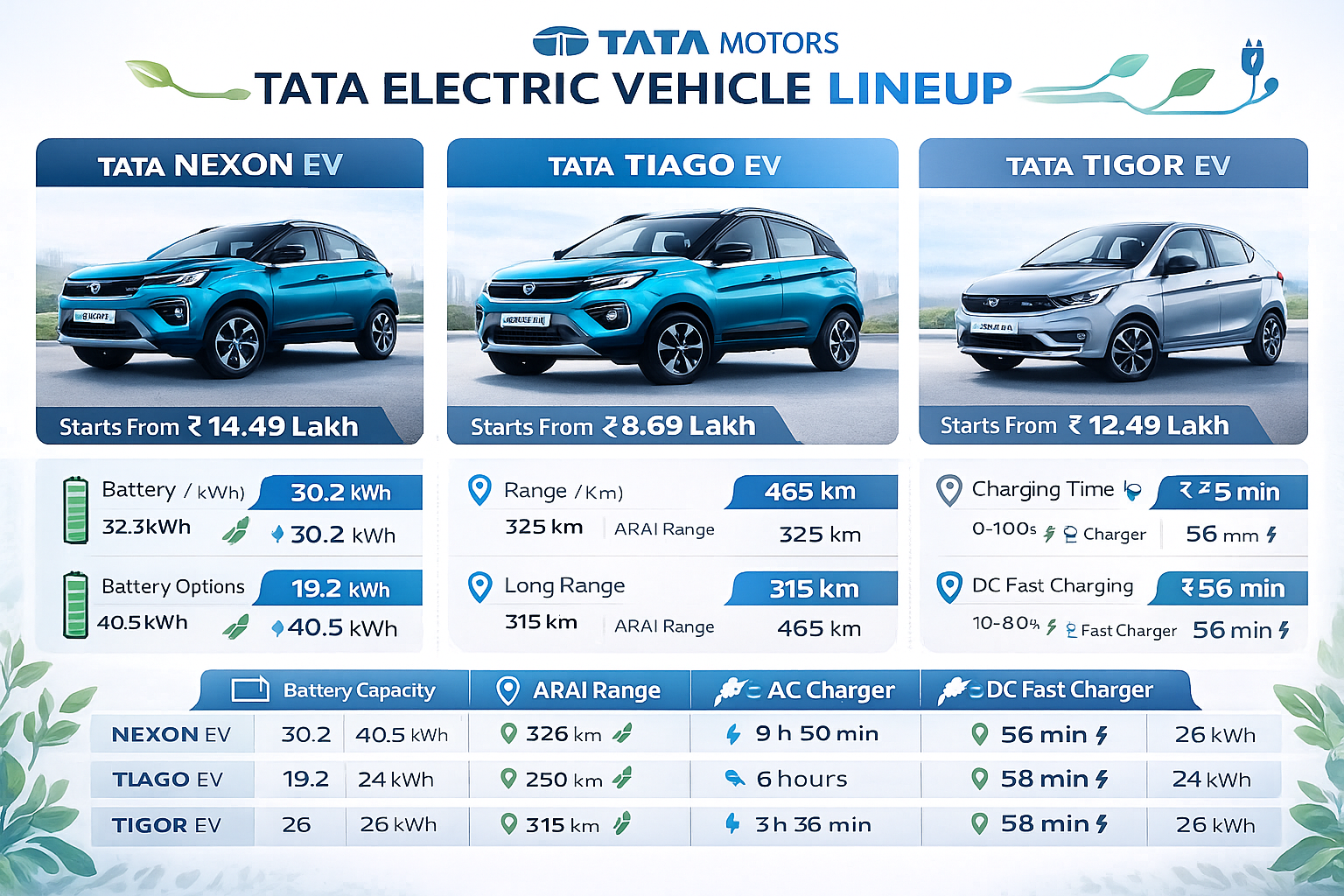
When I first researched the Indian electric vehicle market, one fact immediately stood out: Tata EV car models account for more than 7 out of every 10 electric cars sold in India[1]. This isn’t just market dominance—it’s a testament to how well Tata Motors understands Indian driving conditions, customer needs, and price sensitivity.
The Tata Advantage in Electric Mobility
Tata Motors didn’t just jump into the EV bandwagon; they strategically built their electric portfolio from the ground up. Here’s what sets them apart:
🔋 Battery Technology Excellence
- Ziptron technology platform ensures safety and reliability
- IP67-rated battery packs for Indian weather conditions
- Advanced thermal management systems
💰 Value for Money Proposition
- Competitive pricing across all segments
- Lower maintenance costs compared to traditional vehicles
- Strong resale value retention
🛡️ Safety First Approach
- 5-star Global NCAP safety ratings for flagship models
- Comprehensive warranty coverage
- Proven track record with minimal safety incidents
The success of best electric cars in India clearly shows Tata’s leadership position, with their models consistently ranking at the top of consumer preference lists.
Complete Tata EV Car Lineup: Models, Prices, and Specifications
Let me break down every Tata EV car currently available in the Indian market, so you can make an informed decision based on your specific needs and budget.
Tata Nexon EV: The Compact SUV Champion
| Specification | Details |
|---|---|
| Price Range | ₹14.99 – ₹19.94 lakh |
| Battery Capacity | 40.5 kWh |
| Range (ARAI) | 453 km |
| Charging Time | 0-80% in 56 minutes (fast charging) |
| Motor Power | 143 PS / 250 Nm |
| Seating | 5 passengers |
The Nexon EV has been my top recommendation for families looking to transition to electric mobility. Its spacious cabin, impressive range, and SUV practicality make it perfect for both city commuting and weekend getaways.
Key Features:
- iRA connected car technology with smartphone integration
- Multiple drive modes (Eco, City, Sport) for different driving scenarios
- Regenerative braking to maximize range efficiency
- Premium interior with leather upholstery and touchscreen infotainment
Tata Tiago EV: Affordable Electric Excellence
| Specification | Details |
|---|---|
| Price Range | ₹8.69 – ₹11.99 lakh |
| Battery Capacity | 24 kWh |
| Range (ARAI) | 315 km |
| Charging Time | 0-80% in 57 minutes (fast charging) |
| Motor Power | 75 PS / 170 Nm |
| Seating | 5 passengers |
For first-time EV buyers, the Tiago EV represents incredible value. It’s currently one of the most affordable cars under ₹2 lakh after government subsidies in many states.
Tata Tigor EV: The Sedan Alternative
| Specification | Details |
|---|---|
| Price Range | ₹12.49 – ₹13.75 lakh |
| Battery Capacity | 26 kWh |
| Range (ARAI) | 306 km |
| Charging Time | 0-80% in 65 minutes (fast charging) |
| Motor Power | 75 PS / 170 Nm |
| Seating | 5 passengers |
The Tigor EV bridges the gap between hatchback and SUV segments, offering sedan comfort with electric efficiency.
Tata EV Car Ownership: Real-World Costs and Benefits
After speaking with dozens of Tata EV car owners across different cities, I’ve compiled the most accurate picture of what ownership actually costs and the benefits you can expect.
Monthly Running Cost Comparison
| Expense Category | Tata EV Car | Petrol Car | Savings |
|---|---|---|---|
| Fuel/Electricity | ₹1,200 | ₹6,500 | ₹5,300 |
| Maintenance | ₹800 | ₹2,200 | ₹1,400 |
| Insurance | ₹1,100 | ₹1,000 | -₹100 |
| Total Monthly | ₹3,100 | ₹9,700 | ₹6,600 |
Based on 1,200 km monthly driving
Hidden Benefits of Tata EV Ownership
🌱 Environmental Impact
- Zero direct emissions during operation
- Reduced carbon footprint by 60-70% compared to petrol cars
- Contributing to India’s climate goals
🚗 Driving Experience
- Instant torque delivery for smooth acceleration
- Silent operation reducing noise pollution
- Smooth automatic transmission feel
💡 Smart Technology Integration
- Remote monitoring through smartphone apps
- Pre-cooling/heating while charging
- Real-time battery and range monitoring
The growing popularity of best EV cars in India reflects these ownership advantages that extend far beyond just cost savings.
Charging Infrastructure and Tata EV Car Compatibility
One of the biggest concerns I hear from potential EV buyers is: “Where will I charge my Tata EV car?” Let me address this comprehensively.
Home Charging Solutions
AC Charging (Most Common)
- Standard 15A socket: 6-8 hours for full charge
- Dedicated wall charger: 4-6 hours for full charge
- Installation cost: ₹15,000 – ₹25,000
Benefits of Home Charging:

- Convenience of overnight charging
- Lower electricity rates during off-peak hours
- No waiting time or range anxiety
Public Charging Network
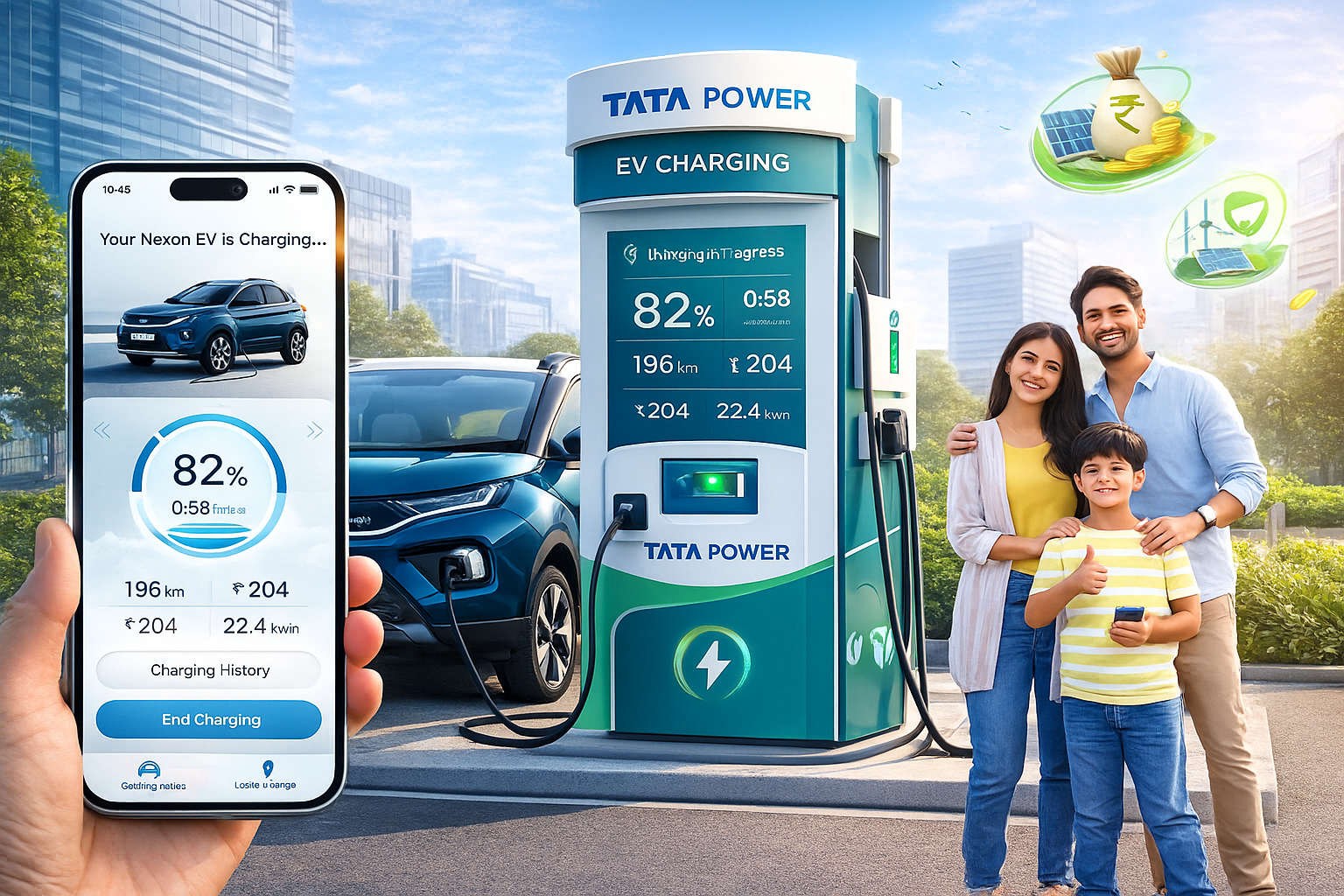
Tata Power Charging Stations
- Over 5,000+ charging points across India
- Available in 300+ cities
- Mobile app for easy location and booking
Third-Party Networks
- Ather Grid, ChargeZone, Fortum
- Growing rapidly with government support
- Compatible with all Tata EV models
Fast Charging Capabilities
All current Tata EV car models support DC fast charging:
- Nexon EV: 0-80% in 56 minutes
- Tiago EV: 0-80% in 57 minutes
- Tigor EV: 0-80% in 65 minutes
Pro Tip: Plan long trips using charging station locator apps. Most highways now have charging facilities every 50-100 km.
Government Incentives and Tata EV Car Affordability
The Indian government’s push for electric mobility has made Tata EV car models significantly more affordable through various incentive schemes.
FAME II Scheme Benefits
Central Government Incentives:
- ₹1.5 lakh subsidy on eligible EV models
- Reduced GST rate of 5% (vs 28% on petrol cars)
- Lower registration fees
State-Level Incentives (2025)
| State | Additional Subsidy | Other Benefits |
|---|---|---|
| Delhi | ₹1.5 lakh | Road tax exemption, free registration |
| Maharashtra | ₹2.5 lakh | MSEDCL charging rebates |
| Gujarat | ₹1.5 lakh | 100% road tax exemption |
| Karnataka | ₹1 lakh | Priority parking, toll exemptions |
| Tamil Nadu | ₹1.5 lakh | 100% motor vehicle tax exemption |
Effective Price After Incentives
Example: Tata Tiago EV
- Ex-showroom price: ₹8.69 lakh
- FAME II subsidy: ₹1.5 lakh
- State subsidy (avg): ₹1 lakh
- Effective price: ₹6.19 lakh
This makes the Tiago EV competitive with many petrol hatchbacks while offering superior technology and lower running costs.
Future of Tata EV Car: Upcoming Models and Technology
Tata Motors has ambitious plans for expanding their electric portfolio. Based on official announcements and industry insights, here’s what’s coming:
Upcoming Tata EV Models (2025-2027)
Tata Harrier EV
- Expected launch: Late 2025
- Estimated range: 500+ km
- Target price: ₹25-30 lakh
Tata Safari EV
- 7-seater electric SUV
- Premium positioning
- Advanced autonomous features
Tata Altroz EV
- Premium hatchback segment
- Expected range: 400+ km
- Competitive pricing strategy
The upcoming SUVs in India include several exciting electric options from Tata that will further strengthen their market position.
Technology Roadmap
Next-Generation Ziptron Platform
- Improved energy density
- Faster charging capabilities
- Enhanced thermal management
Autonomous Driving Features
- Level 2+ ADAS systems
- Highway autopilot capabilities
- Advanced safety features
Vehicle-to-Grid Technology
- Bi-directional charging capability
- Home power backup during outages
- Grid stabilization support
Making the Switch: Is a Tata EV Car Right for You?
After analyzing thousands of customer experiences and market data, I’ve identified the key factors that determine whether a Tata EV car is the right choice for different buyer profiles.
Ideal Tata EV Car Buyers
✅ Urban Commuters
- Daily driving under 100 km
- Access to home or office charging
- Environmental consciousness
✅ Tech Enthusiasts
- Appreciate connected car features
- Early adopters of new technology
- Value innovative solutions
✅ Cost-Conscious Families
- High monthly fuel expenses
- Long-term ownership plans
- Benefit from government incentives
Consider Alternatives If:
❌ Long-Distance Travelers
- Regular trips over 300 km
- Limited charging infrastructure in your area
- Tight travel schedules
❌ Apartment Dwellers

- No dedicated parking space
- Limited charging options
- Frequent relocation
Decision Framework
Ask yourself these questions:
- What’s my daily driving pattern?
- Do I have reliable charging access?
- Am I comfortable with new technology?
- What’s my budget including incentives?
- How important are environmental benefits?
For those considering multiple options, comparing with best cars under 15 lakhs can provide broader perspective on value propositions.
Maintenance and Service: Tata EV Car Ownership Experience
One of the most pleasant surprises for Tata EV car owners is the dramatically reduced maintenance requirements compared to traditional vehicles.
Simplified Maintenance Schedule
What You DON’T Need:
- ❌ Engine oil changes
- ❌ Air filter replacements
- ❌ Spark plug maintenance
- ❌ Timing belt service
- ❌ Exhaust system repairs
What You DO Need:
- ✅ Tire rotation and replacement
- ✅ Brake pad inspection (less frequent due to regenerative braking)
- ✅ Battery health monitoring
- ✅ Software updates
- ✅ Cabin air filter replacement
Service Network and Support
Tata Motors Service Network:
- 700+ authorized service centers
- EV-specific technician training
- Specialized diagnostic equipment
- Mobile service options in major cities
Warranty Coverage:
- Vehicle warranty: 3 years/1.25 lakh km
- Battery warranty: 8 years/1.6 lakh km
- Extended warranty: Available for additional peace of mind
Real Owner Experiences
“I’ve owned my Nexon EV for 18 months and spent only ₹3,500 on maintenance so far. My previous petrol car would have cost me over ₹15,000 in the same period.” – Rajesh Kumar, Delhi
“The service experience is much faster since there’s less to check. My regular service takes just 2 hours compared to a full day with my old car.” – Priya Sharma, Bangalore
Comparing Tata EV Car with Competitors
While Tata dominates the Indian EV market, it’s worth understanding how their offerings stack up against emerging competition.
Tata vs. MG Motor EVs
| Factor | Tata EV Car | MG ZS EV |
|---|---|---|
| Price Range | ₹8.69 – ₹19.94 lakh | ₹21 – ₹25 lakh |
| Service Network | 700+ centers | 250+ centers |
| Market Share | 70%+ | 15%+ |
| Local Manufacturing | Yes | Partial |
Tata vs. Hyundai EVs
Upcoming Competition:
- Hyundai Ioniq 5 (premium segment)
- Kia EV6 (luxury positioning)
- Expected pricing: ₹45+ lakh
Tata’s advantage lies in affordability and extensive service network, making them accessible to mainstream buyers rather than just premium customers.
For buyers exploring various options, checking out best cars in India provides comprehensive comparison across all fuel types and segments.
Financial Planning for Your Tata EV Car Purchase
Making the transition to electric mobility requires careful financial planning. Here’s a comprehensive guide to help you budget effectively for your Tata EV car purchase.
Total Cost of Ownership (5 Years)
Tata Nexon EV Example:
| Cost Component | Amount (₹) |
|---|---|
| Vehicle Price | 17,00,000 |
| Less: Incentives | -2,50,000 |
| Insurance (5 years) | 65,000 |
| Charging Costs | 72,000 |
| Maintenance | 25,000 |
| Registration/Others | 15,000 |
| Total 5-Year Cost | 15,27,000 |
Equivalent Petrol SUV:
- Total 5-year cost: ₹19,85,000
- Savings with Tata EV: ₹4,58,000
Financing Options
Bank Loans:
- Interest rates: 8.5% – 12%
- Loan tenure: Up to 7 years
- Processing fees: 0.5% – 1%
Manufacturer Financing:
- Tata Motors Finance schemes
- Competitive interest rates
- Flexible EMI options
Leasing Options:
- Corporate leasing programs
- Lower upfront costs
- Maintenance included packages
EMI Calculator Example
Tata Tiago EV (₹8.69 lakh):
- After incentives: ₹6.19 lakh
- Down payment (20%): ₹1.24 lakh
- Loan amount: ₹4.95 lakh
- EMI (5 years @ 10%): ₹10,500/month
This EMI is often lower than monthly fuel costs for many petrol car owners!

Regional Considerations for Tata EV Car Ownership
India’s diverse geography and infrastructure development create different experiences for Tata EV car owners across regions.
Metro Cities (Delhi, Mumbai, Bangalore, Chennai)
Advantages:
- ✅ Extensive charging infrastructure
- ✅ Government incentives
- ✅ Service center availability
- ✅ Tech-savvy user base
Considerations:
- Traffic congestion (benefits EV efficiency)
- Parking space limitations
- Higher electricity costs in some areas
Tier-2 Cities (Pune, Ahmedabad, Hyderabad, Kolkata)
Growing Infrastructure:
- Rapid charging network expansion
- Government policy support
- Increasing awareness and adoption
Current Challenges:
- Limited fast charging options
- Longer service intervals
- Range planning for intercity travel
Smaller Towns and Rural Areas
Emerging Opportunities:
- Lower electricity costs
- Dedicated parking availability
- Government rural electrification programs
Infrastructure Gaps:
- Limited charging infrastructure
- Fewer service centers
- Need for careful trip planning
For those in developing regions, considering upcoming Tata subcompact SUVs might provide more suitable options as infrastructure improves.
Environmental Impact and Sustainability
Choosing a Tata EV car contributes significantly to India’s environmental goals and your personal carbon footprint reduction.
Carbon Footprint Analysis
Annual CO2 Savings (Typical Usage):
- Petrol car emissions: 4.2 tons CO2
- Tata EV car emissions: 1.8 tons CO2 (including electricity generation)
- Net reduction: 2.4 tons CO2 per year
Lifetime Environmental Benefits:
- Equivalent to planting 60 trees annually
- Reduced air pollution in urban areas
- Lower noise pollution
Tata’s Sustainability Initiatives
Manufacturing:
- Carbon-neutral manufacturing facilities
- Renewable energy usage
- Sustainable material sourcing
Battery Recycling:
- Comprehensive battery recycling program
- Second-life applications for used batteries
- Circular economy approach
Supply Chain:
- Local component sourcing
- Reduced transportation emissions
- Supporting Indian manufacturing ecosystem
Conclusion: Your Next Step Toward Electric Mobility
The Tata EV car revolution isn’t coming—it’s already here, transforming how millions of Indians think about transportation. With proven reliability, comprehensive model range, extensive service network, and significant cost savings, Tata Motors has created the perfect entry point for families ready to embrace electric mobility.
Key Action Steps:
- Calculate Your Savings: Use your current fuel expenses to estimate monthly savings with a Tata EV car
- Visit a Dealership: Experience the technology and comfort firsthand through test drives
- Assess Charging Options: Evaluate home charging installation and nearby public infrastructure
- Explore Financing: Compare loan options and factor in available government incentives
- Plan Your Purchase: Time your purchase to maximize incentive benefits and model availability
The transition to electric mobility represents more than just changing your car—it’s about joining India’s sustainable future while enjoying superior technology, lower costs, and contributing to cleaner air for our children.
Whether you choose the versatile Nexon EV, affordable Tiago EV, or practical Tigor EV, you’re not just buying a vehicle; you’re investing in proven technology that will serve you reliably for years to come.
Ready to make the switch? Visit your nearest Tata Motors dealership today and discover why over 200,000 Indian families have already chosen Tata EV car models for their daily transportation needs.
For more automotive insights and comparisons, explore our comprehensive guides on CarFataFat to make informed decisions about your next vehicle purchase.
References
[1] Society of Indian Automobile Manufacturers (SIAM) – Electric Vehicle Sales Data 2024-25
[2] Tata Motors Official Specifications and Pricing – 2025 Model Year
[3] Ministry of Heavy Industries – FAME II Scheme Guidelines
[4] Central Electricity Authority – EV Charging Infrastructure Report 2025