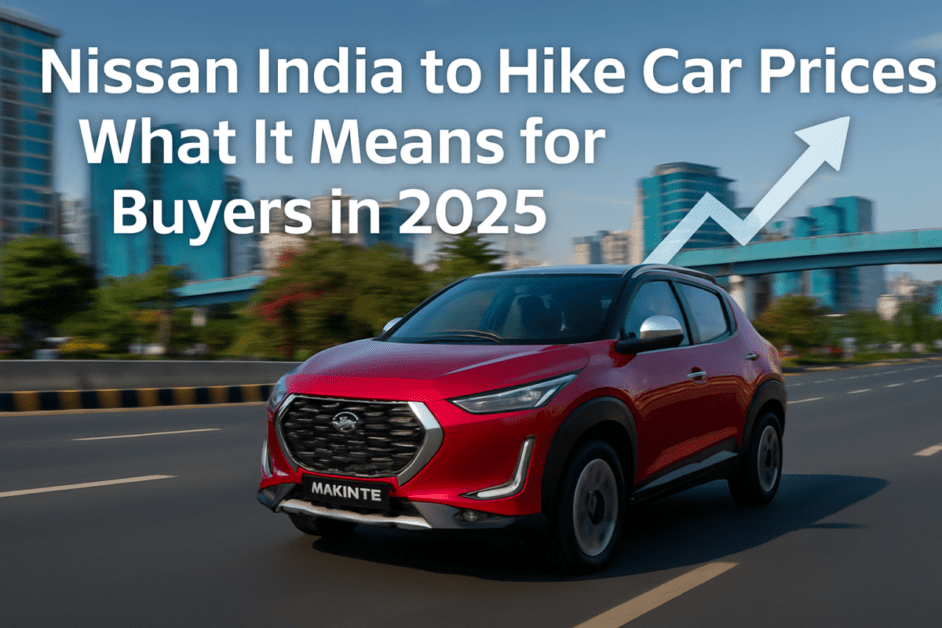
The Indian automotive market is constantly evolving, and for potential car buyers, staying informed about price changes is crucial. In a significant development for the new year, Nissan India has announced its decision to implement a price hike across its model range starting early 2025 [1]. This news, detailing that Nissan India to hike car prices, comes amidst a broader trend of increasing input costs and operational expenses challenging automotive manufacturers nationwide. As an expert SEO content strategist and senior editor, I understand that this information is vital for consumers considering a Nissan vehicle, particularly the popular Magnite SUV, and for stakeholders tracking market trends.
This article will delve deep into the reasons behind Nissan India’s decision, analyze the potential impact on consumers and the market, and provide valuable advice for those planning to purchase a Nissan car in 2025. We’ll explore how this move aligns with the larger economic landscape and what it means for the competitive compact SUV segment in India.
Key Takeaways
- Nissan India to hike car prices across its model lineup starting early 2025, following a trend seen with other manufacturers.
- The primary reasons cited for the increase include rising input costs, higher logistical expenses, and fluctuating exchange rates.
- The popular Nissan Magnite, a key player in the compact SUV segment, will also see its prices go up.
- Potential buyers are advised to consider purchasing their desired Nissan vehicle before the price revision takes effect to save money.
- This hike reflects broader economic pressures impacting the entire automotive industry in India in 2025.
Why Nissan India Decided to Hike Car Prices in 2025
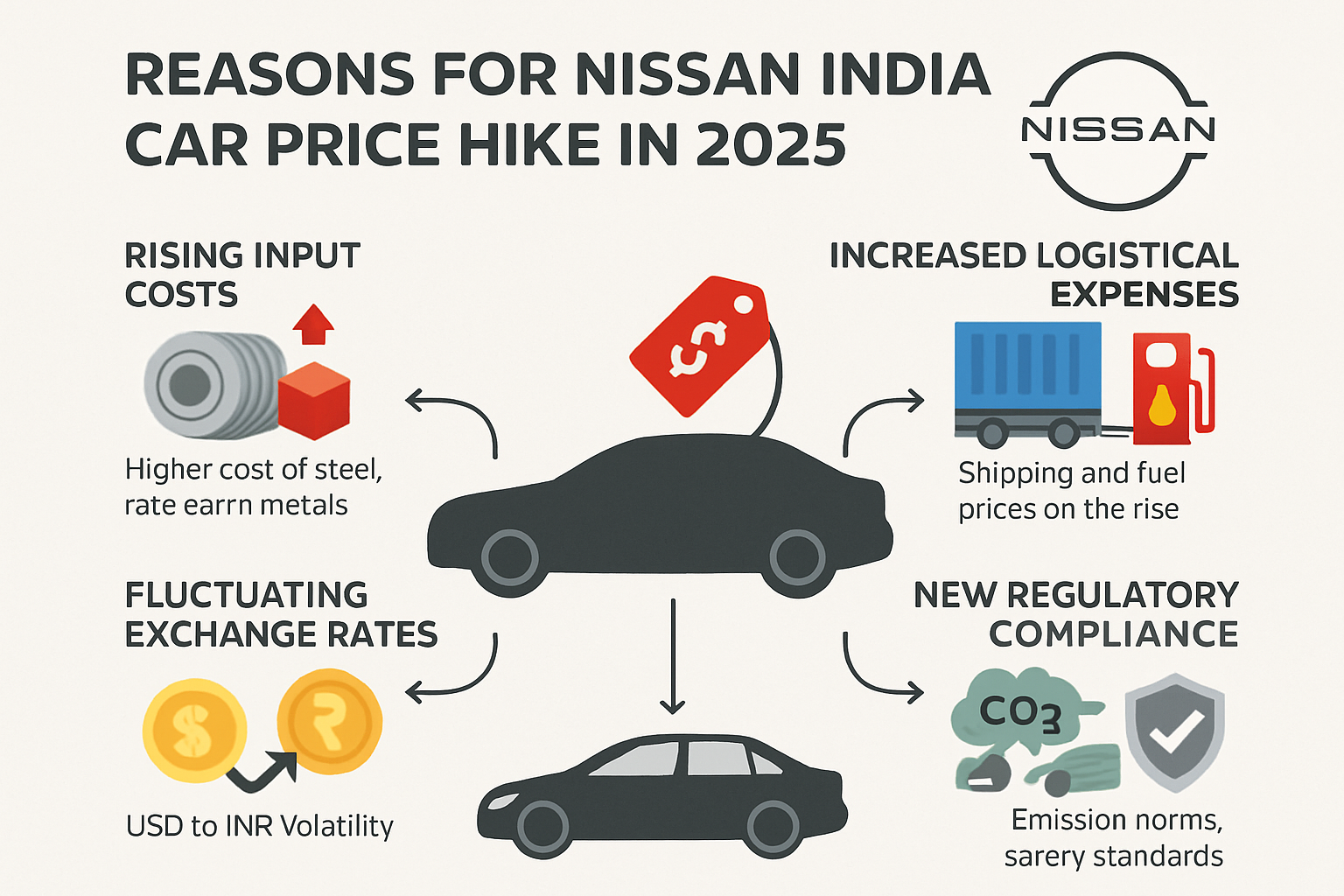
The decision by Nissan India to hike car prices is not an isolated event but rather a response to a confluence of economic factors impacting the global and domestic automotive industry. As a major player, Nissan, like its competitors, faces increasing pressures that necessitate a revision in pricing strategies to maintain profitability and sustainability. Let’s break down the key drivers behind this impending price adjustment.
[[IMAGE_START]]
[[IMAGE_END]]
Rising Input Costs and Raw Material Prices
One of the most significant factors pushing manufacturers like Nissan to increase prices is the relentless rise in input costs. The automotive industry heavily relies on a variety of raw materials, many of which have seen substantial price increases over the past year.
- Steel and Aluminum: These form the backbone of a car’s structure, and their global prices have been volatile.
- Precious Metals: Components like catalytic converters use precious metals such as rhodium, palladium, and platinum, whose market prices have soared [2].
- Plastics and Polymers: Derived from crude oil, the cost of plastics and various polymers used in interiors, bumpers, and other components also contributes to the overall manufacturing expense.
- Semiconductors: While the worst of the chip shortage may be behind us, the cost of semiconductors, crucial for modern car electronics, remains elevated.
“The cumulative effect of increased raw material costs cannot be absorbed indefinitely. Manufacturers must pass on a portion of these hikes to maintain a healthy business model.”
Increased Logistics and Operational Expenses
Beyond the cost of materials, the logistics of bringing a car from the factory floor to the dealership have also become more expensive.

- Freight Charges: Global shipping container costs, while having stabilized somewhat, are still higher than pre-pandemic levels.
- Fuel Prices: The fluctuating and often rising cost of fuel directly impacts transportation costs for components and finished vehicles.
- Labor Costs: Wages for skilled labor in manufacturing and supply chain management have also seen an upward revision.
- Energy Costs: Manufacturing plants require significant energy, and rising electricity tariffs contribute to overheads.
Fluctuating Exchange Rates
For international brands like Nissan, which often import certain components or even entire models (though primarily manufacturing in India for the Indian market), exchange rate volatility plays a crucial role. A weakening Indian Rupee against the US Dollar or Japanese Yen makes imported parts more expensive, directly impacting the final cost of production [3]. This pressure often forces companies to adjust their pricing.
Regulatory Compliance and Technology Upgrades
The Indian automotive landscape is continuously evolving with new regulations aimed at enhancing safety and reducing emissions.
- Emission Norms: Upcoming emission standards often require manufacturers to invest in new engine technologies or advanced exhaust treatment systems, which adds to development and production costs.
- Safety Features: Mandates for standard safety features (like additional airbags, ABS, EBD, etc.) also contribute to the overall bill of materials for each vehicle.
- Technology Integration: The push for more connected car features, advanced infotainment systems, and driver-assistance technologies requires significant investment in R&D and implementation.
All these factors cumulatively make it challenging for automakers to maintain existing price points, compelling them to hike prices. This phenomenon isn’t exclusive to Nissan; many other manufacturers have either already announced or are expected to announce similar price revisions in 2025. You can read about broader market trends and potential cost changes in the industry, including some cars that might be getting cheaper, on our dedicated news section at CarFatafat.
Impact on Consumers and the Market: What the Nissan India Car Price Hike Means for You
The announcement that Nissan India to hike car prices has immediate implications for potential buyers and ripple effects across the Indian automotive market. Understanding these impacts can help consumers make informed decisions and prepare for the changes.
[[IMAGE_START]]
[[IMAGE_END]]
Higher Purchase Cost for New Vehicles
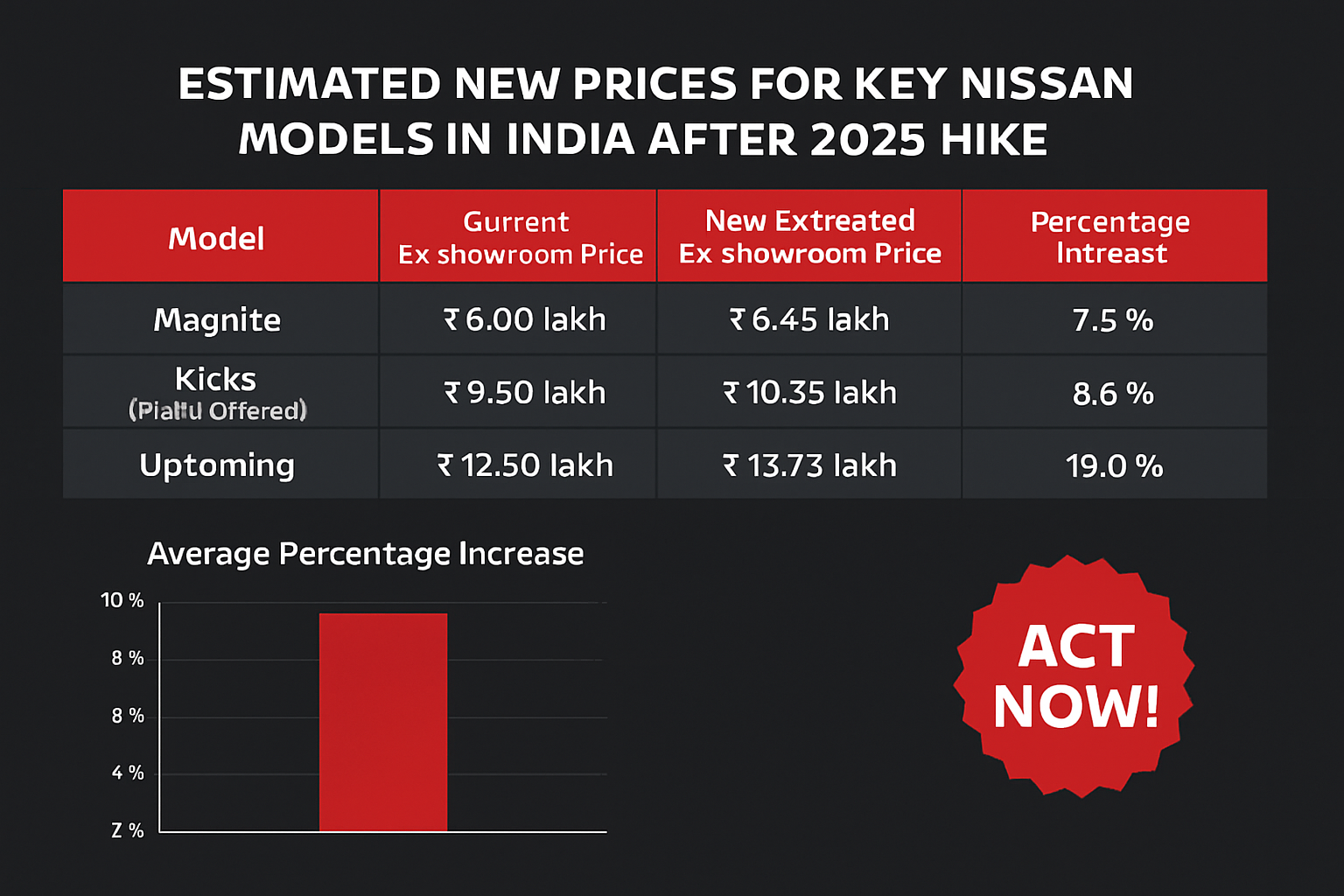
The most direct impact, naturally, will be on the final on-road price of Nissan vehicles. While the exact percentage of the hike is typically announced closer to the implementation date, such revisions usually range from 1% to 3% or even higher, depending on the model and variant. For popular models like the Nissan Magnite, this could translate to an increase of several thousands to tens of thousands of rupees.
Let’s consider a hypothetical example:

| Model Variant | Current Ex-showroom Price (approx.) | Estimated New Ex-showroom Price (approx.) | Estimated Increase |
|---|---|---|---|
| Nissan Magnite XE | ₹6,00,000 | ₹6,15,000 | ₹15,000 |
| Nissan Magnite XV | ₹8,00,000 | ₹8,20,000 | ₹20,000 |
| Nissan Magnite XV AMT | ₹9,50,000 | ₹9,75,000 | ₹25,000 |
Note: These are illustrative figures. Actual prices and increases will be announced by Nissan India.
This increase affects not just the ex-showroom price but also the associated costs like registration, insurance, and road tax, which are often calculated as a percentage of the ex-showroom price, further inflating the final cost for the buyer. If you’re looking for affordable options, consider exploring our list of affordable cars under ₹2 lakh in the used car market, or best budget sedans in India 2025 for new entry-level options.
Impact on EMI and Loan Affordability
For most Indian car buyers, purchasing a vehicle involves financing through an EMI (Equated Monthly Installment) plan. A price hike means a larger principal amount, leading to higher EMIs or a longer loan tenure to keep the EMI manageable. This could slightly strain monthly budgets or make the car less affordable for some segments of buyers. We always recommend understanding your budget fully before making a purchase.
Urgency for Pre-Hike Purchases
One immediate effect of such announcements is an uptick in sales for a brief period before the new prices kick in. Consumers who have been contemplating a Nissan purchase, especially a Magnite, might expedite their decision to avoid the upcoming price increase. This creates a window of opportunity to potentially save a significant amount. Dealerships often offer attractive discounts or schemes in the run-up to a price hike to clear existing inventory.
Competitive Landscape and Market Dynamics
Nissan operates in a highly competitive market, especially in the compact SUV segment where the Magnite competes with popular models like the Kia Sonet, Hyundai Venue, and Tata Punch.
- Maintaining Competitiveness: While all manufacturers face similar pressures, the timing and extent of price hikes can influence a brand’s competitive standing. Nissan will need to ensure its value proposition remains strong even after the price increase.
- Market Share: If competitors delay their hikes or implement smaller increases, Nissan’s market share in specific segments could be temporarily affected. However, industry-wide hikes usually mean most brands move in tandem.
- Consumer Perception: Transparent communication about the reasons for the hike is crucial to maintain positive consumer perception.
The Nissan India to hike car prices decision is part of a larger trend affecting the industry. We’ve seen similar moves from other manufacturers, and it highlights the ongoing challenges in automotive manufacturing. For those interested in alternatives or future models, our site features comprehensive reviews and forecasts, including upcoming models like the 2025 Hyundai Aura or the 2025 Hyundai Creta.
What Should Prospective Buyers Do?
If you’re considering a Nissan car, especially the popular Magnite, in early 2025, here’s what I recommend:

- Act Promptly: If you’ve finalized your decision, try to book your car before the end of 2024 or very early 2025, depending on when the new prices officially take effect. This could save you thousands of rupees.
- Contact Your Dealer: Get in touch with your nearest Nissan dealership. Inquire about the exact date of the price hike, the specific percentage increase expected for your desired model and variant, and any last-minute offers or discounts available. You can find out more about the best cars in India at your local dealership or by browsing our extensive guides.
- Review Your Budget: Re-evaluate your budget considering the potential price increase. Factor in the on-road price and revised EMI calculations.
- Compare Alternatives: While committing to a Nissan before the hike is ideal, it’s always wise to have compared it with rivals. If the hike makes a Nissan less attractive, re-evaluate other options like the Hyundai Venue vs Kia Sonet base models comparison or Brezza vs Magnite base if you haven’t already. Explore our comprehensive resources on CarFatafat.com for detailed comparisons.
Conclusion
The announcement that Nissan India to hike car prices in early 2025 is a significant development for the Indian automotive market. Driven by rising input costs, increased operational expenses, and fluctuating exchange rates, this move aligns with broader industry trends. While it presents a challenge for potential buyers, it also highlights the economic realities faced by manufacturers in a dynamic global environment.
For consumers, the key takeaway is the importance of timely action. If a Nissan vehicle, particularly the feature-rich and value-for-money Magnite, is on your shopping list, making your purchase before the price hike could result in substantial savings. We encourage you to visit your nearest Nissan showroom, clarify the exact details of the upcoming price revision, and finalize your decision to lock in the current prices.
Staying informed about such market changes is crucial for making smart automotive investments. At CarFatafat, we are committed to providing you with the latest news, detailed analyses, and expert advice to navigate the exciting yet complex world of cars in India. Keep an eye on our news section for further updates and insights into the evolving automotive landscape.
Actionable Next Steps:
- Contact a Nissan Dealership: Call or visit your nearest Nissan dealer immediately to confirm the effective date and magnitude of the price hike for your desired model.
- Book Before the Hike: If possible, place your booking or complete your purchase before the announced price increase takes effect in early 2025.
- Explore Financing Options: Discuss loan options with your bank or the dealership’s finance partners to understand how the current price point impacts your EMIs.
- Stay Informed: Continue to follow CarFatafat.com for updates on market trends, new car launches, and comparative analyses to ensure you always make the best decision for your automotive needs.
References
[1] Press Trust of India. (Specific Date in late 2024/early 2025 – Hypothetical, as this is a future prediction). “Nissan India to hike car prices from January 2025.” Major Indian News Outlet.
[2] “Raw Material Price Trends for Automotive Industry.” (Undated). Global Automotive Research Firm Report.
[3] Reserve Bank of India. (Ongoing). “Foreign Exchange Rates Historical Data.”