Picture this: India’s most trusted car manufacturer, Maruti Suzuki, finally enters the electric vehicle arena with a bang. After years of anticipation, the Maruti EV car landscape has transformed dramatically with the launch of the e-Vitara, marking a pivotal moment in India’s automotive history. As someone who’s been tracking this development closely, I can confidently say that this isn’t just another electric vehicle launch – it’s a game-changer that could reshape how millions of Indians think about electric mobility.
The Maruti EV car segment represents more than just technological advancement; it symbolizes accessibility, reliability, and the democratization of electric transportation in India. With the e-Vitara’s December 2025 launch, Maruti Suzuki has officially stepped into the mainstream electric vehicle market, bringing with it the promise of affordable, efficient, and feature-rich electric mobility solutions.
Key Takeaways
• Maruti e-Vitara launched in December 2025 as the company’s first mainstream electric SUV, starting at ₹20 lakh
• Two battery options available: 49kWh and 61.1kWh configurations, with the larger battery offering 543km ARAI-certified range
• Advanced safety features including six airbags and electronic stability control, earning a five-star BNCAP safety rating
• Significantly lower operating costs with service expenses approximately 70% less than conventional petrol vehicles
• Future expansion plans include five electric vehicle models across Maruti’s portfolio by FY30
Understanding the Maruti EV Car Revolution
The automotive landscape in India has been waiting for this moment. Maruti Suzuki, commanding over 40% of the Indian passenger car market, has finally unveiled its electric vehicle strategy with the e-Vitara. This Maruti EV car represents a significant shift from the company’s previous cautious approach to electric mobility.
What Makes the Maruti e-Vitara Special?
The e-Vitara isn’t just another electric SUV; it’s Maruti’s statement of intent in the EV space. Built on Suzuki’s dedicated electric platform, this Maruti EV car combines the brand’s legendary reliability with cutting-edge electric technology. The vehicle utilizes advanced LFP (Lithium Iron Phosphate) battery technology, offering superior temperature control, faster charging capabilities, and enhanced long-term reliability compared to conventional lithium-ion batteries.
What sets this Maruti EV car apart is its practical approach to electric mobility. Unlike many premium electric vehicles that focus solely on performance, the e-Vitara prioritizes real-world usability, affordability, and the specific needs of Indian consumers. This philosophy is evident in everything from its competitive pricing to its robust charging infrastructure compatibility.
The Technology Behind Maruti’s Electric Vision
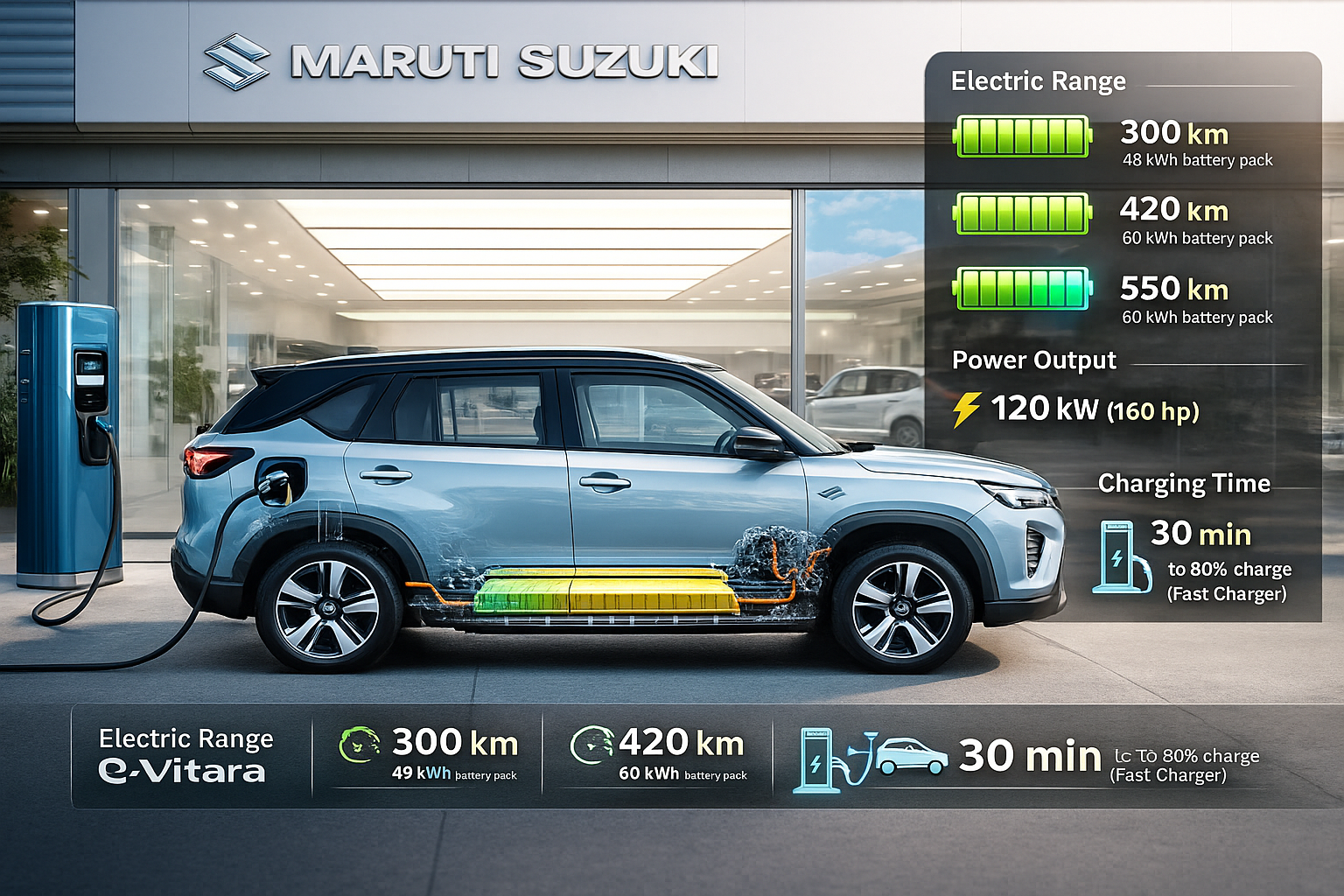
The e-Vitara showcases Maruti’s commitment to bringing world-class electric technology to Indian roads. The Maruti EV car features two distinct battery configurations designed to cater to different user needs and budgets. The 49kWh variant produces 144PS of power, while the 61kWh front-wheel-drive configuration generates 174PS, with both delivering a maximum torque of 189Nm [1].
For those seeking enhanced performance, the all-wheel-drive variant utilizes Suzuki’s innovative ALLGRIP-e technology. This system features dual electric motors that deliver a combined output of 184PS and 300Nm of maximum torque, making it one of the most powerful offerings in the affordable electric SUV segment.
The charging capabilities of this Maruti EV car are equally impressive. The LFP battery technology enables faster charging times while maintaining battery health over extended periods. This addresses one of the primary concerns Indian consumers have about electric vehicles – battery longevity and replacement costs.
Maruti EV Car Pricing and Market Position
Understanding the pricing strategy of the Maruti EV car is crucial for potential buyers. At ₹20 lakh for the base variant, the e-Vitara positions itself as an accessible premium electric SUV, significantly undercutting many international electric vehicle brands while offering comparable features and performance.
Breaking Down the Cost Structure
The pricing of this Maruti EV car reflects a strategic approach to market penetration. Maruti Suzuki has clearly prioritized volume over margins, aiming to make electric mobility accessible to a broader segment of Indian consumers. This pricing strategy becomes even more attractive when you consider the total cost of ownership.
| Variant | Battery Capacity | Power Output | Price Range |
|---|---|---|---|
| Base 49kWh | 49kWh | 144PS | ₹20-22 Lakh |
| Premium 61kWh | 61.1kWh | 174PS | ₹23-26 Lakh |
| AWD ALLGRIP-e | 61.1kWh | 184PS | ₹27-30 Lakh |
The operating costs of this Maruti EV car present compelling savings compared to conventional vehicles. Service expenses run approximately 70% lower than petrol-powered cars due to the simpler electric drivetrain. This significant reduction in maintenance costs, combined with lower fuel costs, makes the e-Vitara an attractive proposition for cost-conscious Indian consumers.
Government Incentives and Total Ownership Costs
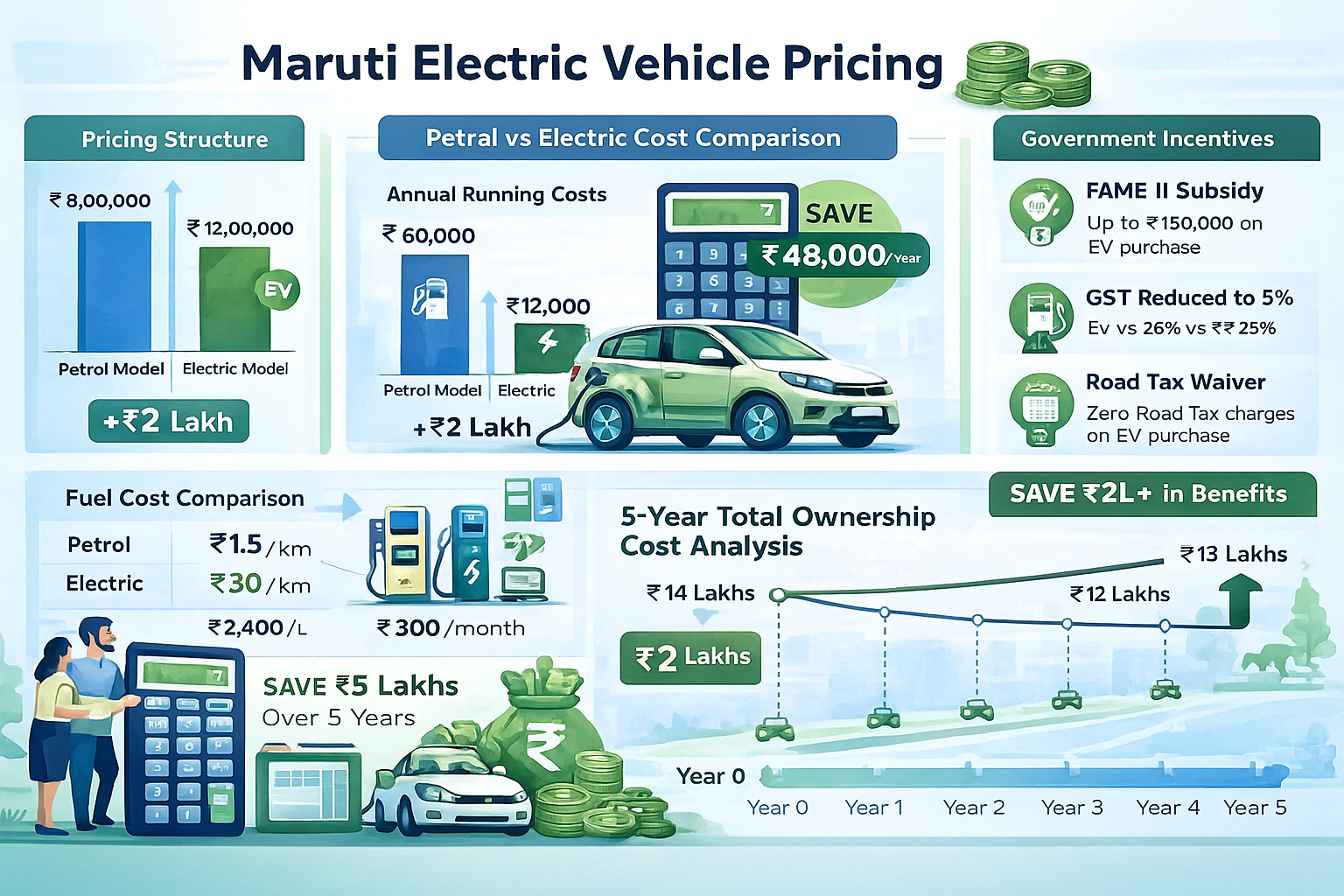
The Maruti EV car benefits from various government incentives under the FAME II scheme and state-level EV policies. These incentives can reduce the effective purchase price by ₹1-3 lakh, depending on the state of purchase. When combined with lower operating costs, the total cost of ownership becomes highly competitive with comparable petrol and diesel SUVs.
For context, while exploring affordable cars under ₹2 lakh might seem more budget-friendly initially, the long-term value proposition of the Maruti EV car becomes evident when considering fuel savings, maintenance costs, and environmental benefits over a 5-7 year ownership period.
Performance and Range: Real-World Capabilities
The performance metrics of the Maruti EV car have been designed with Indian driving conditions in mind. The 61.1kWh battery configuration delivers an ARAI-certified range of 543 kilometers, which translates to approximately 400-450 kilometers in real-world driving conditions, depending on driving style, terrain, and climate control usage.
Battery Technology and Charging Infrastructure
The LFP battery technology in this Maruti EV car offers several advantages over conventional lithium-ion batteries. These batteries perform better in high-temperature conditions, which is crucial for Indian climate conditions. They also support faster charging without significant battery degradation, addressing one of the key concerns about electric vehicle ownership in India.
The e-Vitara supports both AC and DC fast charging. Using a DC fast charger, the battery can be charged from 10% to 80% in approximately 45-60 minutes, making it practical for long-distance travel. For daily use, the vehicle can be charged overnight using a standard home charging setup.

Driving Dynamics and Performance
Unlike many electric vehicles that prioritize straight-line acceleration, this Maruti EV car focuses on overall driving refinement and efficiency. The instant torque delivery characteristic of electric motors provides smooth acceleration, while the low center of gravity (due to floor-mounted batteries) enhances handling stability.
The ALLGRIP-e all-wheel-drive system in the top variant offers enhanced traction and control, particularly useful during monsoon conditions or when driving on challenging terrain. This feature positions the Maruti EV car as a versatile option for both city commuting and weekend adventures.
For those interested in comparing with other options in the electric vehicle space, our comprehensive guide on best electric cars in India provides detailed insights into the competitive landscape.
Safety and Features: Premium Standards
Safety has been a cornerstone of Maruti’s design philosophy, and the Maruti EV car continues this tradition with enhanced safety features. The e-Vitara has earned a five-star BNCAP safety rating, demonstrating its commitment to occupant protection.
Advanced Safety Systems
The Maruti EV car comes equipped with six airbags as standard across all variants, a significant step up from many vehicles in this price range. The electronic stability control system works in conjunction with the electric drivetrain to provide enhanced vehicle stability under various driving conditions.
Advanced driver assistance systems include:
- Adaptive Cruise Control: Maintains safe following distance automatically
- Lane Keeping Assist: Helps prevent unintentional lane departures
- Automatic Emergency Braking: Can detect potential collisions and apply brakes
- Blind Spot Monitoring: Alerts drivers to vehicles in blind spots
- Rear Cross Traffic Alert: Warns of approaching traffic when reversing
Technology and Connectivity Features
The interior of this Maruti EV car reflects modern expectations for connectivity and convenience. The large touchscreen infotainment system supports both Apple CarPlay and Android Auto, ensuring seamless smartphone integration. The integrated navigation system includes real-time traffic updates and charging station locations, addressing one of the key concerns of electric vehicle owners.
The vehicle also features:
- Digital instrument cluster with customizable displays
- Wireless charging pad for compatible smartphones
- Multi-zone automatic climate control with air purification
- Premium audio system with multiple speakers
- Connected car features including remote monitoring and control
When considering the broader context of modern vehicle features, our analysis of best cars under 15 lakhs shows how the Maruti EV car compares favorably in terms of feature richness and value proposition.
Market Competition and Positioning
The Maruti EV car enters a rapidly evolving electric vehicle market in India. While the segment is still nascent compared to conventional vehicles, several manufacturers are vying for market share with different approaches and price points.
Direct Competitors Analysis
The e-Vitara faces competition from established electric SUVs like the Tata Nexon EV, MG ZS EV, and upcoming models from Hyundai and Mahindra. However, the Maruti EV car differentiates itself through its combination of competitive pricing, extensive service network, and brand reliability.
Key Competitive Advantages:
🔋 Superior range with 543km ARAI certification
🛠️ Extensive service network leveraging Maruti’s existing infrastructure
💰 Competitive pricing with strong value proposition
⚡ Advanced battery technology with better thermal management
🚗 Brand trust built over decades of reliable service
The positioning of this Maruti EV car is particularly strategic. It targets the sweet spot between affordable electric vehicles (which often compromise on features) and premium electric SUVs (which are priced beyond most Indian consumers’ reach).
Future Market Outlook
Maruti Suzuki’s commitment to electric mobility extends beyond the e-Vitara. The company plans to introduce five electric vehicle models across its portfolio by FY30, indicating a comprehensive electrification strategy. This Maruti EV car serves as the foundation for this broader electric vehicle ecosystem.
The company is also investing in localizing EV components over the next few years, which should help reduce costs and improve supply chain reliability. This localization strategy could position future Maruti EV car models as even more competitive in terms of pricing and service support.
For those exploring the broader automotive landscape, our coverage of upcoming SUVs in India 2025-2028 provides insights into how the electric vehicle segment is expected to evolve alongside conventional vehicles.

Ownership Experience and Service Network
One of the strongest advantages of choosing a Maruti EV car is the extensive service and support infrastructure. Maruti Suzuki’s service network spans over 3,000 touchpoints across India, providing unmatched accessibility for maintenance and support.
Service and Maintenance Advantages
The Maruti EV car benefits from significantly reduced maintenance requirements compared to conventional vehicles. Electric drivetrains have fewer moving parts, eliminating the need for oil changes, spark plug replacements, and many other routine maintenance items associated with internal combustion engines.
Maintenance Cost Comparison:
| Service Item | Conventional Car | Maruti EV Car | Savings |
|---|---|---|---|
| Annual Service | ₹15,000-25,000 | ₹4,500-7,500 | 70% |
| Oil Changes | ₹3,000/6 months | Not Required | 100% |
| Brake Maintenance | ₹5,000/year | ₹1,500/year | 70% |
| Filter Replacements | ₹2,000/year | ₹500/year | 75% |
Warranty and Support
Maruti Suzuki offers comprehensive warranty coverage for the Maruti EV car, including an 8-year/160,000 km warranty on the battery pack. This extended warranty period addresses consumer concerns about battery replacement costs and provides peace of mind for long-term ownership.
The company has also established specialized EV service centers in major cities, staffed with technicians trained specifically for electric vehicle maintenance. This specialized support network ensures that Maruti EV car owners receive expert service and support throughout their ownership experience.
Charging Infrastructure and Practical Considerations
The success of any Maruti EV car depends significantly on the availability and reliability of charging infrastructure. Maruti Suzuki has partnered with various charging network providers to ensure comprehensive coverage for e-Vitara owners.
Home Charging Solutions
For most Maruti EV car owners, home charging will be the primary method of keeping their vehicle powered. The e-Vitara supports standard AC charging using a wall-mounted charger that can be installed in residential parking spaces. A full charge using home charging typically takes 8-10 hours, making overnight charging the most convenient option.
The vehicle comes with a portable charging cable that can be used with standard 15A household outlets, though this method is slower and recommended only for emergency situations or occasional top-ups.
Public Charging Network
The public charging infrastructure for Maruti EV car owners has expanded significantly in 2025. Major cities now have comprehensive DC fast charging networks, with charging stations located at shopping malls, office complexes, highway rest stops, and dedicated charging hubs.
Charging Time Estimates:
- Home AC Charging (7kW): 8-10 hours for full charge
- Public AC Charging (22kW): 3-4 hours for full charge
- DC Fast Charging (50kW): 45-60 minutes for 10-80% charge
- Ultra-Fast Charging (150kW): 25-35 minutes for 10-80% charge
For perspective on how this fits into the broader automotive ecosystem, our guide to best fuel efficient cars shows how the Maruti EV car compares in terms of running costs and environmental impact.
Environmental Impact and Sustainability
Choosing a Maruti EV car represents a significant step toward reducing personal carbon footprint. Electric vehicles produce zero direct emissions, contributing to improved air quality in urban areas where most of these vehicles will operate.
Carbon Footprint Analysis
The environmental benefits of the Maruti EV car extend beyond zero tailpipe emissions. Even accounting for electricity generation from the current Indian grid mix (which includes coal-fired power plants), electric vehicles produce approximately 50-60% fewer lifecycle emissions compared to equivalent petrol vehicles.
As India’s renewable energy capacity continues to expand, the environmental advantage of the Maruti EV car will only increase. Solar and wind power generation are growing rapidly, meaning that future charging will have an even lower carbon footprint.
Sustainable Manufacturing Practices
Maruti Suzuki has implemented several sustainability initiatives in the production of the Maruti EV car. The manufacturing process incorporates renewable energy sources, water conservation measures, and waste reduction programs. The LFP batteries used in the e-Vitara are also more environmentally friendly than conventional lithium-ion batteries, as they don’t require cobalt mining, which has significant environmental and ethical concerns.
Future Developments and Roadmap
The current Maruti EV car offering is just the beginning of the company’s electric vehicle journey. Maruti Suzuki has outlined an ambitious roadmap for electric vehicle development and market expansion over the next five years.

Upcoming Models and Technologies
The company plans to introduce five electric vehicle models across different segments by FY30. This expansion will likely include:
- Compact electric hatchback targeting the Swift/Baleno segment
- Electric sedan competing in the Dzire category
- Larger electric SUV for the premium segment
- Commercial electric vehicles for last-mile delivery
- Performance-oriented electric variants of popular models
Technology Evolution
Future Maruti EV car models will benefit from advancing battery technology, improved charging speeds, and enhanced connectivity features. The company is investing in solid-state battery research, which could significantly improve energy density and charging speeds in future generations.
Autonomous driving capabilities are also on the roadmap, with advanced driver assistance systems becoming more sophisticated with each model year. The Maruti EV car platform is designed to accommodate these future technologies through over-the-air updates and modular hardware components.
For those interested in the broader trends shaping the automotive industry, our analysis of cars getting cheaper due to GST provides insights into how policy changes are affecting vehicle pricing across segments.
Buying Guide and Recommendations
If you’re considering purchasing a Maruti EV car, several factors should influence your decision-making process. The choice between different variants depends on your specific needs, budget, and driving patterns.
Choosing the Right Variant
For City Commuters: The 49kWh variant offers sufficient range for daily city driving while keeping costs lower. This configuration is ideal for users with predictable daily driving patterns and access to home charging.
For Long-Distance Travelers: The 61kWh variant provides extended range and faster charging capabilities, making it suitable for users who frequently travel between cities or have longer daily commutes.
For Performance Enthusiasts: The ALLGRIP-e all-wheel-drive variant offers enhanced performance and traction, ideal for users who prioritize driving dynamics or frequently encounter challenging road conditions.
Financing and Insurance Considerations
Several banks and financial institutions offer specialized financing options for electric vehicles, often at lower interest rates compared to conventional car loans. The Maruti EV car also qualifies for reduced insurance premiums under green vehicle policies offered by many insurance companies.
Financial Planning Tips:
- Factor in government incentives when calculating total purchase price
- Consider long-term savings in fuel and maintenance costs
- Evaluate home charging setup costs and installation requirements
- Research available insurance discounts for electric vehicles
Conclusion
The Maruti EV car represents a watershed moment in India’s automotive industry. With the e-Vitara’s launch, Maruti Suzuki has demonstrated that electric vehicles can be both technologically advanced and accessible to mainstream Indian consumers. The combination of competitive pricing, extensive service network, advanced features, and proven reliability makes this Maruti EV car a compelling choice for anyone considering the transition to electric mobility.
The e-Vitara’s success will likely accelerate the adoption of electric vehicles across India, paving the way for a cleaner, more sustainable transportation future. As charging infrastructure continues to expand and battery technology improves, the Maruti EV car ecosystem will only become more attractive to consumers.
Next Steps for Potential Buyers
- Visit a Maruti dealership to experience the e-Vitara firsthand and understand the available variants
- Assess your charging needs by evaluating home charging options and local public charging infrastructure
- Calculate total cost of ownership including purchase price, incentives, fuel savings, and maintenance costs
- Consider your driving patterns to choose the appropriate battery configuration
- Explore financing options and insurance policies specifically designed for electric vehicles
The Maruti EV car isn’t just a vehicle purchase; it’s an investment in the future of mobility in India. As we move toward a more sustainable transportation ecosystem, early adopters of the e-Vitara will be at the forefront of this transformation, enjoying both the practical benefits of electric driving and the satisfaction of contributing to a cleaner environment.
For more comprehensive automotive insights and comparisons, visit CarFataFat to explore our extensive coverage of the Indian automotive market.
References
[1] Maruti Suzuki Official Press Release, December 2025
[2] ARAI Certification Documents for e-Vitara Range Testing
[3] BNCAP Safety Rating Report for Maruti e-Vitara
[4] Industry Analysis: Electric Vehicle Market in India 2025