India’s electric vehicle revolution is here, and it’s transforming how we think about transportation. With government incentives, improved charging infrastructure, and cutting-edge technology, finding the best EV cars in India has never been more exciting – or more important for your wallet and the environment.
The Indian automotive landscape is experiencing a seismic shift toward sustainable mobility. As fuel prices soar and environmental consciousness grows, electric vehicles are no longer just an alternative – they’re becoming the smart choice for Indian consumers. Whether you’re a tech enthusiast, an eco-warrior, or simply looking to reduce your monthly fuel expenses, this comprehensive guide will help you navigate the exciting world of electric cars in India.
Key Takeaways
• Tata Nexon EV leads the market with proven reliability, extensive service network, and competitive pricing starting at ₹14.99 lakhs
• Range anxiety is diminishing with top EVs offering 300+ km real-world range and rapidly expanding charging infrastructure across major Indian cities
• Government incentives including FAME II subsidies and state-specific benefits can reduce EV costs by ₹1-3 lakhs depending on your location
• Total cost of ownership for EVs is significantly lower than petrol cars, with savings of ₹2-4 per kilometer in running costs
• Charging infrastructure has grown 5x in the past two years, with over 5,000 public charging stations now operational across India
Understanding the EV Landscape: Why Electric Cars Are India’s Future
The electric vehicle market in India has experienced unprecedented growth, with sales increasing by 168% in 2024 compared to the previous year [1]. This surge isn’t just about environmental consciousness – it’s driven by practical benefits that make electric cars increasingly attractive to Indian consumers.
Government Support and Incentives
The Indian government’s commitment to electric mobility through the FAME II (Faster Adoption and Manufacturing of Electric Vehicles) scheme has made EVs more accessible than ever. Under this program, buyers can receive subsidies of up to ₹1.5 lakhs on electric cars, significantly reducing the upfront cost [2].
Many states offer additional incentives:
- Delhi: Road tax exemption and registration fee waiver
- Maharashtra: Up to ₹2.5 lakh subsidy for electric cars
- Gujarat: 100% road tax exemption for the first 100,000 EVs
- Karnataka: 15% subsidy on vehicle cost (up to ₹1 lakh)
Economic Advantages
The economics of electric vehicle ownership in India are compelling. With electricity costs averaging ₹6-8 per unit and EVs delivering 3-5 km per unit, the running cost works out to approximately ₹1.5-2.5 per kilometer. Compare this to petrol cars that cost ₹6-8 per kilometer at current fuel prices, and the savings become substantial.
For someone driving 1,000 km per month, the annual fuel savings alone can range from ₹54,000 to ₹78,000. Over a typical 5-year ownership period, this translates to savings of ₹2.7-3.9 lakhs just on fuel costs.
Top Contenders: Best EV Cars in India for Every Budget
Premium Segment (₹25+ Lakhs)
1. BMW iX1 (₹49.90 lakhs)
The BMW iX1 represents luxury electric mobility at its finest. With a 438 km WLTP range and premium German engineering, it’s perfect for affluent buyers who refuse to compromise on luxury for sustainability.
Key Features:
- 438 km certified range
- 0-100 km/h in 5.7 seconds
- Premium interior with BMW’s latest iDrive system
- Advanced driver assistance features
2. Volvo XC40 Recharge (₹56.90 lakhs)
Volvo’s commitment to safety extends to their electric offerings. The XC40 Recharge combines Scandinavian design with robust electric performance.
3. Mercedes EQS (₹1.55 crore)
For those seeking the ultimate in electric luxury, the EQS offers unparalleled comfort and a range exceeding 500 km.
Mid-Range Segment (₹15-25 Lakhs)
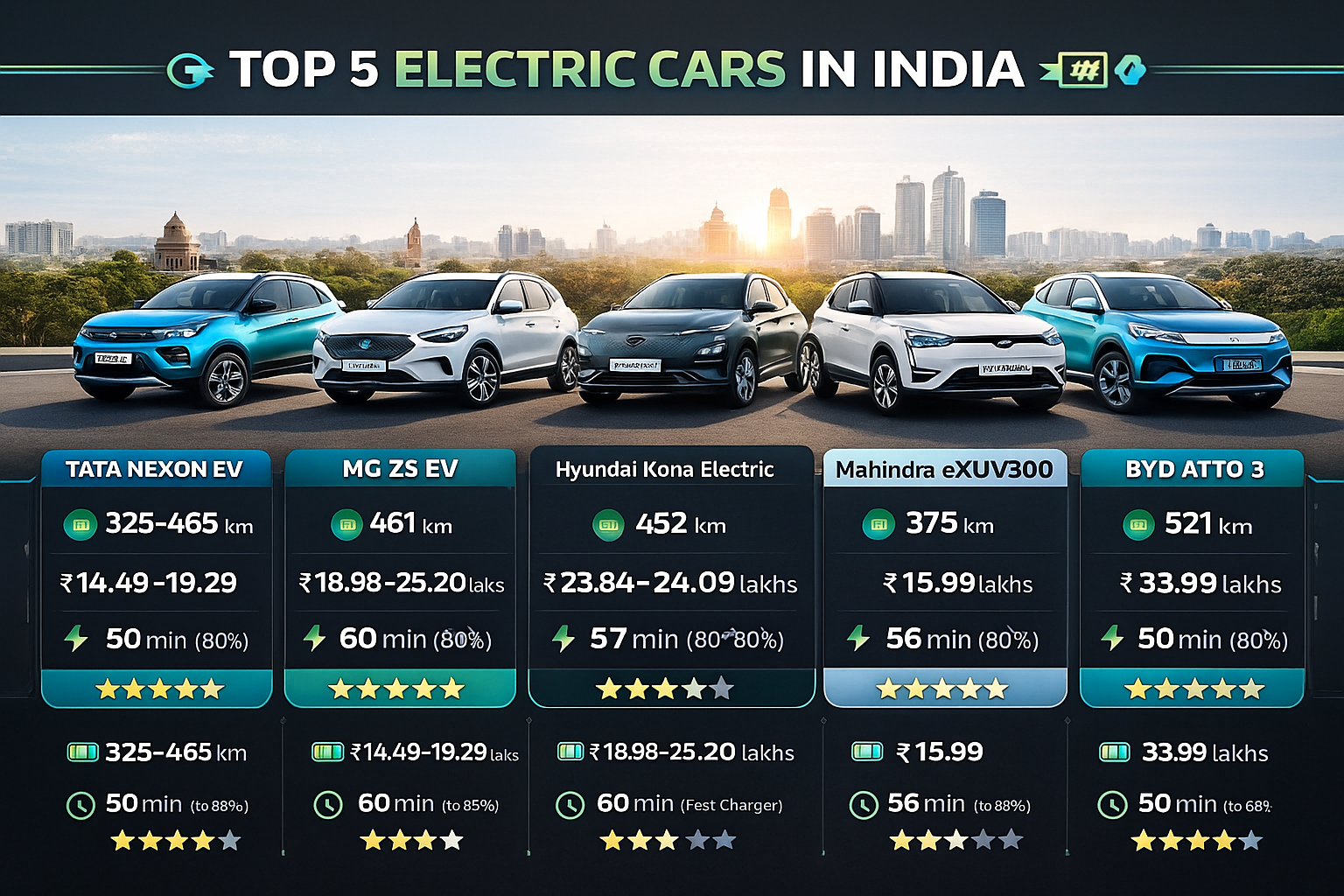
1. MG ZS EV (₹21.99-25.88 lakhs)
The MG ZS EV has carved a niche in the premium compact SUV segment with its impressive feature list and reliable performance.
Strengths:
- 461 km certified range (updated 2024 model)
- Fast charging capability (10-80% in 50 minutes)
- Comprehensive warranty and service support
- Premium interior with connected car features
2. Hyundai Kona Electric (₹23.84-23.94 lakhs)
Though Hyundai has discontinued local assembly, the Kona Electric remains available through imports and offers excellent build quality.
3. BYD Atto 3 (₹33.99 lakhs)
The Chinese manufacturer’s entry into India brings competitive technology and pricing to the premium EV segment.
Affordable Segment (Under ₹15 Lakhs)
1. Tata Nexon EV (₹14.99-19.94 lakhs)
The undisputed leader in India’s EV market, the Nexon EV combines practicality, reliability, and value in an attractive package.
Why it leads the pack:
- Proven track record with over 50,000 units sold
- Extensive service network across India
- 453 km certified range (Max variant)
- 5-star Global NCAP safety rating
- Competitive pricing with excellent resale value
The Nexon EV’s success stems from Tata’s deep understanding of Indian driving conditions and customer preferences. The vehicle offers multiple driving modes, regenerative braking, and a comprehensive infotainment system that rivals cars costing twice as much.

2. Mahindra eXUV300 (Expected ₹15-17 lakhs)
Based on the popular XUV300, Mahindra’s electric offering promises to bring the brand’s SUV expertise to the EV segment.
3. Tata Tigor EV (₹12.49-13.75 lakhs)
For those seeking an electric sedan, the Tigor EV offers practicality and efficiency in a compact package, though it’s primarily available for fleet customers.
When considering affordable cars under ₹2 lakh, it’s worth noting that while traditional ICE vehicles dominate this segment, the electric vehicle space is rapidly evolving with new entrants expected to bring costs down further.
Charging Infrastructure: The Backbone of EV Adoption
One of the biggest concerns for potential EV buyers is charging infrastructure. However, India’s charging network has expanded dramatically, making electric vehicle ownership more practical than ever before.
Current State of Charging Infrastructure
As of 2025, India has over 5,000 public charging stations across major cities and highways [3]. Key players in the charging ecosystem include:
Major Charging Networks:
- Tata Power: 4,000+ charging points across 300+ cities
- Reliance BP: Fast-charging corridors on major highways
- BPCL: Integrated charging at fuel stations
- Ather Grid: Focus on two-wheelers but expanding to four-wheelers
- ChargeZone: Comprehensive urban charging solutions
Types of Charging Solutions
1. Home Charging (AC Slow)
- 3-7 kW capacity
- 6-8 hours for full charge
- Most convenient and cost-effective option
- Installation cost: ₹15,000-30,000
2. Public AC Charging
- 7-22 kW capacity
- 3-4 hours for full charge
- Available at malls, offices, and public spaces
- Cost: ₹8-12 per unit
3. DC Fast Charging
- 25-150 kW capacity
- 30-60 minutes for 80% charge
- Ideal for highway travel and quick top-ups
- Cost: ₹12-18 per unit
Highway Charging Corridors
The government’s focus on highway charging infrastructure has resulted in charging stations every 25-30 km on major routes including:
- Delhi-Mumbai Expressway
- Golden Quadrilateral
- Delhi-Chandigarh Highway
- Mumbai-Pune Expressway
- Bangalore-Chennai Highway
This infrastructure development addresses range anxiety and makes long-distance EV travel feasible across India.
Cost Analysis: Total Cost of Ownership for Best EV Cars in India
Understanding the true cost of EV ownership requires looking beyond the purchase price to include running costs, maintenance, insurance, and depreciation.
Purchase Cost Comparison
| Vehicle | Ex-showroom Price | After FAME II Subsidy | State Incentives (varies) |
|---|---|---|---|
| Tata Nexon EV | ₹14.99-19.94L | ₹13.49-18.44L | Up to ₹2L additional |
| MG ZS EV | ₹21.99-25.88L | ₹20.49-24.38L | Up to ₹2L additional |
| Hyundai Kona | ₹23.84L | ₹22.34L | Up to ₹2L additional |
5-Year Ownership Cost Analysis (Nexon EV vs Nexon Petrol)
Assumptions: 15,000 km/year, petrol at ₹100/liter, electricity at ₹7/unit
| Cost Component | Nexon EV | Nexon Petrol | Savings |
|---|---|---|---|
| Purchase Price | ₹16.50L | ₹12.50L | -₹4.00L |
| Fuel/Electricity | ₹1.05L | ₹5.25L | ₹4.20L |
| Maintenance | ₹0.75L | ₹1.50L | ₹0.75L |
| Insurance | ₹2.25L | ₹1.75L | -₹0.50L |
| Total 5-Year Cost | ₹20.55L | ₹21.00L | ₹0.45L |
This analysis shows that despite higher upfront costs, the Nexon EV achieves cost parity with its petrol counterpart over 5 years, with additional benefits like lower emissions and superior driving experience.
Financing Options
Most banks and NBFCs offer attractive financing for electric vehicles:
- Interest rates: 7.5-9.5% (0.5-1% lower than ICE vehicles)
- Loan tenure: Up to 7 years
- Down payment: As low as 10-15%
Several manufacturers also offer attractive lease options, making EVs accessible to a broader audience.
Performance and Technology: What Sets the Best EV Cars in India Apart
Electric vehicles offer inherent advantages in performance and technology that traditional ICE vehicles struggle to match.
Performance Advantages
Instant Torque Delivery
Electric motors provide maximum torque from 0 RPM, resulting in superior acceleration and responsive driving. The Tata Nexon EV, for example, accelerates from 0-100 km/h in just 9.9 seconds – faster than most petrol cars in its segment.
Silent Operation
The absence of engine noise creates a serene driving experience, reducing fatigue during long journeys and contributing to lower noise pollution in urban areas.
Low Center of Gravity
Battery placement in the floor pan lowers the vehicle’s center of gravity, improving handling and stability compared to traditional vehicles.
Advanced Technology Features
Connected Car Technology
Modern EVs come equipped with sophisticated connectivity features:

- Remote climate control and charging monitoring
- Over-the-air software updates
- GPS-based range prediction
- Smartphone integration for vehicle status
Regenerative Braking
This technology recovers energy during braking and deceleration, extending range by 10-15% in city driving conditions. Most EVs offer multiple levels of regeneration, allowing drivers to customize the driving experience.
Battery Management Systems
Advanced thermal management and battery monitoring ensure optimal performance and longevity. Modern EVs include:
- Active battery cooling/heating
- Cell-level monitoring
- Predictive maintenance alerts
- Battery health optimization
For those interested in the broader automotive landscape, exploring best cars in India provides valuable context for understanding how EVs fit into the overall market.
Maintenance and Service: Keeping Your EV Running Smoothly
One of the most compelling advantages of electric vehicles is their significantly lower maintenance requirements compared to traditional ICE vehicles.
Reduced Maintenance Needs
No Engine Oil Changes
Electric motors require no oil changes, eliminating one of the most frequent and expensive maintenance tasks. This alone saves ₹3,000-5,000 annually.
Fewer Moving Parts
Electric drivetrains have approximately 20 moving parts compared to 2,000+ in ICE vehicles. This dramatic reduction translates to:
- Lower probability of mechanical failures
- Reduced service frequency
- Lower long-term maintenance costs
Brake System Longevity
Regenerative braking reduces wear on traditional brake pads and discs, extending their life by 2-3 times compared to conventional vehicles.
Service Network Expansion
Tata Motors
With over 400 authorized service centers capable of handling EV maintenance, Tata offers the most comprehensive service network for electric vehicles in India. The company has invested heavily in technician training and specialized equipment.
MG Motor
Despite being relatively new to the Indian market, MG has established service centers in 120+ cities, with plans to expand to 250+ centers by end of 2025.
Hyundai
Leveraging their extensive ICE vehicle service network, Hyundai has equipped 200+ service centers with EV-specific capabilities.
Battery Warranty and Replacement
Most manufacturers offer comprehensive battery warranties:
- Tata Nexon EV: 8 years/160,000 km battery warranty
- MG ZS EV: 8 years/150,000 km battery warranty
- Hyundai Kona: 8 years/160,000 km battery warranty
Battery replacement costs have decreased significantly, with current estimates ranging from ₹4-6 lakhs for a complete battery pack. However, with proper care and thermal management, modern EV batteries are expected to retain 70-80% capacity even after 8-10 years.
Future Outlook: The Road Ahead for Best EV Cars in India
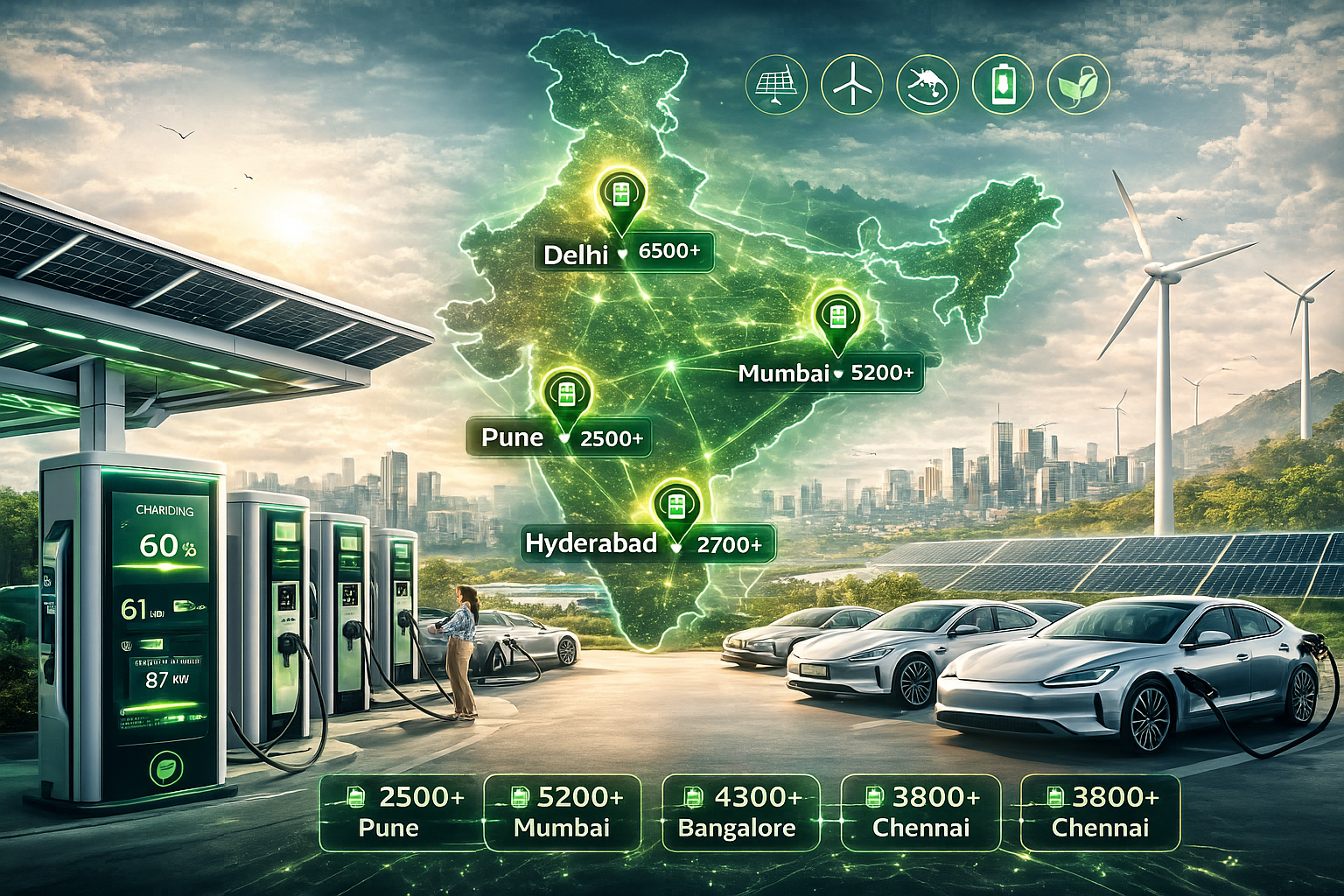
The electric vehicle landscape in India is evolving rapidly, with several exciting developments on the horizon that will make EVs even more attractive.
Upcoming Launches
2025-2026 Expected Launches:
- Maruti Suzuki eVX: Expected to be priced competitively at ₹12-15 lakhs
- Hyundai Creta Electric: Building on the popular Creta platform
- Mahindra XUV400 Electric: Expanding Mahindra’s EV portfolio
- Tata Curvv EV: Coupe-SUV styling in the electric segment
These launches will significantly expand choice in the affordable EV segment, driving further adoption.
Technology Advancements
Battery Technology
- LFP (Lithium Iron Phosphate) batteries offering better safety and longevity
- Solid-state batteries promising 50% more range and faster charging
- Battery swapping technology for instant “refueling”
Charging Infrastructure
- Ultra-fast charging: 350 kW chargers capable of 10-80% charging in 15 minutes
- Wireless charging: Inductive charging pads for convenient home charging
- Solar integration: Charging stations powered by renewable energy
Government Initiatives
Production Linked Incentive (PLI) Scheme
The government’s ₹25,938 crore PLI scheme for automotive and auto components is expected to:
- Reduce EV manufacturing costs by 15-20%
- Increase local content and reduce import dependency
- Create a robust EV ecosystem in India
State-Level Policies
Progressive states are implementing comprehensive EV policies:
- Delhi: Plans to have 25% of all vehicles electric by 2030
- Karnataka: Target of 1 million EVs by 2030
- Maharashtra: Investment of ₹25,000 crores in EV infrastructure
For those considering the broader SUV market, our guide to upcoming SUVs in India 2025-2028 provides insights into how electric variants will shape the future SUV landscape.

Making the Right Choice: Which EV is Best for You?
Choosing among the best EV cars in India depends on your specific needs, budget, and driving patterns. Here’s a decision framework to help you make the right choice:
For First-Time EV Buyers
Recommended: Tata Nexon EV
- Proven reliability and extensive service network
- Competitive pricing with good resale value
- Comprehensive warranty coverage
- Strong brand trust in the Indian market
For Premium Buyers
Recommended: MG ZS EV or BMW iX1
- Advanced features and superior build quality
- Longer range for highway travel
- Premium brand experience
- Latest connectivity and safety features
For City Commuters
Recommended: Tata Tigor EV (if available) or Nexon EV
- Optimal size for city driving
- Excellent efficiency in stop-and-go traffic
- Lower running costs for daily commuting
- Easy parking and maneuverability
For Highway Travelers
Recommended: MG ZS EV or Hyundai Kona Electric
- Longer certified range (400+ km)
- Fast charging capability
- Superior highway stability
- Advanced driver assistance features
Financing and Insurance: Making EVs Affordable
Financing Options
Bank Loans
Most major banks offer EV-specific loan products with attractive terms:
- SBI: Green Car Loan at 7.75% interest
- HDFC Bank: Smart EMI options with flexible tenure
- ICICI Bank: EV loans with processing fee waivers
Manufacturer Financing
- Tata Motors Finance: Customized solutions for Nexon EV buyers
- MG Finance: Attractive lease options for ZS EV
- Hyundai Finance: Flexible EMI structures
Insurance Considerations
EV insurance is typically 10-15% higher than ICE vehicles due to higher vehicle value and specialized parts. However, several insurers offer EV-specific policies with benefits like:
- Battery coverage: Protection against battery damage
- Charging cable theft: Coverage for charging equipment
- Roadside assistance: Specialized EV breakdown support
Recommended Insurers:
- Bajaj Allianz: Comprehensive EV insurance with battery protection
- HDFC ERGO: EV-specific add-ons and benefits
- ICICI Lombard: Competitive premiums for electric vehicles
Those interested in comprehensive insurance options can explore our guide to best car insurance in India for detailed comparisons.
Environmental Impact: Beyond Personal Benefits
Choosing electric vehicles contributes to broader environmental and social benefits that extend far beyond individual ownership.
Emission Reduction
Direct Emissions
EVs produce zero tailpipe emissions, significantly improving local air quality. In cities like Delhi and Mumbai, where air pollution is a serious concern, widespread EV adoption could reduce particulate matter by 30-40% [4].
Lifecycle Emissions
Even accounting for electricity generation and battery manufacturing, EVs in India produce 40-50% fewer emissions than comparable ICE vehicles over their lifetime [5].
Energy Security
Reduced Oil Imports
India imports over 85% of its crude oil requirements. Widespread EV adoption could reduce oil imports by 156 million tons by 2030, saving ₹3.5 lakh crores in foreign exchange [6].
Renewable Energy Integration
As India’s renewable energy capacity grows (target of 500 GW by 2030), EVs will become even cleaner, creating a virtuous cycle of sustainable transportation and energy.
Conclusion: Embracing the Electric Future
The best EV cars in India represent more than just a transportation choice – they’re a gateway to a sustainable, economical, and technologically advanced future. From the reliable and affordable Tata Nexon EV to the premium MG ZS EV, there’s an electric vehicle suited for every Indian buyer’s needs and budget.
The convergence of government support, improving infrastructure, advancing technology, and compelling economics has created the perfect storm for EV adoption in India. With running costs 60-70% lower than petrol vehicles, minimal maintenance requirements, and the satisfaction of contributing to a cleaner environment, electric vehicles offer a compelling value proposition.
Your Next Steps:
- Test Drive: Experience the instant torque and silent operation firsthand
- Calculate Your Savings: Use online calculators to determine your potential fuel savings
- Check Local Incentives: Research state-specific subsidies and benefits in your area
- Assess Charging Options: Evaluate home charging installation and local public infrastructure
- Compare Financing: Explore bank loans, manufacturer financing, and lease options
The electric revolution is here, and the best EV cars in India are ready to transform your driving experience. Whether you prioritize savings, performance, or environmental responsibility, there’s never been a better time to make the switch to electric mobility.
For more insights into the evolving automotive landscape, explore our comprehensive coverage of electric cars in India and stay updated with the latest developments in sustainable transportation.
References
[1] Society of Indian Automobile Manufacturers (SIAM) – EV Sales Report 2024
[2] Ministry of Heavy Industries – FAME II Scheme Guidelines 2024
[3] Bureau of Energy Efficiency – Public Charging Infrastructure Status Report 2025
[4] Centre for Science and Environment – Air Quality Impact Study 2024
[5] International Council on Clean Transportation – India EV Lifecycle Analysis 2024
[6] NITI Aayog – India’s Electric Mobility Transformation Roadmap 2030