The landscape of automotive innovation in India is electrifying, quite literally, as manufacturers race to introduce affordable and accessible electric vehicles. Amidst this exciting shift, one name has captured the nation’s attention: the Wings EV Robin. Priced at an astonishing ₹1.99 lakh, this vehicle has been hailed as India’s Cheapest Electric Car: Delivery Details Of 1.99 Lakh Rupee Wings EV Robin Revealed. This ground-breaking entry is not just about affordability; it represents a significant stride towards making electric mobility a reality for the masses in 2025 and beyond. As an expert SEO content strategist and senior editor, I’m here to unpack all the crucial details, from its groundbreaking price point to the much-anticipated delivery schedule, ensuring you’re fully informed about this game-changing EV.
Key Takeaways
- Unprecedented Affordability: The Wings EV Robin is set to redefine the entry-level EV segment in India with its ex-showroom price of just ₹1.99 lakh, making electric car ownership more accessible than ever before.
- Targeted Urban Commuting: Designed primarily for city driving, it offers a practical range and compact size ideal for navigating India’s bustling urban environments.
- Focus on Essential Features: While budget-friendly, the EV Robin aims to provide essential features and a reliable driving experience, catering to daily commuter needs.
- Nationwide Delivery Rollout: Deliveries of the Wings EV Robin are expected to commence across various regions, marking a crucial step in its market integration in 2025.
- Disruptive Market Potential: This vehicle has the potential to significantly accelerate EV adoption in India, challenging traditional petrol-powered alternatives in the microcar segment.
Understanding India’s Cheapest Electric Car: The Wings EV Robin
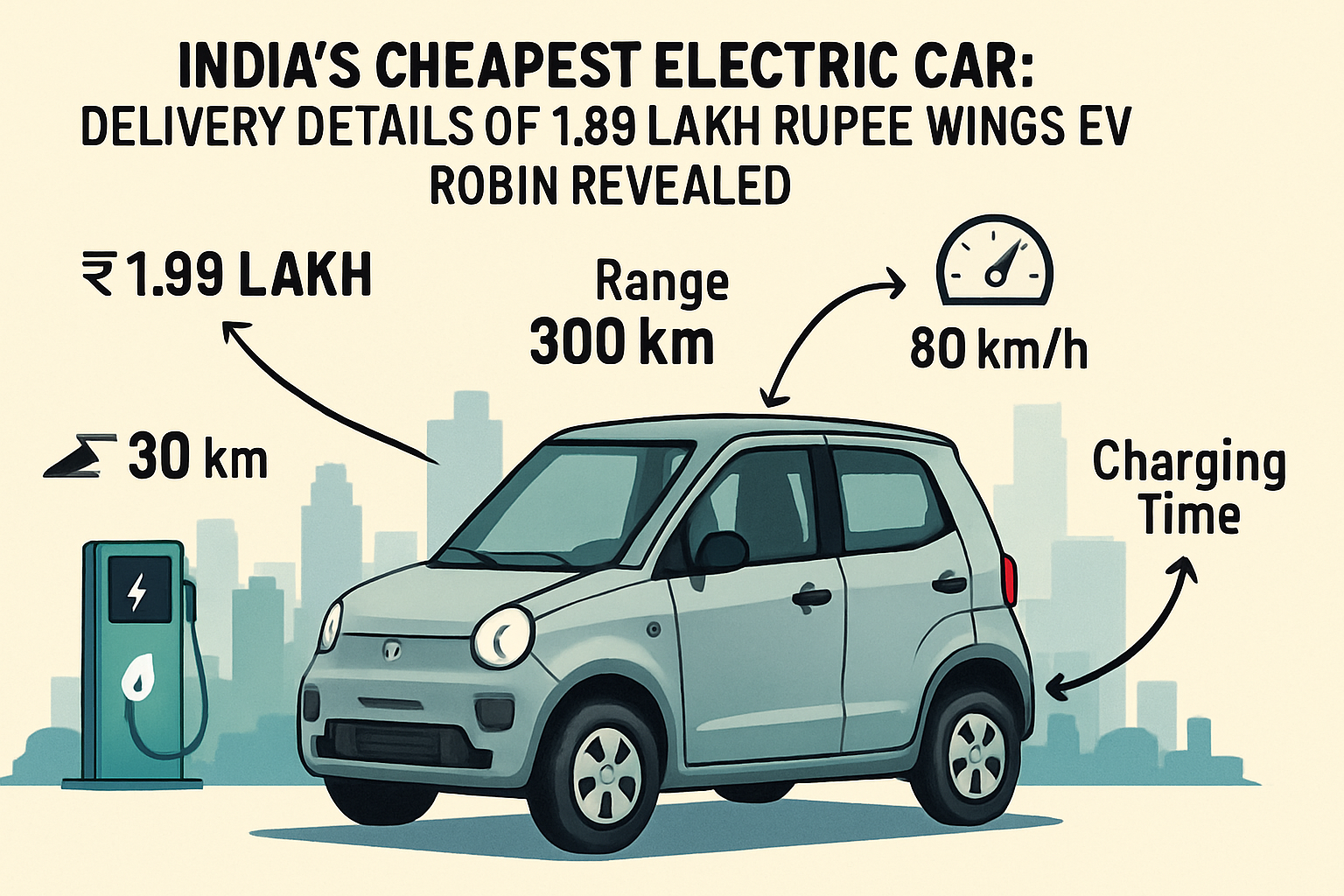
The arrival of the Wings EV Robin at an ex-showroom price of ₹1.99 lakh (approximately $2,400 USD at current exchange rates) is nothing short of a revolution in the Indian automotive market. For years, the high upfront cost has been a significant barrier to electric vehicle adoption in India. The Wings EV Robin directly addresses this concern, positioning itself as India’s Cheapest Electric Car: Delivery Details Of 1.99 Lakh Rupee Wings EV Robin Revealed. This pricing strategy isn’t just about competing; it’s about creating an entirely new segment of EV buyers.
Let’s delve into what makes this vehicle a standout:
Design and Dimensions
The Wings EV Robin is designed with practicality and urban utility in mind. It’s a compact, two-seater electric car, perfect for navigating congested city streets and tight parking spaces. While exact dimensions are still being finalized, expectations are that it will be comparable to microcars, prioritizing maneuverability over spaciousness. Its design ethos focuses on efficiency and a minimalistic approach, ensuring that costs are kept low without compromising on core functionality. Expect a no-frills, yet functional, interior that serves its primary purpose: affordable personal urban transport.
Powertrain and Performance
Given its price point, the Wings EV Robin will likely feature a modest yet efficient electric powertrain. We anticipate a smaller battery pack, optimized for a daily commute range, rather than long-distance travel. While specific figures are pending official release, industry speculation suggests:
- Range: Approximately 60-80 km on a single charge [1]. This makes it perfectly suited for daily errands, office commutes, or short city trips.
- Top Speed: Likely limited to around 40-50 km/h, aligning with urban speed limits and ensuring battery efficiency.
- Charging: We expect standard AC charging capabilities, possibly taking a few hours for a full charge from a regular home socket. Fast charging would be an advanced feature, unlikely at this price point.
| Feature | Anticipated Specification (Estimated) |
|---|---|
| Seating Capacity | 2-seater |
| Price (Ex-showroom) | ₹1.99 Lakh |
| Range (per charge) | 60-80 km |
| Top Speed | 40-50 km/h |
| Charging Time | 4-6 hours (Standard AC) |
| Primary Use | Urban Commuting |
“The Wings EV Robin isn’t just a car; it’s a statement about the future of affordable, sustainable transport in India. Its pricing strategy is a game-changer.”

Features and Safety
To achieve its ultra-low price, certain advanced features common in higher-priced EVs will naturally be omitted. However, essential features for a safe and comfortable ride are expected:
- Basic Infotainment: A simple digital display for speed, battery level, and basic controls.
- Lighting: LED daytime running lights and efficient headlamps.
- Safety: While detailed safety ratings are yet to be revealed, expect basic safety features like seatbelts and a sturdy chassis. Airbags might be an optional extra or not available in the base model, reflecting the segment’s cost-conscious nature.
For those interested in exploring more about entry-level EVs, you can find insights into cheapest electric cars India and general information on electric cars India. The introduction of the Wings EV Robin will undoubtedly shake up the market for electric cars under 5 lakhs.
Delivery Details and Market Impact: India’s Cheapest Electric Car
The excitement surrounding India’s Cheapest Electric Car: Delivery Details Of 1.99 Lakh Rupee Wings EV Robin Revealed reached a crescendo with the announcement of its delivery timeline. This critical phase marks the transition from concept to reality, putting electric vehicle ownership within reach for millions of Indians.
Official Delivery Commencement
Wings EV has indicated that deliveries for the Robin are slated to begin in phases across various major Indian cities, starting in Q2 2025. This staggered rollout is a common strategy for new automotive launches, allowing manufacturers to manage logistics, address initial customer feedback, and scale up production effectively [2]. Prospective buyers who have pre-booked the vehicle will be among the first to receive their units, with priority often given based on booking dates and geographical location.
How to Book and Anticipate Delivery
For interested buyers, the booking process for the Wings EV Robin typically involves:

- Online Registration: Many manufacturers offer online booking portals on their official websites.
- Dealership Network: Local dealerships will also facilitate bookings and provide hands-on information.
- Booking Amount: A nominal, refundable booking amount is usually required to secure a slot.
Once booked, customers can expect regular updates from Wings EV regarding their delivery status. The company is likely to establish a dedicated customer support channel to address queries and provide real-time tracking information.
The Broader Market Implications
The launch and subsequent delivery of the Wings EV Robin at this price point are poised to have several significant impacts on the Indian automotive market:
- Democratization of EVs: By offering an EV at a price comparable to popular entry-level internal combustion engine (ICE) cars (e.g., Maruti Alto, Renault Kwid), Wings EV is making electric mobility accessible to a much broader demographic. This could encourage a shift away from traditional petrol cars, especially for urban commuters.
- Increased Competition: Other manufacturers will undoubtedly take notice. This could spur greater innovation and lead to more affordable EV options entering the market in the coming years. We might see a ripple effect, pushing other brands to explore sub-₹5 lakh EV segments.
- Infrastructure Push: A surge in affordable EV sales could put pressure on the government and private players to accelerate the development of charging infrastructure across the country, which is crucial for widespread EV adoption.
- Sustainability Goals: More affordable EVs directly contribute to India’s ambitious sustainability goals, aiming to reduce carbon emissions and reliance on fossil fuels.
The market for affordable cars under ₹2 lakh has always been robust in India, and the EV Robin’s entry into this space is particularly noteworthy. It competes not just with other EVs but also with petrol-powered alternatives, forcing a re-evaluation of total cost of ownership which includes fuel savings. For a comprehensive look at the Indian car market, you can visit Carfatafat.com. If you’re comparing against other budget sedans, consider researching best budget sedans India 2025. This launch is a truly exciting development for the future of mobility in India, promising cleaner air and quieter streets.
What Lies Ahead for Affordable EVs?
The Wings EV Robin is likely just the beginning. Its success will pave the way for more manufacturers to explore the ultra-affordable EV segment. We can anticipate more localized production, technological advancements in battery efficiency, and government incentives designed to further reduce the cost of ownership. The goal is to move beyond early adopters and bring electric cars into the mainstream, making them the preferred choice for daily commuting. The focus for 2025 and beyond will be on enhancing range, improving charging times, and integrating more comfort features while maintaining an attractive price point.
Conclusion
The revelation of delivery details for the Wings EV Robin, India’s Cheapest Electric Car: Delivery Details Of 1.99 Lakh Rupee Wings EV Robin Revealed, marks a pivotal moment in the nation’s journey towards sustainable mobility. Priced at an unprecedented ₹1.99 lakh, this compact urban electric vehicle is set to democratize EV ownership, making it an achievable dream for millions of Indians in 2025. Its practical design, sufficient range for city commutes, and ultra-affordable price point make it a compelling choice for those seeking an economical and environmentally friendly mode of transport.

As deliveries commence in Q2 2025, the Wings EV Robin is poised to not only disrupt the automotive market but also accelerate the expansion of India’s EV charging infrastructure and foster greater competition among manufacturers. This isn’t just about a new car; it’s about a significant step forward in making India’s urban centers cleaner, quieter, and more sustainable. We at Carfatafat are excited to follow its journey and see the transformative impact it has on the Indian automotive landscape.
Actionable Next Steps:
- Stay Informed: Keep an eye on official announcements from Wings EV for precise delivery schedules and dealership networks.
- Research Comparisons: If you’re considering an EV, compare the Wings EV Robin’s specifications and total cost of ownership (including potential government subsidies and charging costs) against other entry-level cars, both electric and petrol.
- Visit Dealerships: Once available, visit local dealerships to experience the car firsthand and inquire about test drives.
- Consider Infrastructure: Assess the availability of charging points in your area and at your home to ensure a smooth EV ownership experience.
References
[1] Industry estimates and competitive analysis of micro-EV segments (as of late 2024, anticipating 2025 releases).
[2] Automotive industry standard practices for new vehicle launches and phased rollouts.