The streets of India are buzzing with a quiet revolution, and at its heart are small EV cars in India. No longer a distant dream, electric vehicles are becoming a tangible reality for millions, and compact models are leading the charge. As we navigate 2025, the demand for sustainable, affordable, and practical personal transport solutions is soaring, making small electric cars an increasingly attractive option for urban dwellers and eco-conscious buyers alike. These nimble machines offer a unique blend of efficiency, convenience, and environmental responsibility, perfectly tailored for India’s diverse driving conditions and traffic patterns. This article will delve deep into why small EV cars are gaining immense popularity, what makes them ideal for the Indian market, and what you can expect from this exciting segment in the coming year.
Key Takeaways
- Small EV cars in India are experiencing rapid growth due to their affordability, low running costs, and suitability for urban commuting.
- Government incentives and a growing charging infrastructure are significantly boosting the adoption of compact electric vehicles across the country.
- Several domestic and international manufacturers are launching exciting new models and variants in 2025, offering more choices to consumers.
- Challenges like charging availability and initial purchase price are being addressed through policy and technological advancements.
- Owning a small EV in India offers substantial environmental benefits and contributes to a greener future.
Why Small EV Cars are Dominating the Indian Market in 2025
[[R_IMG_1]]
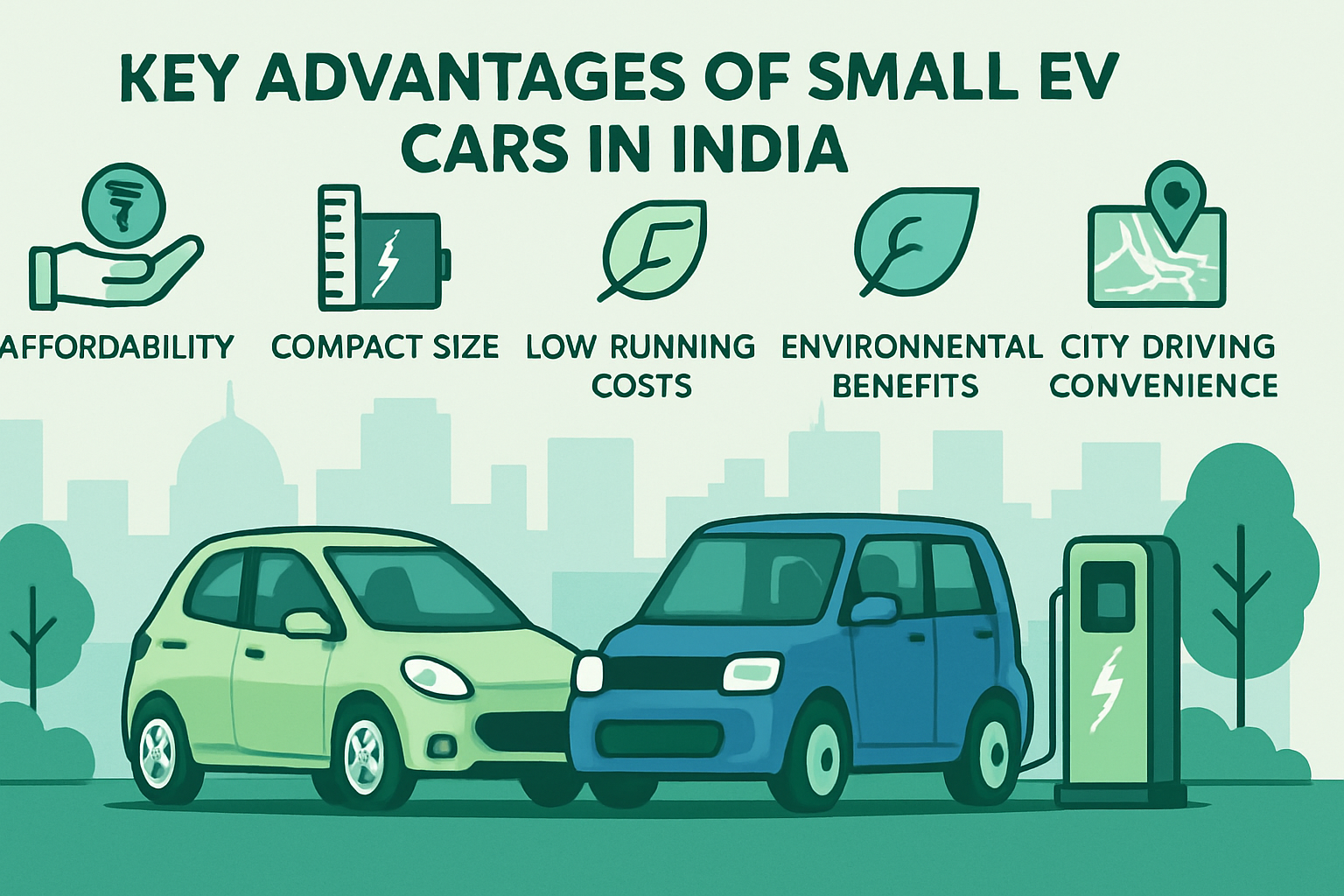
The shift towards electric mobility in India is undeniable, and it’s the segment of small EV cars that’s truly igniting this transformation. In 2025, several factors converge to make these compact electric marvels the preferred choice for a rapidly expanding consumer base. Let’s explore the compelling reasons behind their growing dominance.
Affordability and Accessibility
One of the biggest draws for small electric vehicles is their price point. Compared to their larger EV counterparts or even many traditional internal combustion engine (ICE) cars, small EVs offer a more accessible entry into sustainable mobility. Manufacturers are increasingly focusing on cost-effective battery technology and localizing production to keep prices competitive. This makes owning a brand-new electric car a viable option for a wider demographic, something that was unimaginable just a few years ago.
Furthermore, the government continues to play a pivotal role. Schemes like FAME-II (Faster Adoption and Manufacturing of Electric Vehicles in India) offer subsidies and incentives that directly reduce the upfront cost for buyers. State-level policies, including road tax exemptions and registration fee waivers, further sweeten the deal, making small EV cars in India an incredibly attractive proposition. This affordability is crucial for a price-sensitive market like India, allowing more people to experience the benefits of electric driving.
Low Running Costs and Maintenance
Beyond the initial purchase, the long-term economic advantages of small EV cars are substantial. Electricity is significantly cheaper than petrol or diesel, leading to drastic reductions in daily running costs. Imagine spending just a few rupees per kilometer compared to the much higher fuel costs of a conventional vehicle! This translates into significant savings over the vehicle’s lifespan.
Moreover, electric vehicles have fewer moving parts than ICE cars, meaning less wear and tear and, consequently, lower maintenance requirements. No oil changes, spark plug replacements, or complex exhaust system repairs contribute to a more hassle-free ownership experience and reduced expenditure on servicing. This factor alone is a strong motivator for many Indian consumers, keen on minimizing their monthly outgoings.
Perfect for Urban Commuting
Indian cities are known for their dense traffic, narrow lanes, and limited parking spaces. This is precisely where small EV cars shine. Their compact dimensions make them incredibly easy to maneuver through congested streets, park in tight spots, and navigate the typical challenges of urban driving.
- Agility: Small EVs offer excellent agility, making U-turns and lane changes effortless.
- Parking: Their smaller footprint simplifies parking, a perennial headache in Indian cities.
- Silence: The near-silent operation of EVs reduces noise pollution, contributing to a calmer driving experience for occupants and city dwellers.
For daily commutes, grocery runs, or weekend errands within the city, these vehicles are simply unmatched in convenience. Their range is typically more than sufficient for city driving, and the growing network of charging stations ensures peace of mind.
Environmental Benefits and Sustainable Living
Choosing a small EV car in India is a tangible step towards a greener future. Electric vehicles produce zero tailpipe emissions, directly contributing to cleaner air in our cities and reducing our carbon footprint. With air quality being a significant concern in many Indian urban centers, the widespread adoption of EVs can have a profound positive impact on public health and the environment.

The government’s push for sustainable transport, coupled with increasing environmental awareness among consumers, means that owning an EV is not just a practical choice but also a socially responsible one. As India aims for ambitious net-zero targets, small electric vehicles will play a crucial role in decarbonizing the transportation sector. You can explore more about sustainable transport options and new car launches at CarFatafat.
Growing Charging Infrastructure and Technological Advancements
While charging infrastructure was once a major concern, India has made significant strides in expanding its network. We are seeing a rapid increase in public charging stations across cities and highways, making it easier for EV owners to recharge on the go. Furthermore, home charging solutions are straightforward to install, allowing owners to conveniently charge their vehicles overnight.
Technological advancements are also playing a crucial role. Battery technology is constantly improving, leading to increased range, faster charging times, and enhanced durability. Manufacturers are integrating smart features, advanced safety systems, and improved connectivity into small EV models, making them more appealing and practical than ever before. For those interested in the latest EV innovations, keeping an eye on best EV cars in India will be insightful.
Top Small EV Cars in India to Watch Out for in 2025
[[R_IMG_2]]
The market for small EV cars in India is dynamic and competitive, with both established players and new entrants vying for consumer attention. As we move into 2025, several models stand out, offering a blend of performance, features, and value. Here’s a look at some of the top contenders and what makes them special.
Tata Tiago EV
Tata Motors has been a pioneer in India’s EV revolution, and the Tiago EV is a testament to its commitment to accessible electric mobility. This compact hatchback offers an impressive package, combining practicality with eco-friendliness.
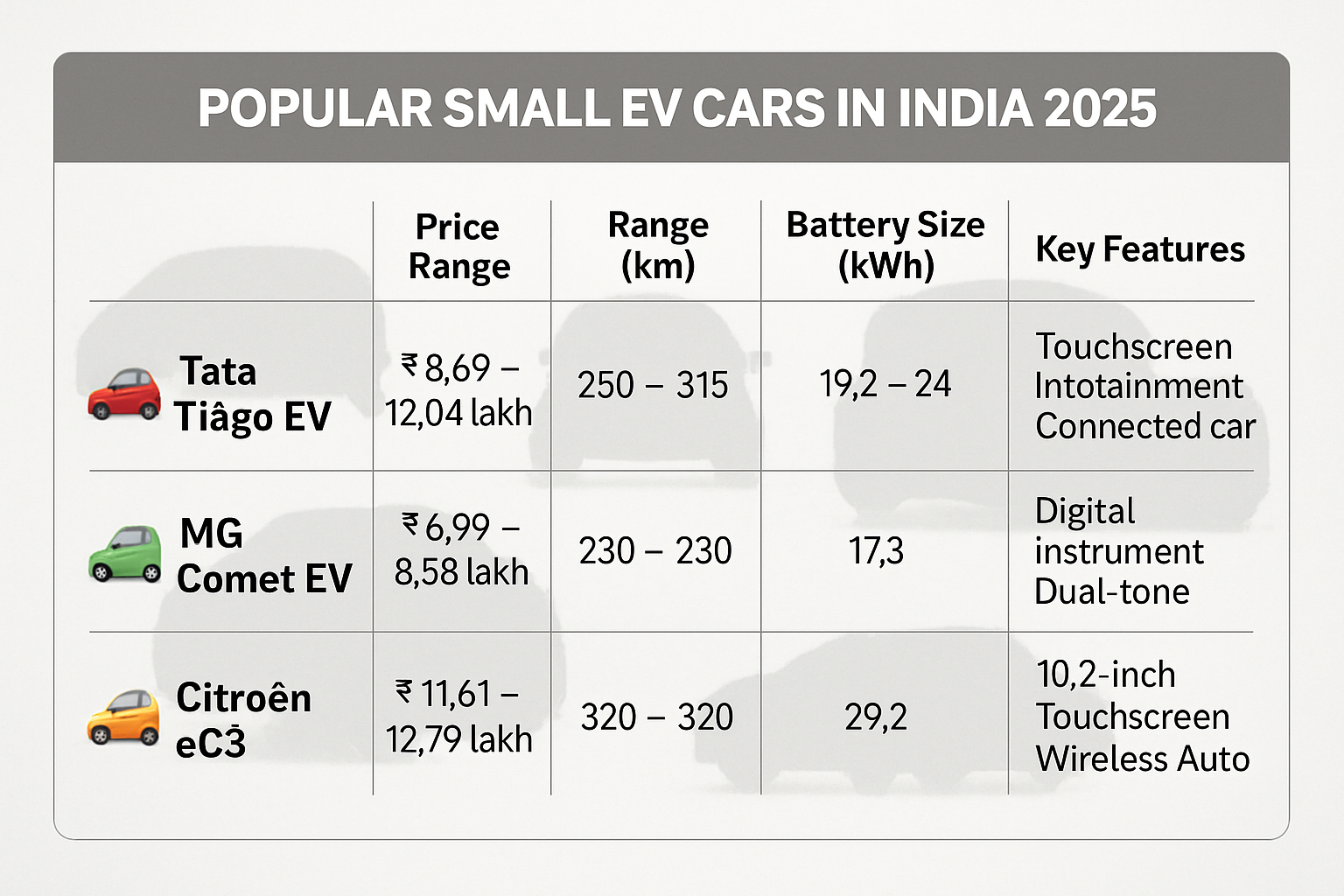
| Feature | Specification (Approximate) |
|---|---|
| Battery Pack | 19.2 kWh or 24 kWh |
| Range (ARAI) | 250 km – 315 km |
| Motor Power | 61 PS / 75 PS |
| Charging | DC Fast Charging (58 mins for 10-80%) |
| Key Highlights | Multi-mode regen, connected car tech, 4 safety airbags |
The Tiago EV is known for its peppy performance, comfortable ride, and a feature-rich cabin, making it a strong contender for those seeking an all-rounder small electric car. Its competitive pricing further solidifies its position as a market leader. Tata also has upcoming subcompact SUVs that could include EV variants, which you can read more about at 3 Upcoming Tata Subcompact SUVs.
MG Comet EV
The MG Comet EV is perhaps one of the most distinctive small EV cars in India. Its ultra-compact dimensions and unique design language make it stand out from the crowd. Designed primarily for urban use, the Comet EV offers incredible maneuverability and ease of parking.
- Compact Design: At just 2.9 meters long, it’s perfect for congested city traffic.
- Modern Interiors: Despite its size, it boasts a surprisingly spacious and tech-laden cabin with twin 10.25-inch screens.
- Decent Range: A 17.3 kWh battery provides an ARAI-certified range of 230 km, ample for city commutes.
- Affordability: Positioned as an entry-level EV, it’s one of the most affordable options available.
The Comet EV is ideal for individuals or small families seeking a secondary car purely for city use. Its quirky design and smart features appeal to a younger, tech-savvy audience.
Citroen eC3
Citroen’s entry into the Indian EV market with the eC3 brings a touch of European flair and practicality. Based on the ICE C3 hatchback, the eC3 offers a familiar, robust design with an electric powertrain.

- Battery: 29.2 kWh battery pack.
- Range (ARAI): 320 km, making it suitable for city and occasional highway runs.
- Ground Clearance: Good ground clearance, a plus for Indian roads.
- Comfort: Known for its comfortable ride quality, a hallmark of Citroen vehicles.
The eC3 positions itself as a practical and comfortable family car, offering decent space and a usable range. Its robust build and easy-to-drive nature make it a strong contender in the small EV segment. For those exploring new launches, Citroen’s plans for 2025 are worth noting, possibly including updates to the C3 line, as seen with Citroen C3 2025.
Upcoming Small EV Cars and Future Trends
The landscape for small EV cars in India is continuously evolving. Several manufacturers are gearing up to introduce new models or update existing ones in 2025. We anticipate:
- Increased Localisation: More components will be manufactured locally, further driving down costs and improving supply chains.
- Longer Ranges: While affordability remains key, there will be a gradual push for slightly longer ranges even in compact EVs.
- Advanced Features: Expect to see more connected car technologies, advanced driver-assistance systems (ADAS), and improved infotainment options trickling down to the small EV segment.
- Dedicated EV Platforms: Manufacturers are investing in dedicated electric vehicle platforms for their compact models, which will optimize design, space, and performance.
Brands like Maruti Suzuki are also expected to make a significant splash in the small EV segment, given their dominance in the small car market. Their upcoming models could revolutionize the entry-level EV space. For insights into other budget-friendly options, you might be interested in cheapest electric cars India.
The future of small EV cars in India looks incredibly bright. With continuous innovation, supportive government policies, and increasing consumer acceptance, these vehicles are set to redefine personal mobility in the country. If you’re considering an EV, 2025 is an excellent time to explore the diverse and growing options available. You can also compare different car models and their features on CarFatafat.
The Practicalities of Owning a Small EV in India
Embracing the electric revolution by choosing a small EV car in India comes with its unique set of practical considerations. While the benefits are clear, understanding the nuances of ownership – from charging to insurance and resale – is crucial for a smooth and satisfying experience.
Charging Solutions: Home, Work, and Public
One of the first questions potential buyers ask is about charging. Thankfully, the ecosystem is rapidly maturing.
- Home Charging: This is the most convenient option for most EV owners. All small EV cars come with a portable charger that can plug into a standard 15A wall socket. For faster charging, many owners opt for a dedicated AC wall charger (typically 3.3 kW or 7.2 kW) installed at their home or apartment parking. This allows for overnight charging, ensuring a full battery every morning.
- Workplace Charging: A growing number of offices and commercial complexes are installing EV charging points as an employee perk. This offers a convenient way to top up your battery during work hours.
- Public Charging Infrastructure: India’s public charging network is expanding rapidly. You’ll find charging stations at petrol pumps, malls, highways, and dedicated EV charging hubs. Most small EVs support DC fast charging, allowing you to charge from 10% to 80% in under an hour, depending on the model and charger capacity. Apps from various providers help locate available charging points.
While rural areas might still have limited infrastructure, urban and semi-urban areas are well-equipped, making the ownership of small EV cars in India increasingly practical.
Battery Life and Replacement Costs
Battery technology has come a long way, and modern EV batteries are designed to last for many years. Most manufacturers offer extensive warranties on their battery packs, typically ranging from 8 years or 160,000 km, whichever comes first. This provides significant peace of mind.
While battery replacement costs can be high, they are rare and often covered under warranty for a considerable period. As technology advances and production scales up, battery costs are expected to decrease further. Additionally, many batteries retain enough capacity for a second life in stationary storage applications, further improving their overall environmental and economic lifecycle.

Insurance and Resale Value
Insuring an EV is similar to insuring a traditional car, though some policies might have specific clauses related to batteries. As the market matures, more specialized EV insurance products are becoming available, often offering competitive rates due to fewer moving parts and potentially lower repair costs for certain components. It’s always advisable to compare quotes from various providers. For general car insurance information, you can check out best car insurance in India.
Regarding resale value, it’s a newer territory for EVs in India. However, initial trends suggest that popular models with good battery health and strong manufacturer support hold their value well. As the market for used EVs grows, and with increasing awareness about the longevity and low running costs of electric vehicles, we expect resale values for small EV cars to stabilize and even strengthen in the coming years. Early adopters may find good value, and as the segment matures, buying a best second-hand cars India EV will become more common.
Government Incentives and Policies for 2025
The Indian government remains committed to promoting electric mobility. In 2025, we can expect continued support through various policies:
- FAME-II Scheme: Subsidies on the purchase of EVs, reducing the upfront cost.
- State-level Incentives: Many states offer additional benefits like exemptions from road tax and registration fees, further reducing the total cost of ownership.
- Production-Linked Incentive (PLI) Scheme: Encourages local manufacturing of advanced automotive technology products, including EV components, leading to cheaper EVs.
- Charging Infrastructure Development: Continued investment and policy support for expanding the public and private charging network.
These incentives make the decision to buy small EV cars in India even more compelling, ensuring that consumers receive financial benefits alongside the environmental ones.
Driving Experience and Performance
Small EV cars in India offer a surprisingly spirited and enjoyable driving experience.
- Instant Torque: Electric motors deliver instant torque, meaning brisk acceleration right from a standstill, making city driving nimble and responsive.
- Smooth and Silent: The absence of engine noise and vibrations provides a remarkably smooth and quiet ride, enhancing comfort, especially in stop-and-go traffic.
- Regenerative Braking: Many EVs feature regenerative braking, which not only helps recharge the battery but also provides a unique “one-pedal” driving feel, reducing wear on traditional brakes.
Whether you’re navigating crowded streets or cruising on an open stretch, these compact EVs offer a refined and engaging drive. They are a practical and joyful choice for anyone looking to upgrade their urban commute. To learn more about other types of vehicles, visit CarFatafat.
Conclusion
The landscape of small EV cars in India is undergoing a profound transformation, positioning these compact electric vehicles as a cornerstone of sustainable personal mobility for 2025 and beyond. Their compelling blend of affordability, low running costs, environmental benefits, and practical urban usability makes them an increasingly attractive choice for a wide spectrum of Indian consumers. From the pioneering efforts of Tata Motors with models like the Tiago EV to the distinctive urban charm of the MG Comet EV and the robust practicality of the Citroen eC3, the market offers diverse options to suit various needs and preferences.
The supportive policy environment, coupled with the rapid expansion of charging infrastructure and continuous technological advancements, is paving the way for even wider adoption. Owning a small EV in India today means embracing a future that is cleaner, quieter, and more economical. The initial considerations regarding charging, battery life, and resale value are being addressed effectively by the industry and government, instilling greater confidence in prospective buyers. As we look ahead, the segment of small EV cars promises to deliver more innovation, more choices, and an even more seamless transition to electric driving. It’s an exciting time to be part of India’s electric journey, and these nimble machines are leading the charge towards a greener tomorrow.
Actionable Next Steps:
- Research Specific Models: Identify 2-3 small EV cars that fit your budget and requirements. Consider factors like range, features, and available charging infrastructure in your area.
- Test Drive: Visit dealerships and take test drives to experience the driving dynamics and comfort of your chosen models firsthand.
- Evaluate Charging Options: Assess your home charging feasibility and explore the public charging network in your frequent travel routes.
- Check Government Incentives: Stay updated on central and state government subsidies and tax benefits applicable in 2025 that can reduce your purchase cost.
- Compare Insurance Quotes: Get specialized EV insurance quotes to understand the cost of ownership beyond the vehicle price.