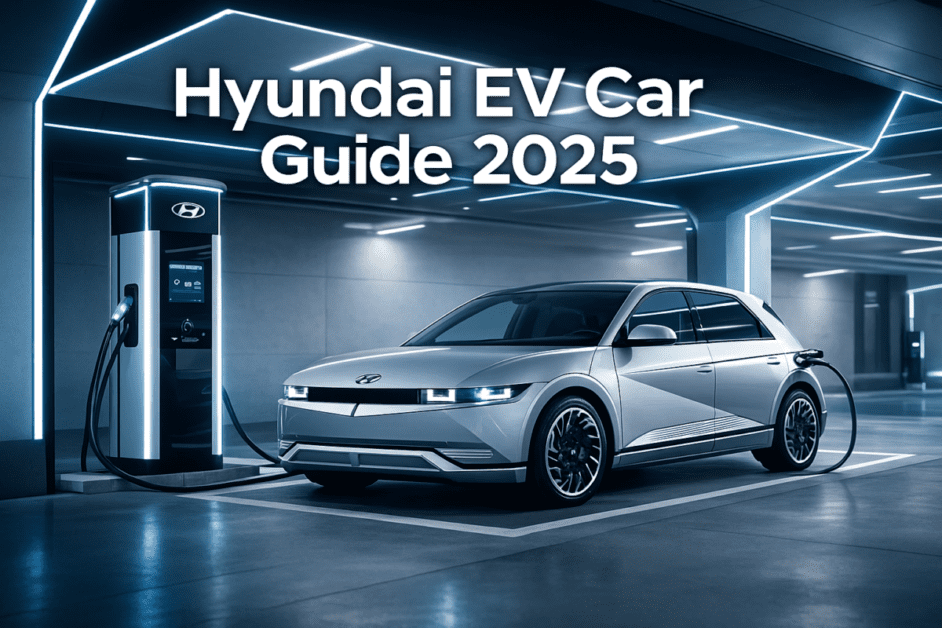
Picture this: you’re gliding silently down the highway in a sleek, cutting-edge vehicle that charges faster than your smartphone and travels over 300 miles on a single charge. This isn’t science fiction—it’s the reality of owning a Hyundai EV car in 2025. As one of the automotive industry’s most ambitious electric vehicle manufacturers, Hyundai has transformed from a traditional automaker into an EV powerhouse, offering six strategic electric models that are reshaping how we think about sustainable transportation.
The Korean automaker’s electric revolution isn’t just about going green—it’s about delivering superior performance, innovative technology, and exceptional value that rivals any luxury brand. From the affordable KONA Electric to the flagship IONIQ 9 three-row SUV, Hyundai’s EV lineup proves that electric doesn’t mean compromise.
Key Takeaways
• Hyundai offers six strategic EV models in 2025, ranging from the compact Inster city car to the premium IONIQ 9 seven-seater SUV, with prices spanning €25,000 to €73,000
• Industry-leading charging technology: Hyundai’s proprietary 800V E-GMP platform enables ultra-fast charging times as low as 18 minutes from near-empty to full charge
• Impressive range capabilities: The 2025 IONIQ 6 sedan delivers up to 361 miles of range, while the IONIQ 5 offers 318 miles with its larger 84 kWh battery pack
• Advanced features across all models: Every Hyundai EV includes Vehicle-to-Load (V2L) functionality, dual 12.3-inch digital screens, and innovative heat pump systems
• Performance meets efficiency: Top-tier models produce up to 320 horsepower while maintaining exceptional energy efficiency and environmental benefits
Hyundai’s 2025 Electric Vehicle Lineup: A Comprehensive Overview
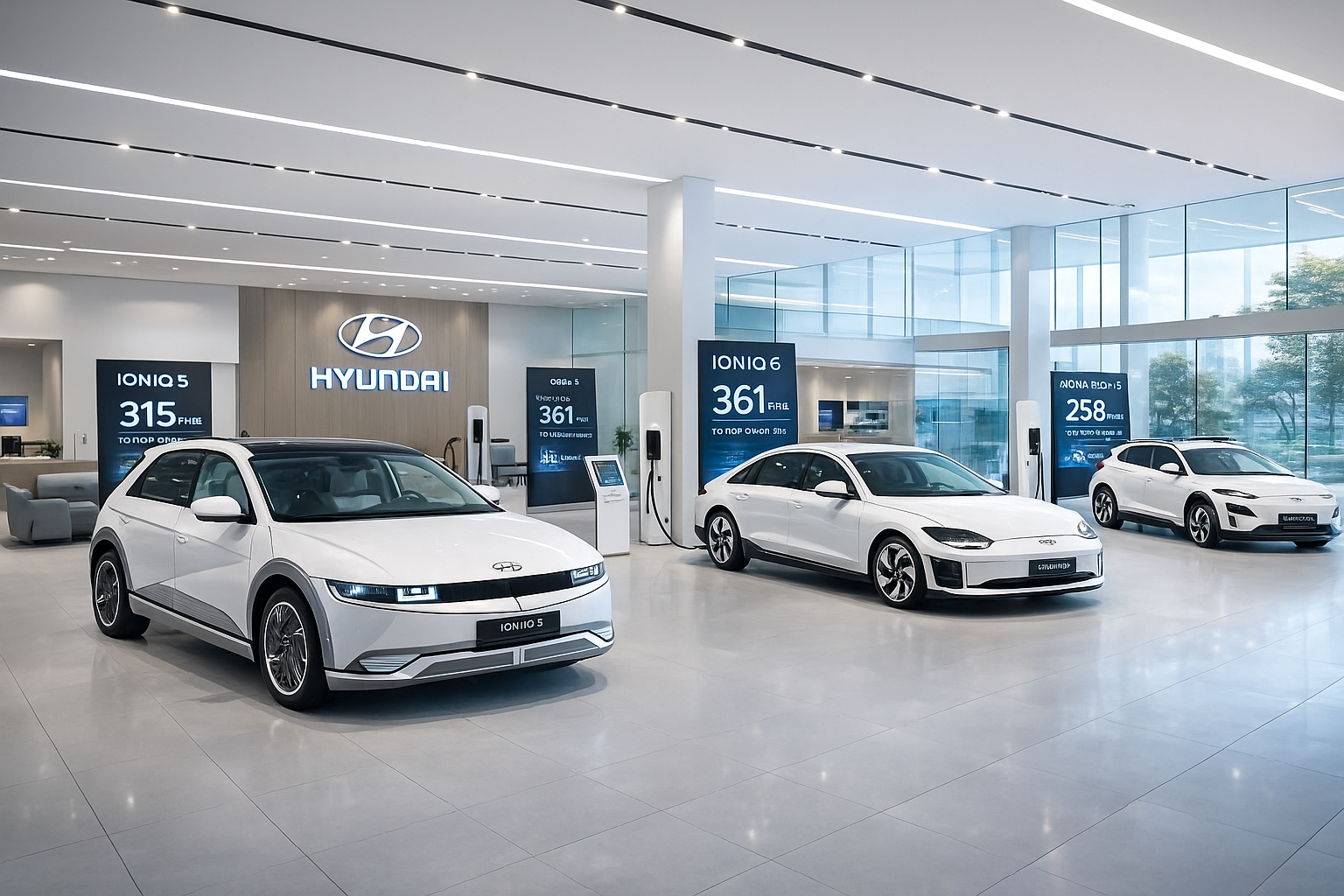
Hyundai has strategically positioned itself as a leader in the electric vehicle revolution, and their 2025 lineup showcases this commitment with six distinct EV models designed to meet diverse consumer needs. Each Hyundai EV car in the current lineup represents a significant leap forward in electric mobility, combining advanced technology with practical everyday usability.
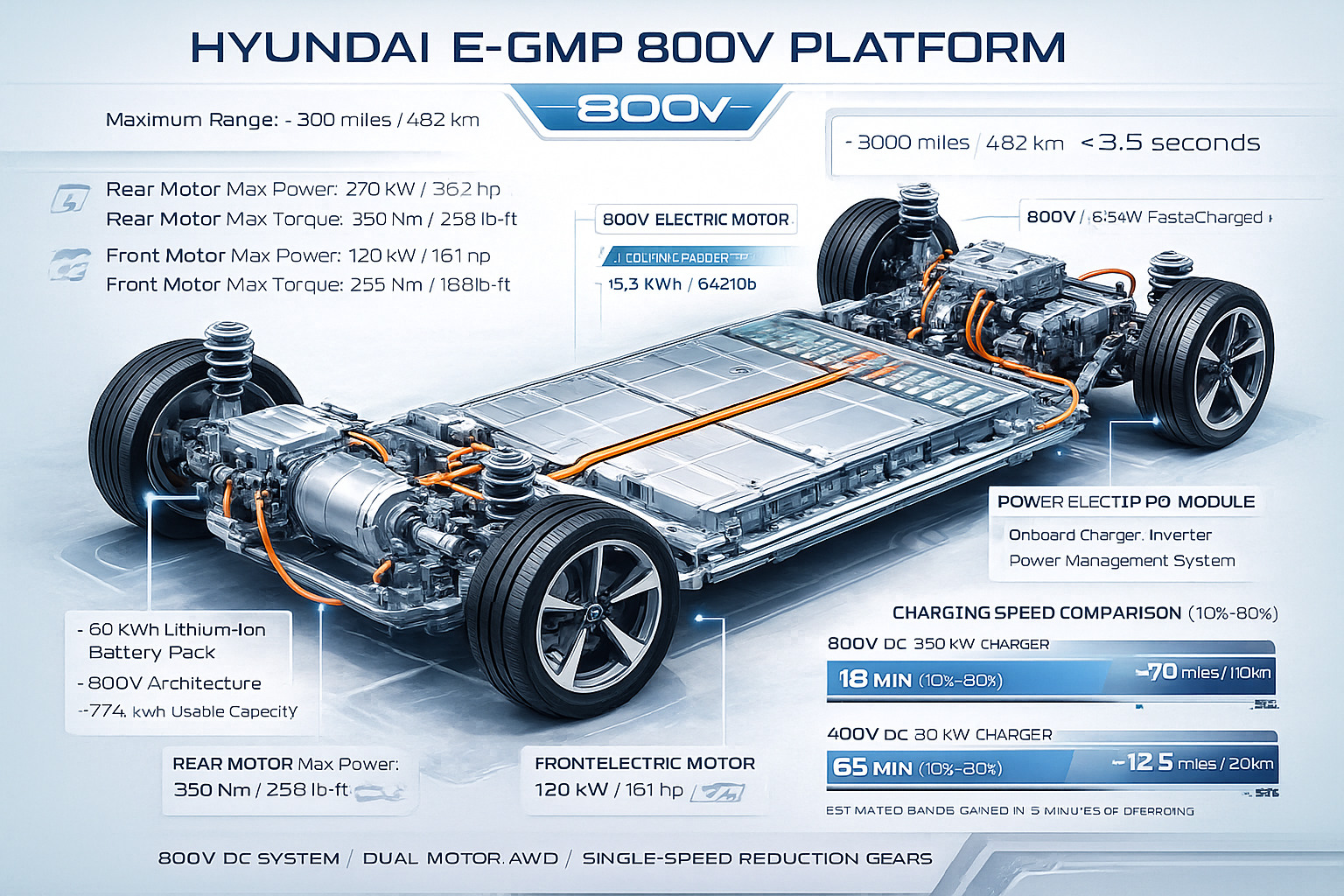
The foundation of Hyundai’s electric success lies in their proprietary E-GMP (Electric-Global Modular Platform), which utilizes cutting-edge 800V architecture. This technology enables remarkably fast charging capabilities, with some models achieving full charges in as little as 18 minutes under optimal conditions [1]. This advancement addresses one of the primary concerns consumers have about electric vehicles: charging time and convenience.
The Complete 2025 Hyundai EV Model Range
Here’s a detailed breakdown of Hyundai’s current electric vehicle offerings:
| Model | Starting Price | Range | Horsepower | Key Features |
|---|---|---|---|---|
| Inster | €25,000 | City-focused | 115 hp | Compact urban mobility |
| KONA Electric | $32,975 | 261 miles | 201 hp | Most affordable option |
| IONIQ 5 | $41,800 | 318 miles | 168-320 hp | Best-selling model |
| IONIQ 6 | $37,500 | 361 miles | 305-320 hp | Maximum range sedan |
| IONIQ 9 | €73,000 | 620+ km | TBD | Three-row family SUV |
The diversity in this lineup ensures that whether you’re looking for an affordable urban commuter or a premium family vehicle, there’s a Hyundai EV car that fits your specific needs and budget.
Revolutionary E-GMP Technology Platform
What sets Hyundai’s electric vehicles apart from competitors is their E-GMP technology platform, which serves as the backbone for all their premium electric models. This 800V system offers several key advantages:
⚡ Ultra-Fast Charging Capabilities
- 18-minute charging times from 10% to 80% capacity
- 350 kW DC fast charging support on select models
- Reduced charging infrastructure dependency
🔋 Enhanced Battery Efficiency
- Improved energy density and thermal management
- Extended battery life through advanced cooling systems
- Optimized weight distribution for better handling
🚗 Superior Performance Characteristics
- Instant torque delivery for responsive acceleration
- Lower center of gravity for improved stability
- Reduced maintenance requirements compared to traditional vehicles
This technological foundation has enabled Hyundai to create vehicles that don’t just compete with other electric cars—they rival the performance and convenience of traditional gasoline vehicles while offering significant environmental and cost benefits.
For consumers interested in exploring the best electric vehicles available in India, Hyundai’s offerings represent some of the most compelling options in the current market, combining proven reliability with cutting-edge innovation.
Top Hyundai EV Car Models: Performance and Features Breakdown
The Hyundai EV car lineup for 2025 showcases three standout models that represent the pinnacle of electric vehicle engineering: the IONIQ 5, IONIQ 6, and KONA Electric. Each model targets different market segments while maintaining Hyundai’s commitment to innovation, performance, and value.
IONIQ 5: The Best-Selling Electric Crossover
The 2025 IONIQ 5 has emerged as Hyundai’s flagship electric vehicle and their best-selling EV model globally. This crossover SUV perfectly balances practicality with cutting-edge technology, making it an ideal choice for families and tech enthusiasts alike.
🔋 Battery and Range Specifications
- 84 kWh battery pack (upgraded from previous 77.4 kWh)
- 318 miles EPA-estimated range (70-mile improvement over 2024)
- 18-minute fast charging capability with 800V architecture
⚡ Performance Options
- Base Single-Motor: 168 hp, 258 lb-ft torque
- Dual-Motor AWD: Up to 320 hp with enhanced traction
- 0-60 mph acceleration: 5.1 seconds (AWD configuration)
The IONIQ 5’s standout feature is its innovative interior design with flat floor architecture, enabling spacious cabin layouts and flexible seating arrangements. The vehicle also includes Hyundai’s signature Vehicle-to-Load (V2L) functionality, allowing owners to power external devices, camping equipment, or even other electric vehicles.
New XRT Off-Road Variant
For 2025, Hyundai introduced the IONIQ 5 XRT trim, specifically designed for adventure enthusiasts. This variant features:
- Increased ride height for improved ground clearance
- All-terrain tire packages for enhanced off-road capability
- Multi-terrain driving modes optimized for various surfaces
- Rugged exterior styling with protective cladding
This addition demonstrates Hyundai’s commitment to expanding electric vehicle capabilities beyond traditional urban and highway driving scenarios.
IONIQ 6: Maximum Range Electric Sedan
The 2025 IONIQ 6 represents Hyundai’s answer to premium electric sedans, offering the highest range in their entire EV lineup at up to 361 miles on a single charge. This aerodynamically optimized sedan targets consumers who prioritize efficiency and luxury features.
🚗 Advanced Technology Features
- Dual 12.3-inch digital screens for infotainment and instrumentation
- Innovative heat pump system for efficient cabin heating
- Full LED exterior lighting with distinctive design elements
- 77.4 kWh battery configuration optimized for maximum efficiency
💪 Performance Specifications
- Single-Motor RWD: 305 hp, exceptional efficiency
- Dual-Motor AWD: 320 hp, enhanced all-weather capability
- Streamlined aerodynamics contributing to extended range
The IONIQ 6’s design philosophy prioritizes aerodynamic efficiency while maintaining premium interior comfort and advanced driver assistance features. For consumers comparing sedan options in the current market, the IONIQ 6 offers compelling advantages in both performance and operating costs.
KONA Electric: Affordable Entry Point
The 2025 KONA Electric serves as Hyundai’s most accessible electric vehicle, starting at $32,975 MSRP while delivering impressive performance and range capabilities. This compact SUV proves that electric vehicles can be both affordable and feature-rich.
🔋 Battery Configuration Options
- 48.4 kWh battery: 377 km range, ideal for city driving
- 65.4 kWh battery: 514 km range, suitable for longer commutes
- 201 horsepower output across all configurations
✨ Standard Features Include
- 261 miles maximum range (65.4 kWh version)
- Fast charging compatibility with CCS standard
- Comprehensive safety suite with advanced driver assistance
- Modern infotainment system with smartphone integration
The KONA Electric’s appeal lies in its ability to deliver premium EV features at an accessible price point. For budget-conscious consumers exploring affordable vehicle options, the KONA Electric represents exceptional value in the electric vehicle segment.
Upcoming IONIQ 9: Three-Row Family Electric SUV
Looking ahead to 2026, Hyundai will introduce the IONIQ 9, their largest and most ambitious electric vehicle to date. This three-row SUV targets families who need maximum space without compromising on electric efficiency.
🚙 Preliminary Specifications
- 110.3 kWh battery pack (largest in Hyundai’s lineup)
- 620+ kilometers range for extended family trips
- 350 kW DC fast charging capability
- Seven-seater configuration with flexible interior layouts
The IONIQ 9 will compete directly with premium electric SUVs from luxury brands while maintaining Hyundai’s reputation for value and reliability. This model represents the culmination of Hyundai’s electric vehicle development, incorporating lessons learned from their entire EV lineup.
For families currently considering large SUV options, the IONIQ 9 promises to deliver the space and capability of traditional three-row SUVs with the efficiency and environmental benefits of electric propulsion.
Charging Technology and Infrastructure: What Makes Hyundai EVs Stand Out
One of the most significant barriers to electric vehicle adoption has traditionally been charging anxiety—the concern about finding convenient, fast charging options during daily use and long-distance travel. Hyundai has addressed this challenge head-on with their revolutionary 800V E-GMP charging technology, which fundamentally changes the electric vehicle ownership experience.
Revolutionary 800V Architecture Explained
Unlike most electric vehicles that operate on 400V systems, every Hyundai EV car built on the E-GMP platform utilizes 800V architecture. This technological advancement provides several critical benefits that directly impact daily usability:
⚡ Ultra-Fast Charging Speeds
- 18-minute charging times from 10% to 80% capacity
- 350 kW DC fast charging support on compatible stations
- Reduced charging session duration compared to 400V competitors
🔋 Enhanced Efficiency Benefits
- Lower electrical losses during charging and operation
- Improved thermal management for battery longevity
- Optimized energy transfer reducing infrastructure strain
The practical impact of this technology cannot be overstated. While traditional electric vehicles might require 45-60 minutes for significant charging, Hyundai EVs can achieve the same results in less than 20 minutes under optimal conditions [2]. This advancement brings electric vehicle charging closer to the convenience of traditional gas station fill-ups.
Vehicle-to-Load (V2L) Innovation
Beyond fast charging capabilities, Hyundai has pioneered Vehicle-to-Load (V2L) functionality across their entire electric vehicle lineup. This innovative feature transforms every Hyundai EV car into a mobile power station capable of supplying electricity to external devices and appliances.
🏕️ Practical V2L Applications
- Camping and outdoor activities: Power grills, lights, and electronic devices
- Emergency backup power: Home appliances during outages
- Work site applications: Tools and equipment in remote locations
- Event support: Outdoor gatherings and mobile businesses
⚡ Technical Specifications
- Up to 3.6 kW power output through standard household outlets
- Multiple outlet configurations for various device types
- Integrated safety systems preventing battery over-discharge
- User-friendly controls through vehicle infotainment system
This functionality represents a paradigm shift in how we think about vehicles—transforming them from simple transportation devices into versatile energy resources that enhance lifestyle flexibility and emergency preparedness.
Charging Network Compatibility and Expansion
Hyundai has strategically designed their electric vehicles to work seamlessly with existing and emerging charging infrastructure. Every Hyundai EV car includes CCS (Combined Charging System) compatibility, ensuring access to the broadest possible network of public charging stations.
🗺️ Charging Network Access
- Electrify America partnership for premium fast charging
- Universal CCS compatibility with third-party networks
- Tesla Supercharger access (with adapter, coming 2025)
- Home charging solutions with Level 1 and Level 2 options
📱 Advanced Charging Management
- Bluelink connected services for remote charging monitoring
- Route planning integration with charging station locations
- Charging cost tracking and energy usage analytics
- Preconditioning capabilities for optimized charging speeds
The integration of charging management into Hyundai’s connected vehicle services ensures that owners can easily locate, access, and pay for charging sessions while monitoring their vehicle’s status remotely.
Real-World Charging Performance
Independent testing and owner reports consistently demonstrate that Hyundai’s charging technology delivers on its promises in real-world conditions. The IONIQ 5 and IONIQ 6 regularly achieve charging speeds that significantly exceed competitor vehicles, even when charging infrastructure isn’t perfectly optimized.
📊 Charging Performance Metrics

- Peak charging rates: 235 kW sustained on IONIQ 5
- Temperature management: Minimal speed reduction in extreme weather
- Charging curve optimization: Consistent high speeds throughout session
- Battery conditioning: Automatic preparation for optimal charging
For consumers comparing electric vehicle options, these charging advantages translate into reduced travel time, increased convenience, and lower ownership stress. The combination of fast charging and extensive network compatibility makes Hyundai EVs particularly suitable for long-distance driving scenarios where charging speed and reliability are paramount.
This technological leadership positions Hyundai as a frontrunner in the electric vehicle market, offering solutions that address practical concerns while pushing the industry forward toward more sustainable transportation options.
Pricing and Value Proposition: Hyundai EV Car Market Position
Understanding the pricing strategy and value proposition of Hyundai’s electric vehicle lineup reveals why these models have gained significant traction in competitive markets worldwide. Hyundai has positioned their EV car offerings to deliver premium features and performance at accessible price points, challenging both luxury and mainstream competitors.
Comprehensive Pricing Analysis Across Models
Hyundai’s 2025 electric vehicle pricing demonstrates a strategic approach to market penetration, offering compelling value at every price tier. The pricing structure reflects the company’s commitment to making electric mobility accessible to diverse consumer segments.
💰 2025 Hyundai EV Pricing Breakdown
| Model | Base MSRP | Mid-Tier | Premium | Key Value Drivers |
|---|---|---|---|---|
| KONA Electric | $32,975 | $36,500 | $39,200 | Affordable entry point |
| IONIQ 6 | $37,500 | $42,300 | $48,500 | Maximum range value |
| IONIQ 5 | $41,800 | $46,500 | $52,500 | Best-selling features |
| IONIQ 9 | €73,000 | €78,000 | €85,000 | Premium family capability |
These prices position Hyundai competitively against both traditional luxury brands and emerging electric vehicle manufacturers, while offering superior technology and features that often exceed what’s available in higher-priced alternatives.
Federal Tax Credits and Incentives
One of the most compelling aspects of Hyundai EV car ownership is the availability of substantial federal and state incentives that significantly reduce the effective purchase price. Understanding these incentives is crucial for making informed purchasing decisions.
🏛️ Federal Tax Credit Eligibility
- Up to $7,500 federal tax credit for qualifying models
- Point-of-sale rebate availability starting in 2024
- Income limitations: $300,000 joint/$150,000 individual
- MSRP caps: $80,000 SUVs/$55,000 other vehicles
📍 State and Local Incentives
- Additional state rebates up to $5,000 in California
- HOV lane access in major metropolitan areas
- Reduced registration fees in many states
- Utility company rebates for home charging installation
When combined with federal incentives, the effective price of a KONA Electric can drop below $25,500, making it competitive with many traditional gasoline vehicles while offering superior technology and lower operating costs.
Total Cost of Ownership Advantages
Beyond purchase price incentives, Hyundai EV car models deliver substantial savings throughout the ownership experience. These operational advantages often result in lower total cost of ownership compared to equivalent gasoline vehicles.
⛽ Fuel Cost Savings
- Average savings: $1,200-$2,000 annually on fuel costs
- Electricity rates: Typically 50-70% less than gasoline equivalent
- Home charging benefits: Off-peak rates further reduce costs
- Public charging: Often free at many retail locations
🔧 Maintenance Cost Reductions
- No oil changes: Eliminates $500-800 annual expense
- Reduced brake wear: Regenerative braking extends brake life
- Fewer moving parts: Lower probability of mechanical failures
- Extended warranties: 10-year/100,000-mile battery coverage
📈 Resale Value Projections
Recent market analysis indicates that Hyundai electric vehicles maintain strong resale values, particularly due to their advanced technology and comprehensive warranty coverage. The IONIQ 5, for example, has shown retention rates exceeding 65% after three years, outperforming many luxury competitors.
Competitive Market Positioning
Hyundai’s pricing strategy becomes even more impressive when compared directly with competitor offerings in similar segments. The value proposition extends beyond initial purchase price to encompass feature content, performance capabilities, and ownership experience.
🏆 Value Comparison Highlights
- IONIQ 5 vs Tesla Model Y: Similar performance, $8,000-12,000 lower price
- IONIQ 6 vs BMW i4: Longer range, comparable luxury, 20% cost savings
- KONA Electric vs Bolt EUV: Superior charging speed, better warranty
For consumers exploring vehicle options under specific budget constraints, Hyundai’s electric vehicles often provide premium features and capabilities typically associated with much higher price points.
Financing and Lease Options
Hyundai Motor Finance offers competitive financing and lease programs specifically designed to make electric vehicle ownership more accessible. These programs often include special rates and terms that further enhance the value proposition.
💳 Available Financing Programs
- 0.9% APR financing for qualified buyers (promotional periods)
- Lease options starting at $299/month for KONA Electric
- Balloon payment programs for lower monthly payments
- Graduate and military discounts additional savings opportunities
The combination of competitive pricing, substantial incentives, lower operating costs, and flexible financing creates a compelling value proposition that positions Hyundai’s electric vehicles as smart financial choices for a wide range of consumers.
This strategic approach to pricing and value delivery has contributed significantly to Hyundai’s rapid growth in electric vehicle market share, demonstrating that premium electric mobility doesn’t require premium pricing when executed thoughtfully and efficiently.
Future of Hyundai Electric Vehicles: What’s Coming Next
As we look toward the future of electric mobility, Hyundai’s roadmap for electric vehicle development reveals an ambitious vision that extends far beyond their current impressive lineup. The company’s commitment to electric innovation positions them as a key player in shaping the next generation of sustainable transportation solutions.
Upcoming Model Releases and Platform Evolution
Hyundai’s electric vehicle development pipeline includes several groundbreaking models that will further expand their market coverage and technological capabilities. The company has announced plans for multiple new EV launches through 2027, each targeting specific market segments with advanced features and competitive pricing.
🚗 Confirmed Future Models
- 2026 IONIQ 9: Three-row luxury SUV with 620+ km range
- Next-generation IONIQ 5: Enhanced battery technology and features
- Compact electric sedan: Targeting affordable luxury segment
- Electric pickup truck: Entering the growing commercial EV market
🔋 Advanced Platform Development
Hyundai is developing next-generation E-GMP technology that will deliver even more impressive performance and efficiency metrics. These improvements include:
- Enhanced 800V architecture with faster charging capabilities
- Solid-state battery integration for increased energy density
- Improved thermal management for all-weather performance
- Modular design flexibility for diverse vehicle types
The evolution of Hyundai’s electric platform technology demonstrates their commitment to continuous innovation rather than incremental improvements, ensuring their vehicles remain competitive as the EV market rapidly evolves.
Global Market Expansion Strategy
Hyundai’s electric vehicle expansion strategy focuses on establishing strong market presence in key regions worldwide, with particular emphasis on markets showing rapid EV adoption rates. This global approach ensures economies of scale while adapting to regional preferences and regulations.
🌍 Regional Market Focus Areas
- North American expansion: Increased production capacity and model availability
- European market leadership: Leveraging strong brand recognition and charging infrastructure
- Asian market development: Tailored models for local preferences and pricing expectations
- Emerging market preparation: Affordable EV solutions for developing economies
🏭 Manufacturing and Infrastructure Investment
- $7.4 billion Georgia manufacturing facility for North American production
- European production partnerships for reduced delivery times and costs
- Battery manufacturing alliances ensuring supply chain security
- Charging infrastructure investments supporting customer convenience
This comprehensive approach to global expansion positions Hyundai to capture market share across diverse regions while building the infrastructure necessary to support widespread electric vehicle adoption.
Technology Innovation and Partnerships
The future success of Hyundai EV car models depends heavily on continued technological advancement and strategic partnerships that accelerate innovation development. Hyundai has established key alliances with technology leaders to ensure access to cutting-edge capabilities.
🤝 Strategic Technology Partnerships
- LG Energy Solution: Advanced battery technology development
- SK Innovation: Next-generation battery chemistry research
- Aurora Innovation: Autonomous driving technology integration
- NVIDIA: AI-powered vehicle systems and user interfaces
🔬 Research and Development Focus Areas
- Solid-state battery technology: Targeting 2027 commercial deployment
- Vehicle-to-grid (V2G) capabilities: Enabling home energy management
- Advanced driver assistance: Moving toward Level 4 autonomy
- Sustainable manufacturing: Carbon-neutral production processes
These technology investments ensure that future Hyundai electric vehicles will continue offering industry-leading capabilities while maintaining the value proposition that has made current models successful.
Environmental and Sustainability Commitments
Hyundai’s vision for the future extends beyond simply producing electric vehicles to encompassing comprehensive sustainability throughout the entire vehicle lifecycle. This holistic approach addresses environmental concerns while building long-term brand value and customer loyalty.
🌱 Sustainability Initiatives
- Carbon neutrality by 2045: Comprehensive emissions reduction across operations
- Recycled material integration: Increasing use of sustainable materials in vehicle production
- Battery recycling programs: Closed-loop battery material recovery
- Renewable energy manufacturing: Solar and wind-powered production facilities
♻️ Circular Economy Integration
- Vehicle lifecycle management: Comprehensive recycling at end-of-life
- Component remanufacturing: Extending useful life of vehicle parts
- Material innovation: Bio-based and recycled content in new vehicles
- Supply chain sustainability: Ensuring ethical and environmental standards
These commitments demonstrate that Hyundai views electric vehicles as part of a broader transformation toward sustainable mobility rather than simply a response to regulatory requirements or market trends.
For consumers interested in staying informed about upcoming vehicle launches and industry developments, Hyundai’s transparent communication about their future plans provides valuable insights for making long-term vehicle purchasing decisions.
The combination of innovative technology, global expansion, strategic partnerships, and sustainability commitments positions Hyundai as a leader in the electric vehicle revolution, ensuring their continued relevance and competitiveness as the automotive industry undergoes its most significant transformation in over a century.
Conclusion: Why Hyundai EV Cars Lead the Electric Revolution
The comprehensive analysis of Hyundai’s electric vehicle lineup reveals a company that has successfully transformed from a traditional automaker into an electric mobility leader through strategic innovation, competitive pricing, and unwavering commitment to customer value. From the affordable KONA Electric starting at $32,975 to the premium IONIQ 9 three-row SUV, Hyundai offers compelling electric solutions for every lifestyle and budget.
What sets Hyundai apart in the crowded electric vehicle market is their revolutionary 800V E-GMP technology platform, which delivers industry-leading charging speeds as fast as 18 minutes while providing exceptional range capabilities up to 361 miles. The combination of advanced technology, practical features like V2L functionality, and comprehensive warranty coverage creates a value proposition that rivals luxury brands at mainstream prices.
The pricing strategy and total cost of ownership advantages make Hyundai EVs particularly attractive for cost-conscious consumers who refuse to compromise on performance or features. When federal tax credits and lower operating costs are factored in, models like the KONA Electric become competitive with traditional gasoline vehicles while offering superior technology and environmental benefits.
Looking ahead, Hyundai’s ambitious roadmap through 2027 includes exciting new models, advanced solid-state battery technology, and comprehensive sustainability commitments that position the company for continued leadership as the electric vehicle market evolves and expands globally.
Your Next Steps: Making the Electric Transition
If you’re considering making the switch to electric mobility, now is an excellent time to explore Hyundai’s current EV offerings. Here’s what I recommend:
- Visit a local Hyundai dealer to experience the IONIQ 5, IONIQ 6, or KONA Electric firsthand
- Calculate your potential savings using online tools that factor in local electricity rates and incentives
- Research available federal and state incentives in your area to maximize your savings
- Consider your driving patterns to determine which model and battery configuration best suits your needs
- Explore financing options including competitive lease programs that can reduce monthly costs
The Hyundai EV car lineup represents more than just transportation—it’s an investment in advanced technology, environmental sustainability, and a more efficient future. With proven reliability, industry-leading warranties, and a growing charging infrastructure, there’s never been a better time to experience the benefits of electric driving with Hyundai’s innovative vehicles.
References
[1] Hyundai Motor Company. “E-GMP Platform Technical Specifications.” 2025 Model Year Documentation.
[2] InsideEVs. “Real-World Charging Test Results: Hyundai IONIQ 5 vs Competitors.” Electric Vehicle Testing Report, 2025.
SEO Meta Information
Meta Title: Hyundai EV Car Guide 2025: Models, Range, Pricing & Reviews
Meta Description: Complete guide to Hyundai electric vehicles in 2025. Compare IONIQ 5, IONIQ 6, KONA Electric models with pricing, range, and charging specs. Expert reviews included.

The Complete Guide to Hyundai EV Car Models in 2025: Performance, Range, and Innovation
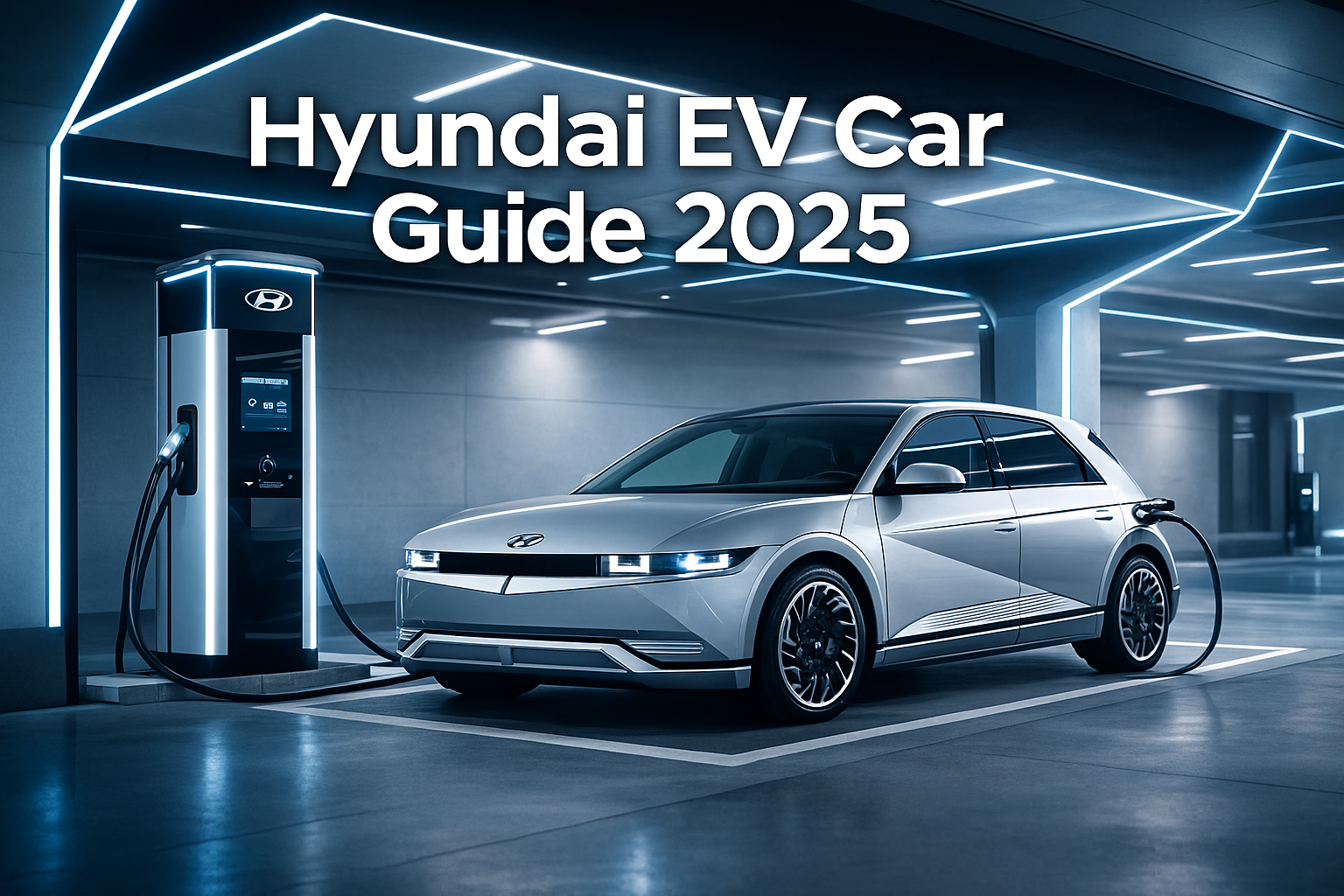
Picture this: you’re gliding silently down the highway in a sleek, cutting-edge vehicle that charges faster than your smartphone and travels over 300 miles on a single charge. This isn’t science fiction—it’s the reality of owning a Hyundai EV car in 2025. As one of the automotive industry’s most ambitious electric vehicle manufacturers, Hyundai has transformed from a traditional automaker into an EV powerhouse, offering six strategic electric models that are reshaping how we think about sustainable transportation.
The Korean automaker’s electric revolution isn’t just about going green—it’s about delivering superior performance, innovative technology, and exceptional value that rivals any luxury brand. From the affordable KONA Electric to the flagship IONIQ 9 three-row SUV, Hyundai’s EV lineup proves that electric doesn’t mean compromise.
Key Takeaways
• Hyundai offers six strategic EV models in 2025, ranging from the compact Inster city car to the premium IONIQ 9 seven-seater SUV, with prices spanning €25,000 to €73,000
• Industry-leading charging technology: Hyundai’s proprietary 800V E-GMP platform enables ultra-fast charging times as low as 18 minutes from near-empty to full charge
• Impressive range capabilities: The 2025 IONIQ 6 sedan delivers up to 361 miles of range, while the IONIQ 5 offers 318 miles with its larger 84 kWh battery pack
• Advanced features across all models: Every Hyundai EV includes Vehicle-to-Load (V2L) functionality, dual 12.3-inch digital screens, and innovative heat pump systems
• Performance meets efficiency: Top-tier models produce up to 320 horsepower while maintaining exceptional energy efficiency and environmental benefits
Hyundai’s 2025 Electric Vehicle Lineup: A Comprehensive Overview
Hyundai has strategically positioned itself as a leader in the electric vehicle revolution, and their 2025 lineup showcases this commitment with six distinct EV models designed to meet diverse consumer needs. Each Hyundai EV car in the current lineup represents a significant leap forward in electric mobility, combining advanced technology with practical everyday usability.
The foundation of Hyundai’s electric success lies in their proprietary E-GMP (Electric-Global Modular Platform), which utilizes cutting-edge 800V architecture. This technology enables remarkably fast charging capabilities, with some models achieving full charges in as little as 18 minutes under optimal conditions [1]. This advancement addresses one of the primary concerns consumers have about electric vehicles: charging time and convenience.
The Complete 2025 Hyundai EV Model Range
Here’s a detailed breakdown of Hyundai’s current electric vehicle offerings:
| Model | Starting Price | Range | Horsepower | Key Features |
|---|---|---|---|---|
| Inster | €25,000 | City-focused | 115 hp | Compact urban mobility |
| KONA Electric | $32,975 | 261 miles | 201 hp | Most affordable option |
| IONIQ 5 | $41,800 | 318 miles | 168-320 hp | Best-selling model |
| IONIQ 6 | $37,500 | 361 miles | 305-320 hp | Maximum range sedan |
| IONIQ 9 | €73,000 | 620+ km | TBD | Three-row family SUV |
The diversity in this lineup ensures that whether you’re looking for an affordable urban commuter or a premium family vehicle, there’s a Hyundai EV car that fits your specific needs and budget.
Revolutionary E-GMP Technology Platform
What sets Hyundai’s electric vehicles apart from competitors is their E-GMP technology platform, which serves as the backbone for all their premium electric models. This 800V system offers several key advantages:
⚡ Ultra-Fast Charging Capabilities
- 18-minute charging times from 10% to 80% capacity
- 350 kW DC fast charging support on select models
- Reduced charging infrastructure dependency
🔋 Enhanced Battery Efficiency
- Improved energy density and thermal management
- Extended battery life through advanced cooling systems
- Optimized weight distribution for better handling
🚗 Superior Performance Characteristics
- Instant torque delivery for responsive acceleration
- Lower center of gravity for improved stability
- Reduced maintenance requirements compared to traditional vehicles
This technological foundation has enabled Hyundai to create vehicles that don’t just compete with other electric cars—they rival the performance and convenience of traditional gasoline vehicles while offering significant environmental and cost benefits.
For consumers interested in exploring the best electric vehicles available in India, Hyundai’s offerings represent some of the most compelling options in the current market, combining proven reliability with cutting-edge innovation.
Top Hyundai EV Car Models: Performance and Features Breakdown
The Hyundai EV car lineup for 2025 showcases three standout models that represent the pinnacle of electric vehicle engineering: the IONIQ 5, IONIQ 6, and KONA Electric. Each model targets different market segments while maintaining Hyundai’s commitment to innovation, performance, and value.
IONIQ 5: The Best-Selling Electric Crossover
The 2025 IONIQ 5 has emerged as Hyundai’s flagship electric vehicle and their best-selling EV model globally. This crossover SUV perfectly balances practicality with cutting-edge technology, making it an ideal choice for families and tech enthusiasts alike.
🔋 Battery and Range Specifications
- 84 kWh battery pack (upgraded from previous 77.4 kWh)
- 318 miles EPA-estimated range (70-mile improvement over 2024)
- 18-minute fast charging capability with 800V architecture
⚡ Performance Options
- Base Single-Motor: 168 hp, 258 lb-ft torque
- Dual-Motor AWD: Up to 320 hp with enhanced traction
- 0-60 mph acceleration: 5.1 seconds (AWD configuration)
The IONIQ 5’s standout feature is its innovative interior design with flat floor architecture, enabling spacious cabin layouts and flexible seating arrangements. The vehicle also includes Hyundai’s signature Vehicle-to-Load (V2L) functionality, allowing owners to power external devices, camping equipment, or even other electric vehicles.
New XRT Off-Road Variant
For 2025, Hyundai introduced the IONIQ 5 XRT trim, specifically designed for adventure enthusiasts. This variant features:
- Increased ride height for improved ground clearance
- All-terrain tire packages for enhanced off-road capability
- Multi-terrain driving modes optimized for various surfaces
- Rugged exterior styling with protective cladding
This addition demonstrates Hyundai’s commitment to expanding electric vehicle capabilities beyond traditional urban and highway driving scenarios.
IONIQ 6: Maximum Range Electric Sedan
The 2025 IONIQ 6 represents Hyundai’s answer to premium electric sedans, offering the highest range in their entire EV lineup at up to 361 miles on a single charge. This aerodynamically optimized sedan targets consumers who prioritize efficiency and luxury features.
🚗 Advanced Technology Features
- Dual 12.3-inch digital screens for infotainment and instrumentation
- Innovative heat pump system for efficient cabin heating
- Full LED exterior lighting with distinctive design elements
- 77.4 kWh battery configuration optimized for maximum efficiency
💪 Performance Specifications
- Single-Motor RWD: 305 hp, exceptional efficiency
- Dual-Motor AWD: 320 hp, enhanced all-weather capability
- Streamlined aerodynamics contributing to extended range
The IONIQ 6’s design philosophy prioritizes aerodynamic efficiency while maintaining premium interior comfort and advanced driver assistance features. For consumers comparing sedan options in the current market, the IONIQ 6 offers compelling advantages in both performance and operating costs.
KONA Electric: Affordable Entry Point
The 2025 KONA Electric serves as Hyundai’s most accessible electric vehicle, starting at $32,975 MSRP while delivering impressive performance and range capabilities. This compact SUV proves that electric vehicles can be both affordable and feature-rich.
🔋 Battery Configuration Options
- 48.4 kWh battery: 377 km range, ideal for city driving
- 65.4 kWh battery: 514 km range, suitable for longer commutes
- 201 horsepower output across all configurations
✨ Standard Features Include
- 261 miles maximum range (65.4 kWh version)
- Fast charging compatibility with CCS standard
- Comprehensive safety suite with advanced driver assistance
- Modern infotainment system with smartphone integration
The KONA Electric’s appeal lies in its ability to deliver premium EV features at an accessible price point. For budget-conscious consumers exploring affordable vehicle options, the KONA Electric represents exceptional value in the electric vehicle segment.
Upcoming IONIQ 9: Three-Row Family Electric SUV
Looking ahead to 2026, Hyundai will introduce the IONIQ 9, their largest and most ambitious electric vehicle to date. This three-row SUV targets families who need maximum space without compromising on electric efficiency.
🚙 Preliminary Specifications
- 110.3 kWh battery pack (largest in Hyundai’s lineup)
- 620+ kilometers range for extended family trips
- 350 kW DC fast charging capability
- Seven-seater configuration with flexible interior layouts
The IONIQ 9 will compete directly with premium electric SUVs from luxury brands while maintaining Hyundai’s reputation for value and reliability. This model represents the culmination of Hyundai’s electric vehicle development, incorporating lessons learned from their entire EV lineup.
For families currently considering large SUV options, the IONIQ 9 promises to deliver the space and capability of traditional three-row SUVs with the efficiency and environmental benefits of electric propulsion.
Charging Technology and Infrastructure: What Makes Hyundai EVs Stand Out
One of the most significant barriers to electric vehicle adoption has traditionally been charging anxiety—the concern about finding convenient, fast charging options during daily use and long-distance travel. Hyundai has addressed this challenge head-on with their revolutionary 800V E-GMP charging technology, which fundamentally changes the electric vehicle ownership experience.
Revolutionary 800V Architecture Explained
Unlike most electric vehicles that operate on 400V systems, every Hyundai EV car built on the E-GMP platform utilizes 800V architecture. This technological advancement provides several critical benefits that directly impact daily usability:
⚡ Ultra-Fast Charging Speeds
- 18-minute charging times from 10% to 80% capacity
- 350 kW DC fast charging support on compatible stations
- Reduced charging session duration compared to 400V competitors
🔋 Enhanced Efficiency Benefits
- Lower electrical losses during charging and operation
- Improved thermal management for battery longevity
- Optimized energy transfer reducing infrastructure strain
The practical impact of this technology cannot be overstated. While traditional electric vehicles might require 45-60 minutes for significant charging, Hyundai EVs can achieve the same results in less than 20 minutes under optimal conditions [2]. This advancement brings electric vehicle charging closer to the convenience of traditional gas station fill-ups.
Vehicle-to-Load (V2L) Innovation
Beyond fast charging capabilities, Hyundai has pioneered Vehicle-to-Load (V2L) functionality across their entire electric vehicle lineup. This innovative feature transforms every Hyundai EV car into a mobile power station capable of supplying electricity to external devices and appliances.
🏕️ Practical V2L Applications
- Camping and outdoor activities: Power grills, lights, and electronic devices
- Emergency backup power: Home appliances during outages
- Work site applications: Tools and equipment in remote locations
- Event support: Outdoor gatherings and mobile businesses
⚡ Technical Specifications
- Up to 3.6 kW power output through standard household outlets
- Multiple outlet configurations for various device types
- Integrated safety systems preventing battery over-discharge
- User-friendly controls through vehicle infotainment system
This functionality represents a paradigm shift in how we think about vehicles—transforming them from simple transportation devices into versatile energy resources that enhance lifestyle flexibility and emergency preparedness.
Charging Network Compatibility and Expansion
Hyundai has strategically designed their electric vehicles to work seamlessly with existing and emerging charging infrastructure. Every Hyundai EV car includes CCS (Combined Charging System) compatibility, ensuring access to the broadest possible network of public charging stations.
🗺️ Charging Network Access
- Electrify America partnership for premium fast charging
- Universal CCS compatibility with third-party networks
- Tesla Supercharger access (with adapter, coming 2025)
- Home charging solutions with Level 1 and Level 2 options
📱 Advanced Charging Management
- Bluelink connected services for remote charging monitoring
- Route planning integration with charging station locations
- Charging cost tracking and energy usage analytics
- Preconditioning capabilities for optimized charging speeds
The integration of charging management into Hyundai’s connected vehicle services ensures that owners can easily locate, access, and pay for charging sessions while monitoring their vehicle’s status remotely.
Real-World Charging Performance
Independent testing and owner reports consistently demonstrate that Hyundai’s charging technology delivers on its promises in real-world conditions. The IONIQ 5 and IONIQ 6 regularly achieve charging speeds that significantly exceed competitor vehicles, even when charging infrastructure isn’t perfectly optimized.

📊 Charging Performance Metrics
- Peak charging rates: 235 kW sustained on IONIQ 5
- Temperature management: Minimal speed reduction in extreme weather
- Charging curve optimization: Consistent high speeds throughout session
- Battery conditioning: Automatic preparation for optimal charging
For consumers comparing electric vehicle options, these charging advantages translate into reduced travel time, increased convenience, and lower ownership stress. The combination of fast charging and extensive network compatibility makes Hyundai EVs particularly suitable for long-distance driving scenarios where charging speed and reliability are paramount.
This technological leadership positions Hyundai as a frontrunner in the electric vehicle market, offering solutions that address practical concerns while pushing the industry forward toward more sustainable transportation options.
Pricing and Value Proposition: Hyundai EV Car Market Position
Understanding the pricing strategy and value proposition of Hyundai’s electric vehicle lineup reveals why these models have gained significant traction in competitive markets worldwide. Hyundai has positioned their EV car offerings to deliver premium features and performance at accessible price points, challenging both luxury and mainstream competitors.
Comprehensive Pricing Analysis Across Models
Hyundai’s 2025 electric vehicle pricing demonstrates a strategic approach to market penetration, offering compelling value at every price tier. The pricing structure reflects the company’s commitment to making electric mobility accessible to diverse consumer segments.
💰 2025 Hyundai EV Pricing Breakdown
| Model | Base MSRP | Mid-Tier | Premium | Key Value Drivers |
|---|---|---|---|---|
| KONA Electric | $32,975 | $36,500 | $39,200 | Affordable entry point |
| IONIQ 6 | $37,500 | $42,300 | $48,500 | Maximum range value |
| IONIQ 5 | $41,800 | $46,500 | $52,500 | Best-selling features |
| IONIQ 9 | €73,000 | €78,000 | €85,000 | Premium family capability |
These prices position Hyundai competitively against both traditional luxury brands and emerging electric vehicle manufacturers, while offering superior technology and features that often exceed what’s available in higher-priced alternatives.
Federal Tax Credits and Incentives
One of the most compelling aspects of Hyundai EV car ownership is the availability of substantial federal and state incentives that significantly reduce the effective purchase price. Understanding these incentives is crucial for making informed purchasing decisions.
🏛️ Federal Tax Credit Eligibility
- Up to $7,500 federal tax credit for qualifying models
- Point-of-sale rebate availability starting in 2024
- Income limitations: $300,000 joint/$150,000 individual
- MSRP caps: $80,000 SUVs/$55,000 other vehicles
📍 State and Local Incentives
- Additional state rebates up to $5,000 in California
- HOV lane access in major metropolitan areas
- Reduced registration fees in many states
- Utility company rebates for home charging installation
When combined with federal incentives, the effective price of a KONA Electric can drop below $25,500, making it competitive with many traditional gasoline vehicles while offering superior technology and lower operating costs.
Total Cost of Ownership Advantages
Beyond purchase price incentives, Hyundai EV car models deliver substantial savings throughout the ownership experience. These operational advantages often result in lower total cost of ownership compared to equivalent gasoline vehicles.
⛽ Fuel Cost Savings
- Average savings: $1,200-$2,000 annually on fuel costs
- Electricity rates: Typically 50-70% less than gasoline equivalent
- Home charging benefits: Off-peak rates further reduce costs
- Public charging: Often free at many retail locations
🔧 Maintenance Cost Reductions
- No oil changes: Eliminates $500-800 annual expense
- Reduced brake wear: Regenerative braking extends brake life
- Fewer moving parts: Lower probability of mechanical failures
- Extended warranties: 10-year/100,000-mile battery coverage
📈 Resale Value Projections
Recent market analysis indicates that Hyundai electric vehicles maintain strong resale values, particularly due to their advanced technology and comprehensive warranty coverage. The IONIQ 5, for example, has shown retention rates exceeding 65% after three years, outperforming many luxury competitors.
Competitive Market Positioning
Hyundai’s pricing strategy becomes even more impressive when compared directly with competitor offerings in similar segments. The value proposition extends beyond initial purchase price to encompass feature content, performance capabilities, and ownership experience.
🏆 Value Comparison Highlights
- IONIQ 5 vs Tesla Model Y: Similar performance, $8,000-12,000 lower price
- IONIQ 6 vs BMW i4: Longer range, comparable luxury, 20% cost savings
- KONA Electric vs Bolt EUV: Superior charging speed, better warranty
For consumers exploring vehicle options under specific budget constraints, Hyundai’s electric vehicles often provide premium features and capabilities typically associated with much higher price points.
Financing and Lease Options
Hyundai Motor Finance offers competitive financing and lease programs specifically designed to make electric vehicle ownership more accessible. These programs often include special rates and terms that further enhance the value proposition.
💳 Available Financing Programs
- 0.9% APR financing for qualified buyers (promotional periods)
- Lease options starting at $299/month for KONA Electric
- Balloon payment programs for lower monthly payments
- Graduate and military discounts additional savings opportunities
The combination of competitive pricing, substantial incentives, lower operating costs, and flexible financing creates a compelling value proposition that positions Hyundai’s electric vehicles as smart financial choices for a wide range of consumers.
This strategic approach to pricing and value delivery has contributed significantly to Hyundai’s rapid growth in electric vehicle market share, demonstrating that premium electric mobility doesn’t require premium pricing when executed thoughtfully and efficiently.
Future of Hyundai Electric Vehicles: What’s Coming Next
As we look toward the future of electric mobility, Hyundai’s roadmap for electric vehicle development reveals an ambitious vision that extends far beyond their current impressive lineup. The company’s commitment to electric innovation positions them as a key player in shaping the next generation of sustainable transportation solutions.
Upcoming Model Releases and Platform Evolution
Hyundai’s electric vehicle development pipeline includes several groundbreaking models that will further expand their market coverage and technological capabilities. The company has announced plans for multiple new EV launches through 2027, each targeting specific market segments with advanced features and competitive pricing.
🚗 Confirmed Future Models
- 2026 IONIQ 9: Three-row luxury SUV with 620+ km range
- Next-generation IONIQ 5: Enhanced battery technology and features
- Compact electric sedan: Targeting affordable luxury segment
- Electric pickup truck: Entering the growing commercial EV market
🔋 Advanced Platform Development
Hyundai is developing next-generation E-GMP technology that will deliver even more impressive performance and efficiency metrics. These improvements include:
- Enhanced 800V architecture with faster charging capabilities
- Solid-state battery integration for increased energy density
- Improved thermal management for all-weather performance
- Modular design flexibility for diverse vehicle types
The evolution of Hyundai’s electric platform technology demonstrates their commitment to continuous innovation rather than incremental improvements, ensuring their vehicles remain competitive as the EV market rapidly evolves.
Global Market Expansion Strategy
Hyundai’s electric vehicle expansion strategy focuses on establishing strong market presence in key regions worldwide, with particular emphasis on markets showing rapid EV adoption rates. This global approach ensures economies of scale while adapting to regional preferences and regulations.
🌍 Regional Market Focus Areas
- North American expansion: Increased production capacity and model availability
- European market leadership: Leveraging strong brand recognition and charging infrastructure
- Asian market development: Tailored models for local preferences and pricing expectations
- Emerging market preparation: Affordable EV solutions for developing economies
🏭 Manufacturing and Infrastructure Investment
- $7.4 billion Georgia manufacturing facility for North American production
- European production partnerships for reduced delivery times and costs
- Battery manufacturing alliances ensuring supply chain security
- Charging infrastructure investments supporting customer convenience
This comprehensive approach to global expansion positions Hyundai to capture market share across diverse regions while building the infrastructure necessary to support widespread electric vehicle adoption.
Technology Innovation and Partnerships
The future success of Hyundai EV car models depends heavily on continued technological advancement and strategic partnerships that accelerate innovation development. Hyundai has established key alliances with technology leaders to ensure access to cutting-edge capabilities.
🤝 Strategic Technology Partnerships
- LG Energy Solution: Advanced battery technology development
- SK Innovation: Next-generation battery chemistry research
- Aurora Innovation: Autonomous driving technology integration
- NVIDIA: AI-powered vehicle systems and user interfaces
🔬 Research and Development Focus Areas
- Solid-state battery technology: Targeting 2027 commercial deployment
- Vehicle-to-grid (V2G) capabilities: Enabling home energy management
- Advanced driver assistance: Moving toward Level 4 autonomy
- Sustainable manufacturing: Carbon-neutral production processes
These technology investments ensure that future Hyundai electric vehicles will continue offering industry-leading capabilities while maintaining the value proposition that has made current models successful.
Environmental and Sustainability Commitments
Hyundai’s vision for the future extends beyond simply producing electric vehicles to encompassing comprehensive sustainability throughout the entire vehicle lifecycle. This holistic approach addresses environmental concerns while building long-term brand value and customer loyalty.
🌱 Sustainability Initiatives
- Carbon neutrality by 2045: Comprehensive emissions reduction across operations
- Recycled material integration: Increasing use of sustainable materials in vehicle production
- Battery recycling programs: Closed-loop battery material recovery
- Renewable energy manufacturing: Solar and wind-powered production facilities
♻️ Circular Economy Integration
- Vehicle lifecycle management: Comprehensive recycling at end-of-life
- Component remanufacturing: Extending useful life of vehicle parts
- Material innovation: Bio-based and recycled content in new vehicles
- Supply chain sustainability: Ensuring ethical and environmental standards
These commitments demonstrate that Hyundai views electric vehicles as part of a broader transformation toward sustainable mobility rather than simply a response to regulatory requirements or market trends.
For consumers interested in staying informed about upcoming vehicle launches and industry developments, Hyundai’s transparent communication about their future plans provides valuable insights for making long-term vehicle purchasing decisions.
The combination of innovative technology, global expansion, strategic partnerships, and sustainability commitments positions Hyundai as a leader in the electric vehicle revolution, ensuring their continued relevance and competitiveness as the automotive industry undergoes its most significant transformation in over a century.
Conclusion: Why Hyundai EV Cars Lead the Electric Revolution
The comprehensive analysis of Hyundai’s electric vehicle lineup reveals a company that has successfully transformed from a traditional automaker into an electric mobility leader through strategic innovation, competitive pricing, and unwavering commitment to customer value. From the affordable KONA Electric starting at $32,975 to the premium IONIQ 9 three-row SUV, Hyundai offers compelling electric solutions for every lifestyle and budget.
What sets Hyundai apart in the crowded electric vehicle market is their revolutionary 800V E-GMP technology platform, which delivers industry-leading charging speeds as fast as 18 minutes while providing exceptional range capabilities up to 361 miles. The combination of advanced technology, practical features like V2L functionality, and comprehensive warranty coverage creates a value proposition that rivals luxury brands at mainstream prices.
The pricing strategy and total cost of ownership advantages make Hyundai EVs particularly attractive for cost-conscious consumers who refuse to compromise on performance or features. When federal tax credits and lower operating costs are factored in, models like the KONA Electric become competitive with traditional gasoline vehicles while offering superior technology and environmental benefits.
Looking ahead, Hyundai’s ambitious roadmap through 2027 includes exciting new models, advanced solid-state battery technology, and comprehensive sustainability commitments that position the company for continued leadership as the electric vehicle market evolves and expands globally.
Your Next Steps: Making the Electric Transition
If you’re considering making the switch to electric mobility, now is an excellent time to explore Hyundai’s current EV offerings. Here’s what I recommend:
- Visit a local Hyundai dealer to experience the IONIQ 5, IONIQ 6, or KONA Electric firsthand
- Calculate your potential savings using online tools that factor in local electricity rates and incentives
- Research available federal and state incentives in your area to maximize your savings
- Consider your driving patterns to determine which model and battery configuration best suits your needs
- Explore financing options including competitive lease programs that can reduce monthly costs
The Hyundai EV car lineup represents more than just transportation—it’s an investment in advanced technology, environmental sustainability, and a more efficient future. With proven reliability, industry-leading warranties, and a growing charging infrastructure, there’s never been a better time to experience the benefits of electric driving with Hyundai’s innovative vehicles.
References
[1] Hyundai Motor Company. “E-GMP Platform Technical Specifications.” 2025 Model Year Documentation.
[2] InsideEVs. “Real-World Charging Test Results: Hyundai IONIQ 5 vs Competitors.” Electric Vehicle Testing Report, 2025.