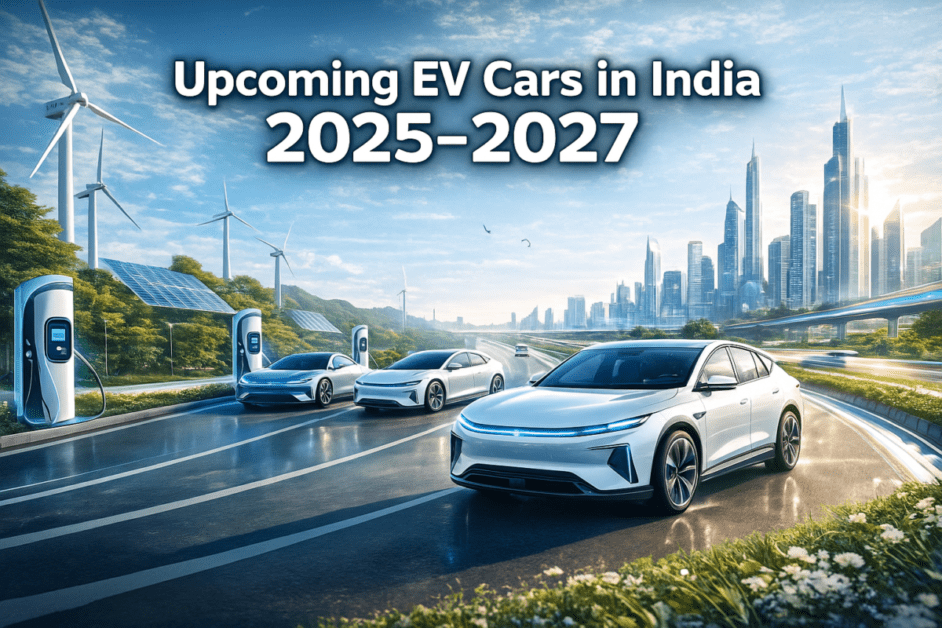
India’s automotive landscape is experiencing a revolutionary transformation that will reshape how we think about transportation. With 39 upcoming EV cars in India scheduled to launch between 2025 and 2027, the electric vehicle revolution is no longer a distant dream—it’s happening right now, and it’s happening fast. From budget-friendly options starting at ₹8 lakh to luxury Tesla models priced at ₹2 crore, the diversity of upcoming ev cars in india promises something for every Indian consumer.
Key Takeaways
• 39 electric vehicles are launching in India between 2025-2027, including 29 SUVs, 6 sedans, 3 hatchbacks, and 1 coupe
• Price range spans from ₹8 lakh (Leapmotor T03) to ₹2 crore (Tesla Model X), making EVs accessible across all segments
• 17 vehicles are expected to launch within the next three months, accelerating market adoption
• Major players include Mahindra, Tata, Maruti Suzuki, Hyundai, Tesla, and new entrants like Leapmotor and VinFast
• Advanced technologies like solid-state batteries and AI-powered energy management systems are being integrated
The Electric Revolution: Understanding India’s EV Market Transformation
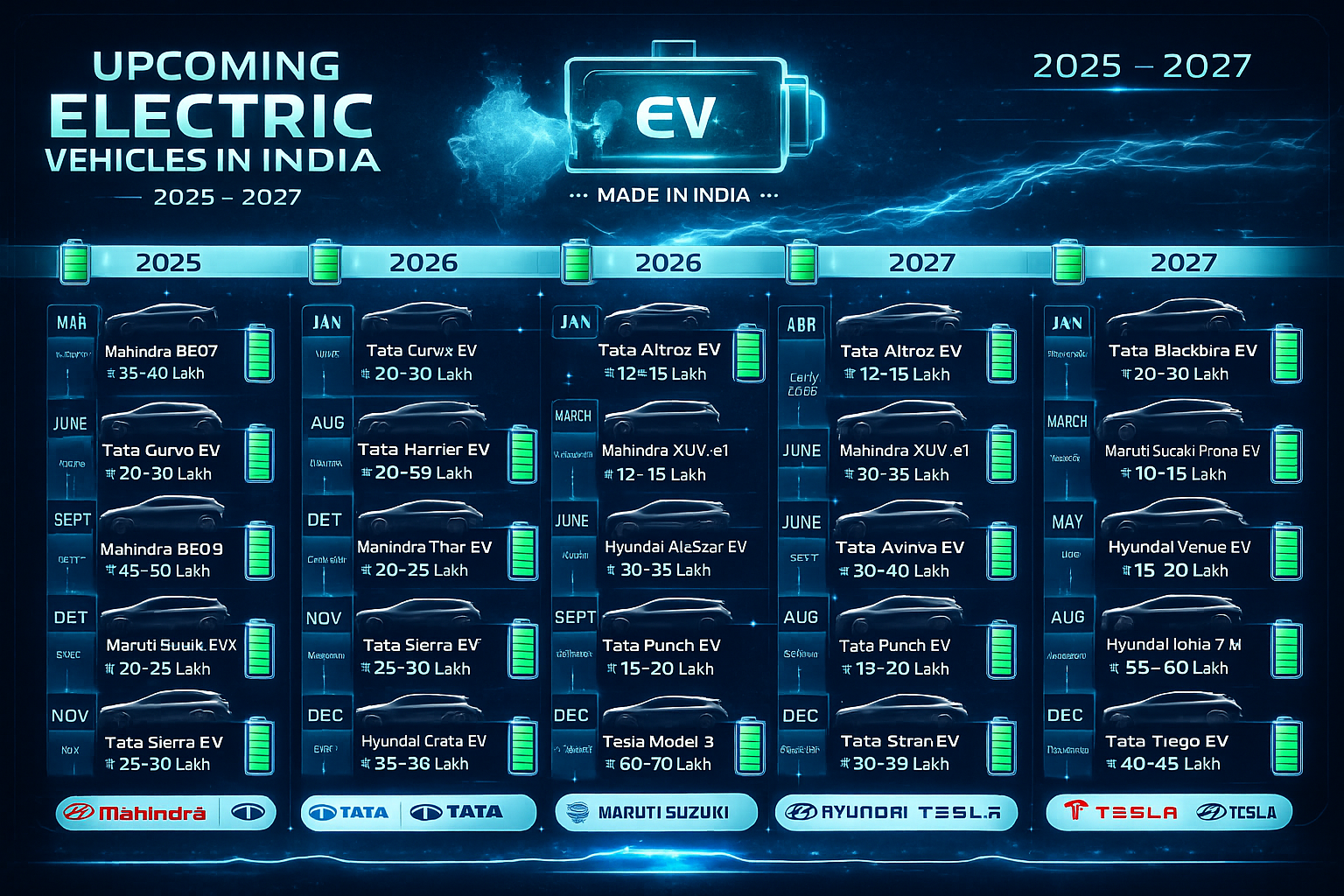
The Indian automotive industry stands at a pivotal moment. After years of gradual progress, the electric vehicle segment is experiencing unprecedented momentum. The surge in upcoming ev cars in india represents more than just new product launches—it signals a fundamental shift toward sustainable mobility.
Why 2025-2027 Marks the EV Tipping Point
Several factors have converged to make this period crucial for India’s electric future:
Government Support: Enhanced subsidies, reduced GST rates, and infrastructure development initiatives have created a favorable ecosystem. The recent changes in automotive pricing reflect the government’s commitment to making EVs more affordable.
Technology Maturation: Battery technology has reached a point where range anxiety is becoming less of a concern. Modern EVs offer ranges comparable to traditional vehicles while charging times continue to decrease.
Consumer Readiness: Indian consumers are increasingly environmentally conscious and cost-aware. With rising fuel prices, the total cost of ownership for EVs is becoming increasingly attractive.
Infrastructure Development: The charging network across India is expanding rapidly, making EV ownership more practical for daily use.
Comprehensive Breakdown of Upcoming EV Cars in India by Segment
Budget-Friendly Electric Vehicles (₹8-15 Lakh)
The affordable segment will see the most activity, with several manufacturers targeting price-conscious Indian consumers.
Leapmotor’s Market Entry
Leapmotor T03 (₹8 lakh) and Leapmotor C10 (₹45 lakh) are both scheduled for January 15, 2026. This Chinese manufacturer’s entry marks a significant moment for India’s mass market EV segment. The T03, positioned as an ultra-affordable city car, could revolutionize urban mobility.
Maruti Suzuki’s Electric Debut
The Maruti Suzuki WagonR Electric (₹8.50 lakh, January 15, 2026) represents India’s largest carmaker’s serious commitment to electrification. Given Maruti’s dominance in the budget segment, this launch could be a game-changer for EV adoption in India.
Mahindra’s Affordable Options
Mahindra XEV 4e (₹13 lakh, January 2026) will compete directly with existing players like Tata Nexon EV. Built on Mahindra’s dedicated INGLO platform, it promises better packaging and efficiency than converted ICE vehicles.
Mid-Range Electric SUVs (₹15-35 Lakh)
This segment shows the highest diversity in upcoming ev cars in india, with multiple manufacturers competing for the growing middle-class market.
Kia and VinFast Entries
- Kia Syros EV (₹14 lakh, February 17, 2026)
- VinFast VF3 (₹10 lakh, February 18, 2026)
These launches indicate international manufacturers’ confidence in India’s EV market potential. The competitive pricing suggests aggressive market penetration strategies.

Mahindra’s Premium Electric SUVs
- Mahindra BE 07 (₹29 lakh, January 2026)
- Mahindra Thar E (₹25 lakh, August 2026)
The electric Thar is particularly exciting, as it could be the world’s first electric off-road vehicle in this price segment. This aligns with the broader trend of upcoming SUVs in India focusing on diverse consumer needs.
Tata’s Continued Innovation
Tata Sierra EV (₹32 lakh, May 15, 2026) was unveiled at the Bharat Mobility Global Expo 2025. This retro-styled SUV combines nostalgia with cutting-edge electric technology, targeting consumers who want both style and sustainability.
Luxury Electric Vehicles (₹50 Lakh+)
The premium segment will see significant activity, with established luxury brands and new players competing for affluent consumers.
Mercedes-Benz Electric Lineup
- Mercedes-Benz CLA Electric (₹65 lakh, April 2026)
- Mercedes-Benz EQE Sedan (₹1.20 crore, December 2026)
These launches represent Mercedes-Benz’s commitment to electrifying its entire lineup. The CLA Electric, in particular, targets younger luxury buyers who prioritize sustainability.
Hyundai’s Premium Electric Sedan
Hyundai IONIQ 6 (₹65 lakh, March 2026) brings Hyundai’s advanced E-GMP platform to India. With its distinctive design and impressive range capabilities, it directly challenges European luxury EVs.
Tesla’s Much-Awaited Indian Debut
- Tesla Model S (₹1.50 crore, May 2026)
- Tesla Model X (₹2 crore, September 2026)
Tesla’s entry into India has been long anticipated. These launches will test whether Indian consumers are willing to pay premium prices for the Tesla brand and technology.
Technology Innovations Driving the Next Generation of EVs
Mahindra’s Solid-State Battery Revolution
Mahindra is developing solid-state battery technology that promises to be safer, more energy-dense, and longer-lasting than traditional lithium batteries. This technology is currently being tested in upcoming vehicles and could provide Mahindra with a significant competitive advantage.
Key Benefits of Solid-State Batteries:
- Higher Energy Density: More range in smaller, lighter packages
- Faster Charging: Reduced charging times compared to conventional batteries
- Enhanced Safety: Lower risk of thermal runaway and fires
- Longer Lifespan: Reduced degradation over time
AI-Powered Energy Management
Modern EVs are incorporating artificial intelligence to optimize energy consumption. These systems learn driving patterns, predict energy needs, and optimize charging schedules to maximize efficiency and convenience.
Dedicated EV Platforms
Unlike early EVs that were converted from ICE vehicles, most upcoming ev cars in india are built on dedicated electric platforms. Mahindra’s INGLO platform exemplifies this approach, offering:
- Optimized Packaging: Better interior space utilization
- Lower Center of Gravity: Improved handling and stability
- Flexible Architecture: Ability to accommodate different vehicle sizes
- Enhanced Safety: Purpose-built crumple zones and battery protection
Market Impact and Consumer Implications
Pricing Strategy Revolution
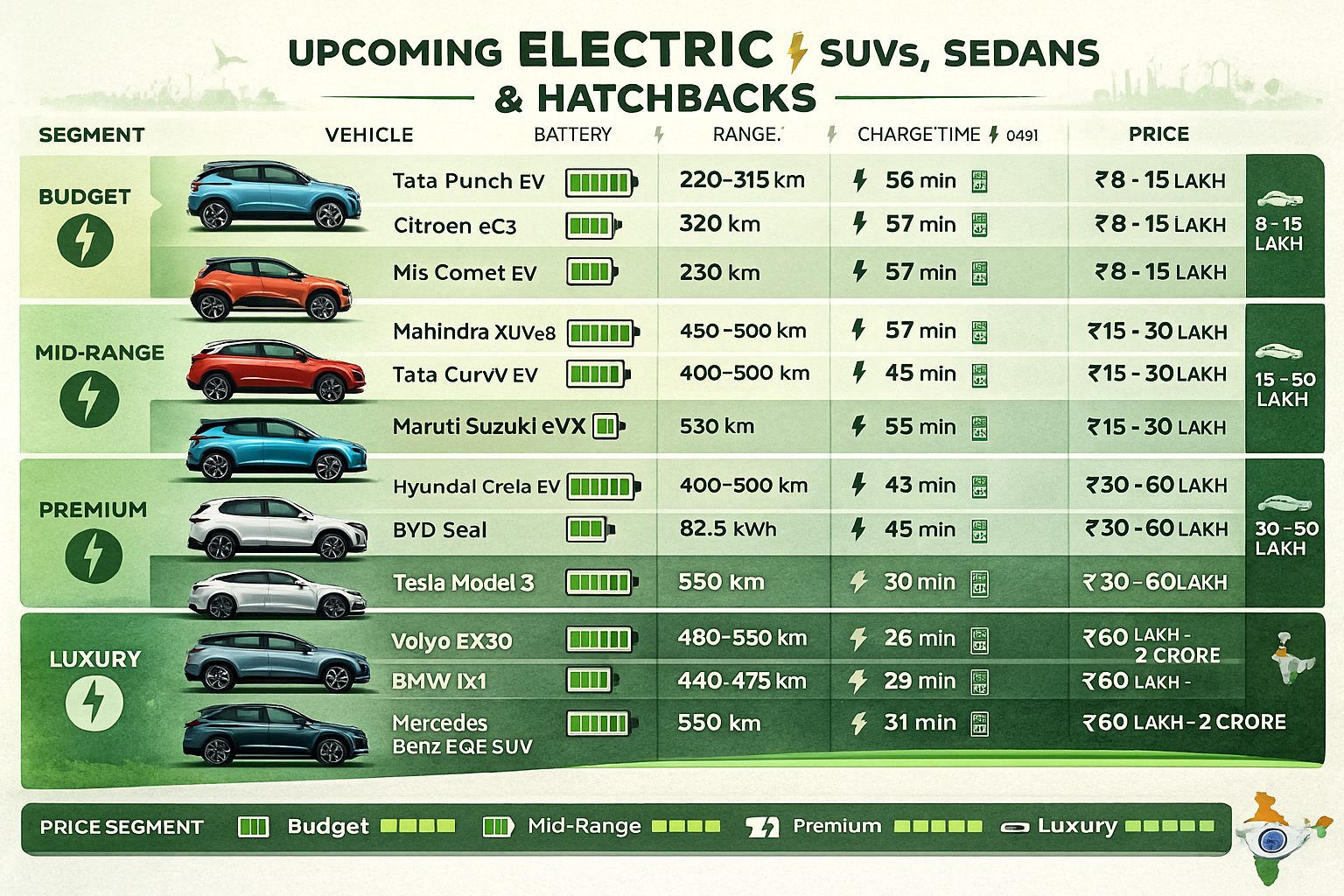
The wide price range of upcoming ev cars in india indicates manufacturers’ commitment to democratizing electric mobility. With options from ₹8 lakh to ₹2 crore, EVs are no longer limited to early adopters or luxury buyers.
Price Segment Distribution:
- Budget (₹8-15 lakh): 12 vehicles
- Mid-range (₹15-35 lakh): 18 vehicles
- Premium (₹35 lakh+): 9 vehicles
This distribution suggests manufacturers expect the mid-range segment to drive volume growth, similar to patterns seen in the best cars under 15 lakhs category.
Infrastructure Development Acceleration
The launch of 39 new EVs will necessitate rapid charging infrastructure expansion. This creates a positive feedback loop where more EVs drive infrastructure development, which in turn makes EVs more practical for consumers.

Impact on Traditional Automotive Segment
The electric vehicle surge will significantly impact traditional automotive sales. Manufacturers are already adjusting their ICE vehicle portfolios, as seen in recent pricing strategies designed to maintain competitiveness.
Regional Market Dynamics and Consumer Preferences
Urban vs. Rural Adoption Patterns
Urban Markets will likely lead EV adoption due to:
- Better charging infrastructure
- Higher environmental awareness
- Shorter daily commutes suitable for current EV ranges
- Government incentives for pollution reduction
Rural Markets present unique challenges and opportunities:
- Longer distances between destinations
- Limited charging infrastructure
- Price sensitivity
- Potential for solar-powered charging solutions
State-Specific Policies and Incentives
Different Indian states offer varying incentives for EV adoption, creating regional market dynamics. States like Delhi, Maharashtra, and Gujarat lead in EV-friendly policies, while others are rapidly catching up.
Challenges and Opportunities in India’s EV Market
Infrastructure Challenges
Despite rapid growth, charging infrastructure remains a concern. The success of upcoming ev cars in india depends heavily on:
- Fast Charging Networks: Reducing charging time anxiety
- Home Charging Solutions: Making overnight charging convenient
- Workplace Charging: Enabling charging during work hours
- Highway Charging: Supporting long-distance travel
Supply Chain Considerations
The semiconductor shortage and battery material costs continue to impact the automotive industry. Manufacturers launching upcoming ev cars in india must navigate:
- Battery Supply Security: Ensuring consistent battery availability
- Localization Requirements: Meeting government local content mandates
- Quality Control: Maintaining standards while scaling production
- Cost Management: Balancing features with affordability
Opportunities for Growth
The EV revolution creates numerous opportunities:
For Consumers:
- Lower operating costs compared to ICE vehicles
- Access to latest automotive technologies
- Environmental benefits
- Government incentives and tax benefits
For the Industry:
- New business models around charging and services
- Software and technology integration opportunities
- Export potential to other emerging markets
- Job creation in new technology sectors
Future Outlook: Beyond 2027
Technology Roadmap
The upcoming ev cars in india launching through 2027 represent just the beginning. Future developments will likely include:
- Autonomous Driving Integration: Self-driving capabilities in electric vehicles
- Vehicle-to-Grid Technology: EVs feeding power back to the electrical grid
- Advanced Materials: Lighter, stronger materials reducing weight and improving efficiency
- Wireless Charging: Elimination of physical charging connections
Market Maturation
By 2027, India’s EV market will likely mature significantly:
- Standardization: Common charging standards and protocols
- Service Networks: Comprehensive maintenance and repair infrastructure
- Used EV Market: Development of secondary markets for electric vehicles
- Battery Recycling: Sustainable end-of-life battery management
Making the Right Choice: Guidance for Potential EV Buyers
Assessing Your Needs
Before choosing from the upcoming ev cars in india, consider:
Daily Driving Patterns:

- Average daily distance
- Typical trip types (city vs. highway)
- Access to charging facilities
- Backup transportation options
Financial Considerations:
- Total cost of ownership vs. ICE vehicles
- Available government incentives
- Financing options for EVs
- Insurance costs for electric vehicles
Lifestyle Factors:
- Environmental priorities
- Technology adoption comfort
- Maintenance preferences
- Brand loyalty considerations
Timing Your Purchase
With 17 vehicles launching in the next three months and many more throughout 2025-2027, timing becomes crucial:
Early Adoption Benefits:
- Access to latest technology
- Government incentives (which may reduce over time)
- Pioneer status in your community
- Potentially better resale values
Waiting Advantages:
- More options to choose from
- Better charging infrastructure
- Potential price reductions due to competition
- Proven reliability and service networks
For those interested in current options, exploring the best electric cars currently available in India can provide valuable insights for comparison.
Conclusion
The landscape of upcoming EV cars in India represents one of the most significant transformations in the country’s automotive history. With 39 new electric vehicles launching between 2025 and 2027, Indian consumers will have unprecedented choice across all price segments and vehicle categories.
From the affordable Leapmotor T03 at ₹8 lakh to the luxury Tesla Model X at ₹2 crore, these launches demonstrate that electric mobility is becoming mainstream in India. The diversity in pricing, features, and technologies ensures that every consumer segment has viable electric options.
The success of these launches depends on continued government support, infrastructure development, and consumer acceptance. However, early indicators suggest strong momentum across all these factors.
Next Steps for Consumers
- Research Your Options: Study the specifications and launch timelines of vehicles that match your budget and requirements
- Assess Infrastructure: Evaluate charging options in your area and daily routes
- Calculate Total Cost: Compare the complete ownership costs of EVs vs. traditional vehicles
- Stay Informed: Follow launch updates and reviews as these vehicles become available
- Test Drive: Experience electric driving through currently available models to understand the technology
The electric revolution in India is not just about new cars—it’s about reimagining transportation for a sustainable future. The upcoming ev cars in india launching over the next three years will play a crucial role in determining how quickly and successfully this transformation occurs.
For the latest updates on automotive trends and detailed reviews of new launches, visit CarFatafat to stay informed about India’s evolving automotive landscape.
References
[1] Industry reports on upcoming electric vehicle launches in India, 2025-2027
[2] Manufacturer announcements and press releases from Bharat Mobility Global Expo 2025
[3] Government policy documents on electric vehicle adoption and incentives
[4] Battery technology research papers on solid-state battery development
[5] Market analysis reports on Indian automotive industry transformation